Divorce as a Means of Alimony in Islam.

This is a continuation of ‘Dowry as a Means of Alimony in Islam’.

When it comes to alimony talks in islam after a divorce pronouncement, unlike the practice we have today that basically doesn’t encourage taking care of the woman anymore, until say, the courts intervene, and she wins; in Islam, the divorce only goes into effect when the waiting period is over, of which depending on the circumstances, is an average of three period cycles, or if the woman is found to be pregnant, will last till she gives birth, and in this time, the husband is still expected to care for her in a way and manner that she would love to be cared for, and that is peaceful.

Having discussed some of the ways in which the Dowry system in Islam was engineered towards making sure that in the event of a divorce, the woman is able to stand on her two feet; here, in this piece, we’ll be looking into other measures that are available in Islam that encourages, mandates and obligate men to care for their ex-wives after the end of the waiting period.

And so, we’ll be looking into how the wife is supposed to be cared for in the Waiting Period, and in the post Waiting Period.

Well, without further ado, let’s get into it.

Tolaq is the word that’s popularly translated and known to be divorce, and as we read on in this piece, we’ll get acquainted with more expressions that were translated to divorce, what they really mean, and how they apply in the divorce system in Islam.

So, tolaq, Tọlaq is one of those words that when understood the way Allah intends that it be understood, a lot of the controversies surrounding its execution becomes really easy to understand and dispel. And that’s our first task in this piece, to try to make understanding the word easy, so that no matter what circumstances one finds one’s self in, or someone else, one is able to objectively apply the tools in this piece to reach a more just conclusion, InshaAllah.

The root alphabets of tọlaq are tọ, lam and qaf, and 4 forms of the word appeared a total of 23 times in the Quran. Tọlaq is said to mean to be free, to free, to let go, to set off, to set out, to bring forth shoots; to be generous; to divorce etc.

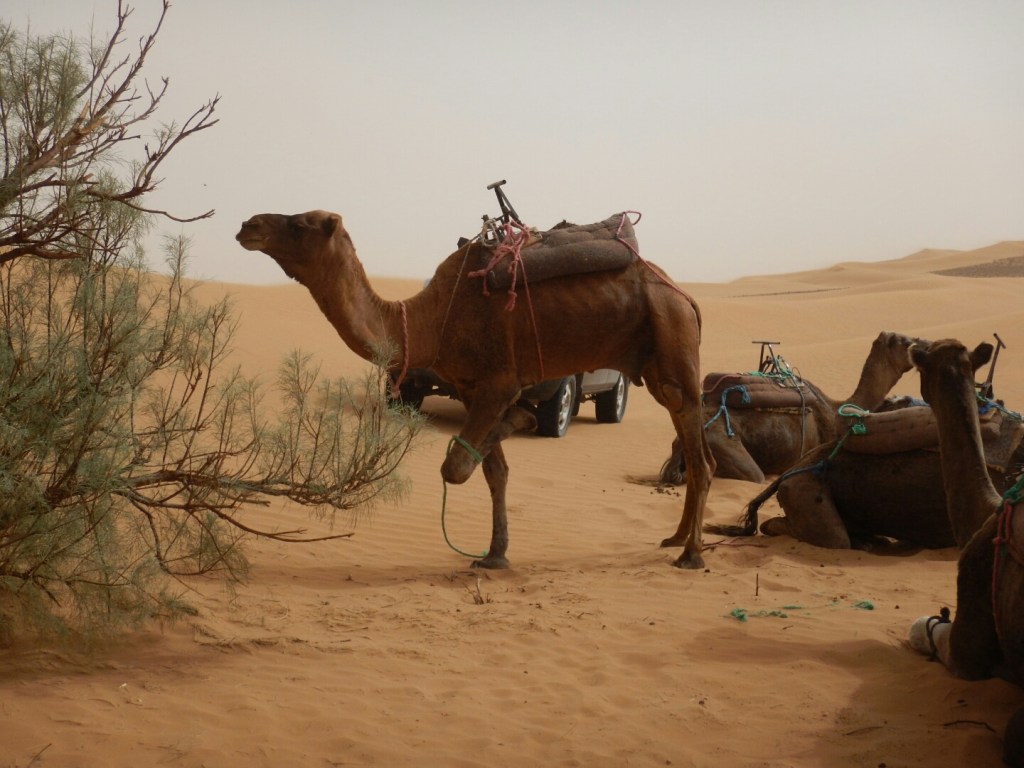
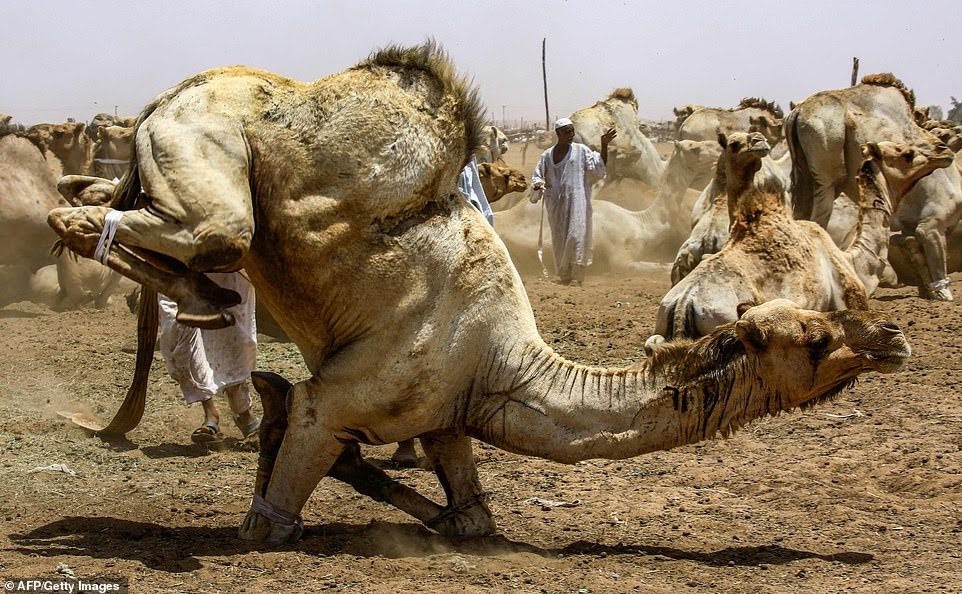
Classically though, tolaq is said of a camel when its bond, cord or knot by which the shank and arm of a camel was bound together is being loosened. The shank and the arm of a camel gets tied together you ask? I gatchu:

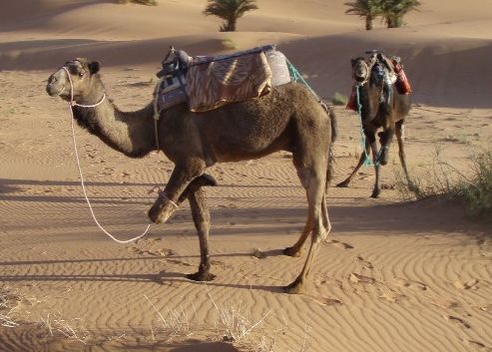
As we see in the pictures above, sometimes, the rear shanks and rear arms of the camel are also bound together. This is done for various reasons which can include but not limited to the shepherd trying to make sure that the camels don’t wander off, to tame an unruly camel from kicking and hurting others, to keep them still for milking, etc.

And so the act of unknotting or loosening this bond is what tolaq is. To be noted in all these is the ‘being held up’ before the loosening that occurs, for tolaq, when it is used to mean ‘setting out’ is only used in the Quran to describe a setting out after having been held back, or one having a feeling of being bound to remain somewhere.

Q48 V15 is a perfect example of its usage in this way; Allah said, “Those who remained behind will say when you tolaq (set out) toward the war booty to take it, ‘Let us follow you.’ They wish to change the words of Allah. Say, ‘Never will you follow us. Thus did Allah say before.’ So they will say, ‘Rather, you envy us.’ But [in fact] they were not understanding except a little.”

The verse was revealed about Banu Ghifar, Aslam, Ashja and some people from Muzaynah and Juhaynah who didn’t set out with the prophet pbuh and his companions when they set out to Makkah, which later led to the treaty of hudaybiyyah because they thought setting out then was a death sentence, but now wanted to set out with the prophet and his companions to Khaybar because that promised a lot of spoils of war. The Muslims, having been bound hitherto by the Charter between them and the Jews, but now are being released, the knot is now being loosened for them to go forth, set out, against them, because the Jews breached the charter; we see in both instances in the verse, a viable reason why the use of the word tolaq was essential.

Other places where the word was used to mean setting out are embedded in the story of Moses and Khidr, wherein, tolaq was used 3 times in Q18 Vs 71, 74 and 77, after having been held up, before then proceeding. Other places that the word was used to mean setting out are Q77 Vs 29 and 30, and in Q68 V23.

It is with all of these in mind that the word has come to be used to mean being free, setting forth, proceeding, and expressions of that nature. And since the free one is happy, cheerful, bright, generous and the likes, tolaq is also said to mean that.

To further buttress this definition of tolaq meaning loosening of a knot or bond, let’s look into how it was used in another story of Moses.

We find in Q26 V13 that Moses while pleading for reinforcement from Allah, said, “And that my breast will tighten and my tongue yantoliqu (will not be fluent), so send for Aaron.” And in Q20 V27 he supplicated to remedy that by saying “And untie the u’qdatan (knot) from my tongue”. So we see here that he prayed for his tongue to be able to move freely and with ease, aka speak fluently, and not stammer, the knot from his tongue has to be untied. Q113 V4 is another place where a’qidu was translated to knot, wherein Allah says “And from the evil of the blowers in u’qad (knots)”.

So that we see that before tolaq happens, there’s a knot, a bond, and in the case of marriage, a covenant. In fact, a’qidu is a word that was used in the Quran in relation to marriage too. I’m sure that rings a bell already, a’qidu nikah.

In Q2 V235, Allah says that “…And do not determine to undertake an u’qdata nnikah (marriage contract) until the decreed period reaches its end…”; and in V237, Allah states that “…unless they forego the right or the one in whose hand is the u’qdatu nnikah (marriage contract) foregoes it…” Some other translators have translated that phrase to mean marriage tie, knot of marriage, bond of marriage, wedding knot, marriage knot, and the likes.

Q5 V1 states that “O you who have believed, fulfill [all] u’quud (contracts)…”. Q5 V89 states that “Allah will not impose blame upon you for what is meaningless in your oaths, but He will impose blame upon you for [breaking] what you a’qadtum (contracted) of oaths…” And Q4 V33, Allah says, “…And to those whom your a’qadat (oaths have bound [to you]) – give them their share. Indeed Allah is ever, over all things, a Witness.”

All of these to say that with knots, the bond doesn’t just come off immediately the shepherd wishes like some kind of magic, but in doing tolaq of the knot, there is a waiting period in which the shepherd has to go on his knees, seek the knot, and untie it, one twist at a time until the camel is fully free, free to roam, and pasture wherever she wants.

As with Allah’s ever perfect use of words, it so happens that this ‘waiting period’ that the shepherd has to undergo while taking off the knot is also recorded in the Quran with respect to undoing marriage bonds, and it’s called I’ddah, the Waiting Period.

Allah says in Q65 V1, “O Prophet, when you [Muslims] tollaqtum (divorce) women, fatoliquu (divorce) them for [the commencement of] their iddatiHina (waiting period) and keep count of the i’ddat (waiting period), and fear Allah, your Lord. Do not turn them out of their [husbands’] houses, nor should they [themselves] leave [during that period] unless they are committing a clear immorality. And those are the limits [set by] Allah. And whoever transgresses the limits of Allah has certainly wronged himself. You know not; perhaps Allah will bring about after that a [different] matter.”; and Q65 V5 with respect to iddah says that “That is the command of Allah, which He has sent down to you…”.

Q2 V228 records that the Waiting Period should be 3 period cycles, “Divorced women remain in waiting for three periods, and it is not lawful for them to conceal what Allah has created in their wombs if they believe in Allah and the Last Day…”. Q65 V4 however stated 3 months of iddah for those who despair of menstruation, if one is in doubt; and 3 months also for those that don’t menstruate – 3 months, not to be confused with 3 period cycles that was mentioned in Q2 V228 above for those that still menstruate. And as for those that are pregnant, their iddah ends when they give birth as stated in Q65 V4, “…And for those who are pregnant, their term is until they give birth…”, and Allah follows that verse with V5 that says “That is the command of Allah, which He has sent down to you; and whoever fears Allah – He will remove for him his misdeeds and make great for him his reward.”

And as I wrote above, it is only after the iddah has happened in which the knots are being untied, that the camel then becomes free, to pasture wherever it pleases. And again, this eventuality, the being free, is also recorded as a stage in the divorce process, and that’s what is called the Sarih, and Fariq; these are the words that really fit into what we refer to as divorce today, the being apart, and being free, from one another. A total break from one’s spouse, and that’s why a new dowry is required if one wants to remarry them, something that’s not required were someone to assimilate them during the Waiting Period.

Well now, let’s define the terms.

As for Sarih, its root alphabets are sin, ra and ha, it is said to mean to pasture, to set free, and 5 forms of the word was used 7 times in the Quran; sarihuu occurred twice, sarahaan twice, usarih once, tasrahuun once, and tasreehun once. Of all of them, the only time it was used for other than in the space of divorce was in Q16 V6, wherein Allah said, “And in them there is beauty for you when you bring them home in the evening, and when tasrahuun (you drive them forth to pasture in the morning).”

This idea of being sent out to pasture is true to its Classical Arabic usage as they also used the word to refer to when they let their camels or cattle graze freely, to wherever they please; it is also said of when the torrent flows freely, and easily. And it is from this idea that the meaning of being sent forth, and being free comes from.

And now that we know what we know of this word, we can differentiate it from tolaq when it comes to camels by saying that while tolaq is happening, the shepherd still has the camel in his care, under his roof, still trying to unknot the knot, still feeding and caring for it even, if the unknotting process is taking a while; but with sarih, tolaq has been completed, and the camel is now in the fields, free, left to pasture wherever she likes. Having all these in mind are essential when we start looking at the verses that refer to these words. It is in not understanding these words as they were understood in classical times, that we’ve fallen into the deep abyss of opinion differences and the likes.

To also be noted in all of these is that, with sarih, because they’ve been left to roam freely, they can return to the barn if one goes to get it to come back, or it can waltz away, and get owned by some other shepherd. Essential.

Now, Fariq, its root alphabets are faf, ra and qaf, and it is said to mean to scatter, to disperse, to spread over a period of time; to separate, to distinguish, to cause to be distinct; to split; to discriminate; opening between the front teeth; group, faction. Of this root, 17 forms of the word occurred 72 times in the Our’ an.

Perhaps, an easy way to conceptualize the meaning of fariq is to look at the words of Allah in Q2 V50, wherein Allah said, “And [recall] when faraqna (We parted) the sea for you and saved you and drowned the people of Pharaoh while you were looking on.”

We see there that if with sarih, we are still thinking of a possibility of return, we see with fariq the nature that a divorce can, or may have. One of total separation, because for the people of Israel to have been able to walk through the parted sea, there must have been a total separation of the sea.

And so classically, fariq is said of when the road divides into two roads, and from all that it came to be used for separation, the moving apart, the moving away, physically and mentally, thereby emphasizing the separation. Q18 V78 says “[AI-Khidhr] said, “This is firaaqu (parting) between me and you…”.

The first question I want us to answer after knowing all of these is the question of how many Waiting Period can there be before the wife is expected to mandatorily marry someone else and then divorcing before one is then able to marry them again?

Let’s start with Q2 V226 that says, “For those who yuluuna (swear) not to have sexual relations with their wives is a tarabusu (waiting time) of four months, but if they return [to normal relations] – then indeed, Allah is Forgiving and Merciful.” And V227 that says, “And if they decide on tolaq (divorce) – then indeed, Allah is Hearing and Knowing.”

So we see that when we are talking about tolaq, or its waiting period, V226 doesn’t apply. That’s for those that swear for whatever reason not to be with their wives, and tarabusu alone is the word that was used to refer to how long he can stay away from her. And Allah also made sure to then mention tolaq in the verse that follows it to make sure that it is differentiated from it.

Now, even though Q2 V228 says, “Almutollaqatu (Divorced women) yatarabbasna (remain in waiting) for three periods…”, because the word that was used to describe the separation is ‘talaq’ we know that i’ddah comes with it because Allah said in Q65 V1 that “O Prophet, when you [Muslims] tollaqtum (divorce) women, fatolliquuHuna (divorce them) for [the commencement of] their li-i’ddat (waiting period) and keep count of the i’ddat (waiting period)…”; also because we’ve learned that classically talaq and i’ddah are like a fruit and its seed that’s embedded in it.

Yatarabbasna was highlighted here because of the nature of what was going to be discussed. And that is that one of the reasons for the i’ddah is to see if she is pregnant; V228 continues with ““Almutollaqatu (Divorced women) yatarabbasna (remain in waiting) for three periods, and it is not lawful for them to conceal what Allah has created in their wombs if they believe in Allah and the Last Day…”. And generally, rabis, the key word in yatarabbasna, with a sod, not a sin, is used when one is waiting for something to happen, when one is on the look out, as in Q9 V24 where Allah said “…so be on the look-out till God brings about His command…”. And so, rabis was highlighted here. So that in a nutshell, rabis is one of the qualities of i’ddah, and when it is mentioned outside of tolaq, it doesn’t carry the properties of tolaq.

So we see in V228 that 3 period cycles is the i’ddah of a woman that has been tolaq-d, and we also see that Allah has made tolaq and i’ddah twins, whenever the first is pronounced, the second must be initiated; same as when we looked into the whole camel, knots and untying process; now we see why for every tolaq there must be an i’ddah.

Now, Q2 V229 says, “Attolaqu (Divorce) is twice. Then, either faimsakum (keep [her]) in an acceptable manner or tasreeh (release) [her] with good treatment…”.

The difference of opinions concerning this verse stems from the interpretation of one alphabet, faf. The faf before imsakum, it was translated here to mean ‘then’. This conjunctive particle should have been translated to ‘so’ instead of ‘then’. ‘So’ is a much more appropriate conjunction to be used here in order to show the logical sequence of events. Q28 V15 is an example of where the faf was translated to ‘so’ appropriately, “…fa (so) Moses struck him and [unintentionally] killed him…”. If ‘then’ had been used there, it will presuppose a time lapse, and not an immediate reaction to the reality on ground.

An example of a place where ‘then’ is perfect every time is when there is a proximate sequence of event that has to do with time lapse as in Q23 V14 where Allah said, “Thumma (Then) We made the sperm-drop into a clinging clot, fa (then) We made the clot into a lump [of flesh], fa (then) We made [from] the lump, bones, fa (then) We covered the bones with flesh; thumma (then) We developed him into another creation. Fa (So) blessed is Allah, the best of Creators.”

But in the Q2 V229’s case, there’s no time lapse involved, because, the fa in “fa (Then), either keep [her] in an acceptable manner or release [her] with good treatment…” was explaining the phrase that came before it, that “Divorce is twice…”, and we know this because one, Allah literally just said ‘divorce is twice’, and so to use a word – ‘then’ that is – that will saliently presuppose another marriage and divorce situation will not be the perfect word to translate the faf to. A readily usable word is ‘so’, and a quick insertion of ‘so’ instead of ‘then’ makes us see the verse in a new light, one that defines the experience of being married as imsakun and that of being divorced as tasreeh, “Attolaqu (Divorce) is twice, so, either faimsakum (keep [her]) in an acceptable manner or tasreeh (release) [her] with good treatment…”.

And the second reason why ‘so’ is a much better translation of faf there rather than ‘then’ is embedded in the hadith of Yahya that’s recorded in Imam Malik’s Muwatta, Book 29, hadith number 80 and 1242 where it was said that “Yahya related to me from Malik from Hisham ibn Urwa that his father said, “It used to be that a man would divorce his wife and then return to her before her idda was over, and that was alright, even if he divorced her a thousand times. The man went to his wife and then divorced her and when the end of her idda was in sight, he took her back and then divorced her and said, ‘No! By Allah, I will not go to you and you will never be able to marry again.’ Allah, the Blessed, the Exalted, sent down, Divorce is twice, ‘then’ honourable retention or setting free kindly.’ People then turned towards divorce in a new light from that day whether or not they were divorced or not divorced.” [Apostrophes around the ‘then’ above is mine.]

Anyway, we see in the sabab that the intention was to restrict tolaq to two times, and that sakin and tasreeh that came after was just describing the state of the said marriage, and the divorces, not another marriage that then doesn’t require a tolaq, but one can just move to sarih; if that is right, does that also mean that the marriage doesn’t require a’qidu nikkah? That the ‘marriage’ is just one of ‘retaining her’, even though she has been tolaq-d (divorced) and sarih (separation) has happened? That goes against all that we’ve been learning so far.

In that same vein, V230 wherein Allah said “And if he has tollaqaHa (divorced her) [for the third time], then she is not lawful to him afterward until [after] she marries a husband other than him. And if the latter husband divorces her [or dies], there is no blame upon the woman and her former husband for returning to each other if

they think that they can keep [within] the limits

of Allah. These are the limits of Allah, which He makes clear to a people who know.”, should not have [for the third time] in parentheses, since we know that ‘tolaq is twice’, so that this condition should apply after the wife has been tolaq-d the second time, not the third time, as some say. And Allah knows best.

There are couple of instances of how this can play out, first one is that the husband pronounces tolaq on his wife, her waiting period starts and ends, and sarih kicks in, then he goes and propose to her again, marries her with another dowry and all, does tolaq again, i’ddah starts and ends, and sarih kicks in again; this man will only be able to marry her again after another man has legitimately married and divorced her, or he dies.

The other way this plays out is if a man marries a woman, pronounces tolaq on her, the waiting period starts, he retains her before the end of the i’ddah period; then he pronounces tolaq again; he can’t retain her again, he must wait it out till sarih kicks in, and another man marries her, divorces her, or dies, before he can then marry her again, because Allah said ‘tolaq is twice’. To allow him to retain her in this instance will mean that he will be able to pronounce tolaq on her again, which will make it the third time.

So, one can use up the two tolaqs in one marriage, or use one per marriage, or else we’ll fall into the whole cycle again, which was what it was intended to curb.

I should also state that I think no matter how many times one says tolaq in an instance, it is still one tolaq, because only one i’ddah will be served. And since sarih will kick in as soon as the i’ddah ends anyway, the pronouncer can get his wish. And now if he wants to marry her again, he will have to be nice to her, woo her, eat all of his words, pay a new dowry, and he will only have one more tolaq left to use, if he dares, because then, he will have to wait for her to remarry, if she ever does, get divorced, or her new husband dies before he can then be able to remarry her. But he doesn’t have to wait for her to marry first before proposing if he has only used up one tolaq, and she has only served one i’ddah.

Another question that pops up is if each spouse has two tolaqs, and I think the two tolaqs belong to the marriage, not just one or both spouses; so if the husband pronounces the first tolaq, and takes her back during that i’ddah, she can pronounce the second tolaq, and he will only be able to marry her if and when she has remarried someone else, divorced that person, or the person dies, before he will then be able to marry her again with a new dowry.

To those that have said ‘then either keep her…’ means that he can still take her back during the second i’ddah, and that the third separation is not called tolaq but sarih, and that means that there won’t be a Waiting Period; the problem with that is what if she is pregnant, and Q65 V5 already said that i’ddah of a pregnant woman lasts till she gives birth, will that mean that she will have to go and be taking care of herself during the pregnancy by herself?

Anyway, the next question will be that, is it right to assume that imsakum which is a word derivative of sakin, or sakinah, was used in place of ‘the experience of being married’, and tasreeh was used in place of ‘the experience of being divorced’? And to that extent, let’s look into the Quran itself to see what Allah’s expectation of us in a marriage is.

We see in Q30 V21 that Allah said, “And one of His Signs is this, that He has created wives for you from among yourselves that you may find llitaskunuu (tranquility) in them, and He has put love and tenderness between you. In that surely are Signs for a people who reflect.” So, we see here what we should seek in marriages, and what word we can use or should use to qualify all of the experience of being married is Sakinah from Llitaskunuu above. Q7 V189 furthers this position where it says “He it is Who has created you from a single soul, and made therefrom its mate, that he might find liyaskuna (comfort) in her…”. Sakinah (loyaskuna) was used to again to qualify the experience of being married.

So we see now how in Q2 V229, sakinah in faimsakum will be used to refer to the quality, state and experience of being married; now, let’s look into the instance where Sarih was used for the experience of being divorced.

Q33 V28 says “O Prophet, say to your wives, ‘If you should desire the worldly life and its adornment, then come, I will provide for you wa uSARRIHkunna SARAHAN jameelan (and give you a gracious release).’” So, we see here that sarih was used to describe what we know involves all that we’ve learned about tolaq and i’ddah, and its processes. And we can also derive from the use of the word sarih here, that Allah is putting the wishes of the wives upfront; so if all the way is what you want, we’ll give you all the way, even though it will still go through due process.

Now, back to Q2 V229 that started all of these, I think a more informed translation of that verse is with the conjunctive particle ‘so’, after a comma, to show that imsakun and tasreeh were describing what came before it. Attolaq (Divorce) is twice, so either have a tranquil experience with her in your marriage each time that you are married to her, in a manner that is ma’ruf, or separate from her with ihsan (good treatment) each time you divorce her. No more indefinite amount of tolaq and assimilation, tolaq and assimilation. We see now that one of the purports of the word ‘then’ will also be that this sakinah should only exist in the ‘third marriage’, which as we’ve seen should exist in each and every marriage one has.

Now that we’ve defined those terms, let’s now move into a more alimony aligned talk.

And to that end, we see that Q2 V229 gave us faimsakum bi ma’ruf, and tasrihum bi ihsan; Q2 V231 gave us fa amsikuHuna bi ma’ruf, sarihu Huna bi ma’ruf; Q2 V236 gave us mattiuu’Hunna and mata’am bil ma’ruf; Q33 V49 by itself and in relation to Q2 V237 also gave us mattiuu’Hunna and sarahan jameelan; Q2 V240 gave us mmata-a’n; Q2 V241 mata’um bil ma’ruf; Q65 V2 gave us fa amsikuHuna bi ma’ ruf, and fariqu Huna bi ma’ruf; Q33 V28 gave us Umatti’kuna, usarrihku, and sarahan jamilan; so that when it comes to divorce in islam as a means of alimony, these are the words that will lead the way in our efforts to discuss it.

When broken down, these are the 6 words that were used to express how one is to be treated during and after a divorce – sakina, ma’ruf, ihsan, jamilan, mata’an, and fariq – and so we will look into them and how they apply to alimony.

We’ll start with the two phrases we’ve been talking about, faimsakum bi ma’ruf and tasreehum bi ihsan, the former, describes the treatment one should be giving and getting in a marriage, and the latter describes the treatment one should be getting even when one is getting divorced.

Though, sakinah in Q2 V229 was translated to ‘keep’, in Q2 V231 and Q65 V2 as ‘retain’; what these translations don’t take into account is the quality of the said act, which is that it should be one laced with ‘tranquility’. In Q65 V6, where Allah was talking about the living situation of someone in i’ddah, Allah used sakinah to qualify it with askinuHuna, which was translated to ‘lodge them’. This verse will be dealt with later in this book, but for now, it is enough to note that the sakinah treatment is not limited to pre-i’ddah, but that it continues into the i’ddah period.

So, let’s talk a bit about sakinah so that we are able to make sense of the alimony talks. It has its root alphabets as sin, kaf and nun. 13 forms of the word was used 69 times in the Quran; sakana 14 times, tuskan once, askin 5 times, sakan 3 times, sakin once, sakinatun 6 times, maskan once, masäkin 11 times, maskunatun once, maskanatun twice, miskin 11 times, masakin 12 times and sikkin once.

You’ll find that other than here where it is used to mean to keep, to retain, and where one lives, another form of it is also used to refer to someone that’s in need, as in Miskin in Q18 V79. Or, Sikkeen in Q12 V13 where it is used to mean knife, and the list goes on.

Sakina however means to be quiet, to be still, to be tranquil, to inhabit, to dwell, to be poor, knife. When one is in a tranquil space, the ambiance is referred to as being quiet, still, serene, and peaceful, right? And that’s why ‘knife’ is also derived from the same root alphabets, because, it can kill an animal for instance, and make them still, and quiet. And when it is used to mean ‘poor’, those are the categories of poor people that are quiet, and perhaps, quite content in their lack of material things, they aren’t begging, or asking, these are the Miskin.

Anyway, when Allah says ‘keep her’, ‘retain her’, or ‘lodge them’, what’s missing in that is that they shouldn’t be disturbed, they should be treated in a way that won’t make them have outbursts, and that will mean different things to different people, the spouses are the ones that know each other best, and know what they can do to unsettle their spouse or push their buttons – these are things that should not be done to someone that one is married to, or planning to divorce while they are in their waiting period. And of course, this can incur financial participation from the husband.

Talking of good deeds that flows from knowing one’s spouse, ma’ruf is the word that sakinah qualifies in the 3 verses mentioned above about keeping and retaining her – Imsakun bi ma’ruf, Fa amsikuHuna bi ma’ruf, fa amsikuHuna bi ma’ ruf – and even with respect to the ‘lodge them’ in V6 of Q65, ma’ruf was later mentioned as the acceptable manner that conversations between the spouses should be conducted.

Other mentions of ma’ruf in our alimony talks includes that in Q2 V231, sarihu Huna bi ma’ruf; Q2 V236, Mata’an bil ma’ruf; Q65 V2, Fariqu Huna bi ma’ruf; we see that it was used to qualify sarih and fariq, which as we’ve seen is the separation proper, the phase that kicks in after the waiting period is over, the phase that witnesses the marriage, that here on out, to have her back will require paying another dowry, Allah says that separation process should be done in a ma’ruf manner, so, what in fact is Ma’ruf?

Ma’ruf’s mim is a conjunctive pronoun, the actual word is a’rf, the mim is a conjunctive pronoun prefixed to it to signify one that does a’rf; ain, ra, and fa. 10 forms of the word occurred 70 times in the Quran, and it is said to mean heights, facial features, mane; comb or crest of a bird; to recognise, to know, knowledge, to inform; mentor; divinations; to confess, confession; social norms, good deeds, charity; fragrance, perfumes.

The underlying meaning of the word is to have particular knowledge about something. Though ma’ruf is translated as ‘good’ in a lot of verses, so does a handful of words in the Arabic literature, part of which includes but not limited to hasan, khayr, solihat and the list goes on. But classically, a good act is said to be ma’ruf if the said good act is done based on one’s ‘recognition’ that the receiver particularly likes the act done. So, giving someone a gift is good, but giving them a gift that you know, recognize, based on prior knowledge, that they particularly like, that would be ma’ruf.

Prophet Yusuf, in Q12 V58 when his brothers went to him for their supplies unbeknownst to them that he is Yusuf that they threw down a well years ago; Allah said, ‘and the brothers of Joseph came [seeking food], and they entered upon him; and he ‘recognized’ (a’rafa) them, but he was to them unknown (nkir)’.

We see how nkir (munkar), and a’rafa (ma’ruf) are used as opposites there. To understand a’raf even deeper, let’s look at one more example of its opposite. We see in Q27 V41 that Sulaimon told the Jinns to ‘disguise (nakir) for her her throne…’. So there is a sense of alteration, for something to not be recognizable; so that a’raf, its opposite would mean to recognize, to know, easily recognizable and the likes.

So that when it comes to the living condition and divorce processes and conditions, it should be one that is drenched in Ma’ruf. Talking of divorce conditions, we see in Q65 V2 that Allah said 2 witnesses should be present for either the retaining or the separation, and they should also be witnesses and or signatories to the testimony that will be established; Allah said, “And when they have [nearly] fulfilled their term, either retain them bi ma’ruf (according to acceptable terms) or part with them bi ma’ruf (according to acceptable terms). And bring to witness two just men from among you and establish the testimony for [the acceptance of] Allah. That is instructed to whoever should believe in Allah and the Last day. And whoever fears Allah – He will make for him a way out.”

The content of this testimony when separation is opted for, with the use of ma’ruf, should be one that isn’t mean, or geared towards depriving the other of what they own or are entitled to. The testimony can even include terms that stipulates how the said ex-spouse can be cared for up until they ask for it to be stopped, if they ask for it, and the husband in the spirit of ma’ruf accepts.

To further entrench this idea of ma’ruf in spousal relations, I looked up every mention of ma’ruf in the Quran, and there are 39 mentions, and 19 of these mentions were in relations to spousal relations like the one we are talking about now, and the other 20 times were with respect to other relationships like how to treat someone that has just murdered someone as seen in Q2 V178. So, marital treatments takes a whooping 48%.

Q2 V178, Q2 V263, Q3 V104, Q3 V110, Q3 V114, Q4 V5, Q4 V6, Q4 V8, Q4 V114, Q7 V157, Q9 V67, Q9 V112, Q9 V71, Q22 V41, Q31 V15, Q31 V17, Q33 V6, Q47 V21, Q60 V12, Q24 V53 are the 20 instances to make 51%.

Q2 V180, Q2 V228, Q2 V229, Q2 V231, Q2 V231, Q2 V232, Q2 V233, Q2 V233, Q2 V234, Q2 V235, Q2 V236, Q2 V240, Q2 V241, Q4 V19, Q4 V25, Q33 V32, Q65 V2, Q65 V2, Q65 V6 are the 19 times Ma’ruf was mentioned in relations to spousal relations to make 48%.

Now, let’s digress a little bit, and address the now infamous piece by some scholars where they stated that “the Sharia does not have any concept of nafaqa (financial expenditure) on the ex-husband for the ex-wife, let alone on an ex-wife for an ex-husband… Even while the husband carries the financial obligation during the marriage and the ʿidda, the nafaqa entails covering her financial expenses, not making cash payments to her… Alimony as a means of financial support post-i’ddah is impermissible, and neither party may claim it as part of the divorce proceedings except to recoup actual nafaqa and debts owed…”

Knowing what we know of sakinah and ma’ruf, we can say that it is misleading for anyone to claim that Islam doesn’t have any ‘financial expenditure’ on one’s ex-spouse, because as we’ve seen, if both parties agree to such in the spirit of ma’ruf and in presence of 2 witnesses, then they will be bound by it. As for the word that was translated to ‘financial expenditure’, if they truly understood the word, they’d know that it can’t even be the word to use when trying to make such arguments.

Q60 V10 used the word nafaqa to qualify monies spent on one’s spouse in a marriage, “O you who have believed, when the believing

women come to you as emigrants, examine them. Allah is most knowing as to their faith.

And if you know them to be believers, then do not return them to the disbelievers; they are not lawful [wives] for them, nor are they lawful [husbands] for them. But give the disbelievers what anfaquu (they have spent). And there is no blame upon you if you marry them when you have given them their due compensation. And hold not to marriage bonds with disbelieving women, but ask for what anfaqtum (you have spent) and let them ask for what anfaquu (they have spent). That is the judgement of Allah; He judges between you. And Allah is Knowing and Wise.”

So, what does nafaqa mean? As we’ve seen, it is said to mean spending, to spend, to donate, and 10 forms of the word occurred a total of 111 times in the Quran. And it classically means a desert rat’s tunnel that has an entry hole and another hole for exit somewhere else. Another example of nafaqa is the rope space in one’s trouser around one’s waist. The rope goes in in say the right hole, and then comes out from the left hole, this is nafaqa. You can find it being used as a ‘tunnel’ in Q6 V35 where Allah said “And if their evasion is difficult for you, then if you are able to seek a nafaqaan (tunnel) into the earth or a stairway into the sky to bring them a sign, [then do so]. But if Allah had willed, He would have united them upon guidance. So never be of the ignorant.”

It is also that word that mim prefixes to make muNAFIQUN. You see the nun, faf and qaf? The mim added to it is a conjunctive pronoun that refers to someone that does that repeatedly. So that a munafiqun, unlike a mumin, has an exit strategy or exit plan upon entering into Islam, or at some point whilst in Islam. They are either in just so that they are able to gather intel or cause trouble, and as soon as trials, tribulations, or what they perceive as ‘burden’ is placed on the Muslims, they exit the tunnel just as the desert rat does. Q63 V2 and V5 shows how they not only turn away, but also work towards others turning away from Islam, and they do that all from within.

Anyway, so when it comes to spending, money or otherwise, it is money that one spends freely, money that as soon as it comes into one’s pocket, it slips out into your spouse’s, or at least, if one can’t give it right away for whatever reason, one plans to. Q3 V17 is another example of where Allah used it to qualifier spenders, “The patient, the true, the obedient, munfiqeen (those who spend [in the way of Allah]), and those who seek forgiveness before dawn.” Which basically means that these are people that the money that they make has charity exit plans as soon the money comes in, and so they give it freely.

So that when it comes to nafaqa and ma’ruf, one can say that nafaqa is a form of ma’ruf, one can use nafaqa to fulfill ma’ruf. And so when it comes to nafaqa for an ex, it is enough that both parties agreed to it in their testimony terms; the question of whether the state should mandate nafaqa as part of the terms in the spirit of ma’ruf could be said to be a personal thing that should be left to parties to decide, but so is zakat, and yet, the state, in some Muslim jurisdictions mandate it; and I think in the spirit of ma’ruf, and qist (justice), it should be mandated, it should now be left in the hands of the other to refuse, or accept it, and of course, the amount that will be required will be one that takes into consideration how much the man is making, how much the woman will need to be able to stand on her feet, and any other yardstick that is fair.

If nafaqa is one of vehicles of ma’ruf, and one has to be ma’ruf to one’s when one is living with them in tranquility, and when one is divorcing them, as we’ve seen above it qualifies sarih and fariq, then how can one say that Islam doesn’t have a nafaqa system for one’s ex, or that it is impermissible?

As to their second assertion that nafaqa doesn’t include giving cash to one’s spouse during one’s marriage, it is obvious from the examples we’ve seen above that that’s not true. A munfiqeen for instance, will only be able to do what they do by giving out money to whomsoever needs it, they don’t have to be buying stuff and giving that thing. 🙄

Lastly, to assert, based on faulty assumptions that alimony is not only impermissible, but that parties cannot even write it into their testimony terms of separation, is against the whole idea of ‘nafaqa’, which is suppose to be money one gives freely, money that has an exit strategy as soon as it comes in.

To be continued InshaAllah

Dowry as a means of Alimony in Islam.

Despite the popular frenzy backed by some practices in some Muslim jurisdictions; here, now, we are about to embark on a journey that reintroduces the dowry system in islam, and how it actively works as a means of alimony for the wife should in case a divorce, or death happens.

Dowry, we see that some have defined it as the wealth the wife has to give her husband on being married, and some of those that describe it so, have tried to distinguish it from Dower, which they argue is the true Islamic gift given by a husband to a wife on being married. Some then say shouldn’t it be Bride-Price then? Since the bride is being ‘bought’?

And there are those that are of the view that all those expressions do not capture the true essence of the wherewithal given by a husband to his wife for marriage, that we should ‘stick’ to MaHr, that MaHr really captures it, that maHr is the true word for dowry; does it though? Do any of these words capture the essence of that gift? Hopefully, by the end of this piece, we’ll be able to see this gift for what it really is.

So, let’s define Dowry as it ought to be understood in Islam. We’ll start with MaHr the popular Arabic word that’s said to be Dowry. To start with, MaHr doesn’t appear in the Quran at all, not to describe Dowry, not to describe anything else. The words that were translated to dowry in the Quran are Soduqat as seen in Q4 V4; Ujur, as seen in Q4 V24; Fard, as seen in Q2 V236; and Qintor, as seen in Q4 V20.

As for MaHr, we find its usage in some ahadith literature though, like that of Abu Mas’ud Al Ansari, where he said that “The Messenger of Allah prohibited the price of a dog, the maHr of a fornicator, and the payment made to the fortune-teller.” Tirmidhi 1133. Translators have translated maHr in this hadith to hire paid, earnings, and another to ‘money earned’.

But what does maHr really mean?

The root alphabets of the word are mim, Hao and ra. Classically, maHr is said of a colt, a young uncastrated male horse, particularly one less than four years old. How that came to be used for the dowry is embedded in the potential of a colt. Back then, gifting someone a colt was equivalent to setting someone up for life, just one colt. With it, one can get one’s chores done, one’s travelings, one’s agricultural needs, and even war needs. And because it is uncastrated, it can sire more of its kind for its owner, and even be hired to sire more of its kind to others, so that as it get old, its replacements learns from it. And just from one colt, one can end up with a herd of horses, and even start selling some of them.

It’s such a dependable gift – one that promises lifelong prosperity – that they just started calling the dowry maHr, way to put pressure on the potential husband. 😁 So that even if we stick with maHr in our alimony talks, we see right there and then that the husband by giving maHr is making sure that if he dies in penury or divorce happens, the wife is being taken care of, forever. We will go deeper into the issue of husbands collecting back their dowry on being divorced later in this piece, for now, let’s stick with defining the terms.

Now, let’s start with fard, you know, that word that we’ve come to understand means for something to be ‘compulsory’, yes, that word, it was used as ‘dowry’. We see in Q2 V236 that Allah said, “There is no blame upon you if you divorce women you have not touched nor tafridu (specified) for them a fareedot (dowry)…”, and in V237 of the same Q2, Allah said, “And if you divorce them before you have touched them and you have already faradtum (specified) for them a fareedatan (dowry), then [give] half of what you faradtum (specified)…”. We see fard being spilled everywhere around dowry, either as dowry itself, the act of giving it, and the process of promising to give it. 🥰

Allah in doing that has made paying dowry compulsory, as compulsory as every other act that is fard in islam. And to not do it will be tantamount to disobeying a commandment of Allah, may Allah make it easy for us to carry out all of Gẹs commandments. Ameen. 🤲🏿

Now, let’s look into what fard really means. Its root alphabets are faf, ra and dod, and 4 forms of the word appeared a total of 18 times in the Quran. Fard is said to mean to incise, to indent; to make obligatory, obligation, enforcement, enforced absence; to be advanced in years; appointed measure.

To understand what all of these expressions have in common, let’s see what it means classically. Fard, classically, is said of cutting something that’s really hard, and since one has to carefully consider and be precise in the measurement of where to mark for the cutting, and compulsorily mandate one’s self and others to follow through on the marking(s); this marking is said to be Fard.

And so to make a mark, marks or lines on a piece of cloth, to specify where they should be cut, will be considered fard. The tailor in making those marks or lines has a design in mind, and to not follow the fard (marks) will mean that the intended outcome will not be possible. If a dress comes out of it, it will not be the dress that the tailor intended. And that’s how it has come to mean making an incision, enforcement and for something to be compulsory.

Now that we’ve seen that dowry is compulsory, and how the word fard itself has been used for dowry, let’s go to ujur, the word that was used for dowry most of the time in the Quran. Its root alphabets are alif, jim and ra, and 4 forms of the word appeared a total of 108 times in the Quran. Ujur is said to mean wages, pay wages, reward, recompensed, compensated, reward for work done; hire, to hire, employ, to engage; a hired man, a hireling; rent, to rent; dowry.

And to that end, we see in Q4 V24 that Allah said, “…So for whatever you enjoy [of marriage] from them, give them their ujur (dowries), as an obligation…”. The word translated to ‘enjoy [of marriage]’ is Istamta’tum, which has its root alphabets as mim, ta and ain, and in brief terms means every form of enjoyment, and provision. We see in Q2 V36 that all of the good things of this life was called mata’un, “But Satan caused them to slip out of it and removed them from that condition] in which they had been. And We said, ‘Go down, [all of you], as enemies to one another, and you will have upon the earth a place of settlement and mata’un (provision) for a time.’” And in Q37 V148, Allah said, “And they believed, so We gave them famata’naHum (enjoyment [of life]) for a time.”

So that it is this ‘enjoyment’ that the reward ‘ujur’ is for, as we’ve said that ujur is reward, compensation or remuneration gotten for work done. Another use of ujur in the Quran, of the many is in Q57 V11 where Allah said, “Who is it that would loan Allah a goodly loan so He will multiply it for him and he will have a noble ajrun (reward)?”

Starting with the Prophet in Q33 V50, he is told, “O Prophet, indeed We have made lawful to you your wives to whom you have given their ujuur (dowries)…”; to every muslim, as seen in Q4 V25 wherein Allah said, “…So marry them with the permission of their people and give them their ujuur (dowry) according to what is acceptable…”.

We also see in the story of Moses in Q28 V27 that his father-in-law said, “…I wish to marry you to one of these two daughters of mine, on condition that you tajurani (hire yourself) to me for eight years.” So, we can see that exchange of marriage as a reward for the service given. Which in turn is not only making the wife rich, but the family wealthy. From it we derive that dowry need not be monetarily, but that it can be of service, it can be in installments, it can be one that lasts for years, and it can involve one’s spouse or in-law’s family business(es) etc; it all depends on what has been agreed between the parties, and one has given one’s word on.

Talking of agreement and giving one’s word, the third word that was used for dowry in the Quran is Soduqat. Its root alphabets are sod, dal and qaf, and 22 forms of the word appeared a total of 155 times in the Quran.

Allah said in Q4 V4 that, “And give the women [upon marriage] their soduqat (dowries) graciously. But if they give up willingly to you anything of it, then take it in satisfaction and ease.”

Soduqat, you know the word, it’s the same word that’s used in place of charity or giving alms, but what does sodaqah really mean?

Sidq is classically said of the wild animal when for instance it’s trying to chase down a gazelle, the cheetah is not looking right or left, its attention is 100 percent on the prey, and it contorts itself in its pursuit fervently, going as fast as 80 miles per hour, because its next meal, and that of its cubs depends on the catch, this is Sidq. A spear or arrow is also said to be sidq when they are thrown or fired, because they go right to the heart of their target without wavering or getting distracted.

And so if a person is such that when they promise to give or do something, the next person is beyond certain that this person will not go back on their promise, that they will reach where their words have said that they will reach, that person is then called Siddiq. Anyone that can be trusted like the arrow out of the bow, like the bullet out of the gun, to get to where it has promised to get to, or to do what he has said he’d do, is said to be a Siddiq. Same is said of the person that believes the Siddiq, because, his subsequent actions and plans are unwavering, they show his absolute trust in the siddiq, and so he becomes a siddiq too.

It is from this idea that the word sodaqah came to be, so that anyone that believes and trusts Allah’s words so much so that they give something from the rizq that Allah has given them, trusting and believing in the promise of Allah to have something better, this alms is said to be Sodaqah. And this means that even zakat is a form of sodaqah, because it is a form of giving based on the belief in Allah’s words. And that’s why you find that Q9 V60 that stipulates how zakat should be shared actually used the word sodaqat, not Zakat. Zakat’s root meaning actually comes from purification, to purify, and the likes. So that by Allah calling the compulsory sodaqat Zakat, what Allah wants us to have in mind there is that Zakat purifies, us – in this life and the next – and it purifies whatever rizq it has been removed from, it doesn’t reduce it. 👍🏿

And so when Allah said, “And give the women [upon marriage] their soduqat (dowries) graciously…” in Q4 V4, it means that if and when you promise to give them something, don’t renege on the promise, you must follow through, like the arrow to its target, like the cheetah to the gazelle, unwavering, without backpedaling. And of course, it came after Q4 V3 that talks about 2, 3, 4 wives; you can’t say because you now have multiple wives, the next woman should be understanding of your position, and let you go back on your word that you’ve given them hitherto. So the use of soduqat there is perfect, and paramount.

With Fard, you are giving because it is compulsory, all dowry can be said to be under that umbrella. With ujur, you are giving them as a reward for what they’ve done, which in some cases, can be just their mere acceptance to marry you, and the promise of spousal companionship that you’ll be getting upon marrying them; with soduqat, you are giving them based on the promise you made, and all of the innate qualities of ujur is still embedded in it, that you are giving them for accepting to marry you and all.

So far, we’ve seen that the first 3 words didn’t go into the content of what dowry should be, they were more or less describing its nature as obligatory, as a reward, and as a promise; now, qintor, like maHr, describes its content, and as we’ll see, it swallows all that maHr could ever be. Pun intended. Hehe!

Qintor is the 4th word I found was used for our dear dowry, its root alphabets are qaf, nun, tọ, and ra, and 3 forms of the word was used 4 times in the Quran. Qintor twice, Qanatir once, and muqantoratun once.

We see in Q3 V14 that Allah said, “Beautified for men is the love of desired things – women and children, wal qanateeril muqantorat (and stored-up heaps) of gold and silver…”, and in Q3 V75, Allah said, “And among the People of the Scripture is he who, if you entrust him with qintoor (a great amount [of wealth]), he will return it to you…”.

And the only other time it was used in the Quran, is in this verse that we are about to look into. Qintor is said to mean to tie together, to arch; unspecified large amounts of money, great amount, fortune; sums and/or weights of various measures etc.

Qintor is classically said of tying, knitting or stacking something together, in an effort to build an arch or a vault, which is basically a semicircle structure. The scene is of a river that a bridge needs to be built across, a feat of engineering, because the bricks or stones has to be so precisely and firmly placed, cemented, each and every one of them, so that whatever needs to be crossing over it doesn’t break it, and cause its users to drown, and or lose their goods. And so this sort of bridge over water is also called Qintor.

So that when Allah said in Q4 V20 that, “But if you want to replace one wife with another and you have given one of them a qintor (great amount)…”, what was communicated wasn’t just that you’d given them something, it goes into the heart of the quality of what you must have given, it must have been something so significant that they’ve built a bridge of sustenance and prosperity over the river of poverty and destruction.

Allah expects that wives, while in marriage, should have had something so great that upon divorce from the husband, or the husband’s demise, they’d have no fear of poverty.

Something that must have been built brick by brick, which will include the dowry, but not limited to it, built with precision over the river of poverty that lays below it. This is especially important when we are talking about alimony in islam, because as we’ll see in the full verse and the verse that follows it, Allah was actively watching out for women if and when divorce happens. Allah continues that verse by saying, “…do not take [back] from it anything. Would you take it in injustice and manifest sin?”

So, no matter how large a treasure you’ve built for them, Allah said not to take back from it shay-an (anything).

One wonders where anyone that studies the Quran will come up with ideas about alimony not being in Islam. It is immaterial that you haven’t lived with them for years upon years, because as we see in the verse, ‘years’ wasn’t specified. So, anytime within the marriage, a day after, a week after, that you decide to divorce the woman, Allah expects that she should already be in possession of this great wherewithal that you shouldn’t take anything back from.

I mean, we see in Q2 V236 that Allah said that the woman one marries but hasn’t touched or specified a dowry for shouldn’t be left empty handed, that, in Allah’s words, mati’, which means ‘provision’, should be made for her. If you remember the word mati’ above, it’s the word Allah used to describe all of the ‘provision’ that will be provided for mankind as Adam was sent to earth. So, even Mati’ is not small, it means that she should be given sustenance that she can survive on, each husband according to what he can afford.

Allah said, “There is no blame upon you if you divorce women you have not touched nor specified for them a dowry. But mati’u (provide) for them – the wealthy according to his capability and the poor according to his capability – mata’ (a provision) according to what is ma’ruf (acceptable), a duty upon the doers of good.” Q2 V236.

Allah made sure to mention mati’ twice in that verse to reiterate it, and then added that the said mati’ should also be ma’ruf, which as we will discuss later in this book can easily be defined as a good deed one does for someone knowing that that person particularly likes that thing. For instance, giving someone noodles can be said to be a good deed, but it only reaches the height of ma’ruf if one knew before hand that their best food is noodles, and so one gave them noodles because of that, this is ma’ruf, the knowing.

So, this woman, that one hasn’t touched – basically had sex with – and one hasn’t specified a dowry for; and now one is about to divorce her, Allah is saying she should not only be given a generous severance package, aka alimony, but it must basically be based on what one gathers she likes, if one is to be a ‘muhsineen’, as the verse ends with, and each person according to what they can afford. If this is the fate of the woman one hasn’t touched, how much more one’s wife that has lived with one for years, toiling through life with one, with or without kids?

Now, going back to Qintor, as seen in Q4 V20, and the idea of alimony embedded in it, should one even think of touching it? And Allah isn’t done with the protection of these vulnerable women, for as Allah said in V21 that follows, “And how could you take it while you have gone in unto each other and they have taken from you a meethaqan galeez (solemn covenant)?”

Still on not taking back what one has given one’s spouse upon being divorced, Allah used meethaqan galeez, basically saying if you get anything back from it, it will be tantamount to breaching that covenant. May Allah help us all. Ameen. 🤲🏿

What is meethaqan galeez?

Some translators have translated the phrase to be strong pledge, binding pledge, solemn pledge, solemn compact, rigid bond, strong covenant, solid commitment, firm covenant, strong pledge, and solemn agreement; all of these to show how strong a covenant it is to not take anything of what has been given back.

I won’t be writing an exegesis on the phrase here so that I don’t lose you in the process, it is enough to say that it is the same phrase that was used to qualify the Covenant that the Prophets have with Allah to deliver the Message, as seen in Q33 V7 wherein Allah said, “And [mention, O Muhammad], when We took from the prophets their meethaqaHum (covenant) and from you and from Noah and Abraham and Moses and Jesus, the son of Mary; and We took from them a meethaqan galeez (solemn covenant).”

I mean, marriage is said to be half of one’s faith anyway. So that to take anything back after having built for them something that will keep them afloat for life will be tantamount to a prophet breaching his covenant to deliver the message. Like! One just has to know the biography of the prophet Muhammad pbuh to know that that is not an easy feat at all; I mean, the mere fact that he lost 6 out of his 7 children before his death is enough to shake any man, but he has had a meethaqan galeez with Allah, and so he kept at it, delivering the message, every day, till he took his last breath. ✊🏿

So, the muslim husband that’s going through a divorce, and intends to make sure his wife goes back the way he met her, know that Allah has equated you taking anything back to breaching a meethaqan galeez, and if that’s not scary enough, I don’t know what is.

Hopefully, we see in the Islamic system of dowry, one that not only encourages alimony, but makes it compulsory, and threatens Muslim men not to deprive their wives of their alimony. So when we use the English word ‘dowry’, it is out of ease, in it is fard, ujur, soduqat, and qintor, and I didn’t mention maHr here because embedded in qintor is maHr. 👍🏿

Now, one can say that but this is for when the husband divorces her, not when she divorces him, thereby quoting Q2 V229 wherein Allah said, “Divorce is twice. Then, either keep [her] in ma’ruf (an acceptable manner) or release [her] with ihsan (good treatment). And it is not lawful for you to take anything of what you have given them unless both fear that they will not be able to keep [within] huduudaLlah (the limits of Allah). But if you fear that they will not keep [within] the limits of Allah, then there is no blame upon either of them concerning that by which she ransoms herself. These are the limits of Allah, so do not transgress them. And whoever transgresses the limits of Allah – it is those who are the wrongdoers.” And I will say Q2 V229 applies to both men and women, and that’s why we see that Allah said “…there is no blame upon either of them concerning that by which she ransoms herself…”, and in application we see that some female companions had to do away with their dowry because of this.

So that Q2 V229 has a Rule and its Exception, its Exception should not be regarded as the Rule. And the rule in that verse is this; “…And it is not lawful for you to take anything of what you have given them unless…”, and this Rule is further buttressed in Q4 V20 and V21, only that here, when it comes to women initiating the divorce, returning the dowry can be raised as an option “…if you fear that they will not keep [within] the limits of Allah…”. Despite the husband being encouraged not to take anything back, Allah, in making Islam practical, still created that exception. In fact, one can even say it is Haram to take back what was given in dowry and beyond, because of the word ‘Halal’ that was used in Q2 V229. I mean, the covenant between God and the Prophets, if there’s anything above Haram, it should be it. It’s a Duty of utmost importance, one that the threat of death should not even make one not fulfill.

Now that we’ve gotten the Rule out of the way, Q2 V229 continues by saying “…unless both fear that they will not be able to keep [within] the limits of Allah. But if you fear that they will not keep [within] the limits of Allah, then there is no blame upon either of them concerning that by which she ransoms herself…” and this is where the story of Jamila and Thabit comes in, because this verse was revealed about the both of them.

In Bukhari 5273, Ibn ‘Abbas is reported to have said that, The wife of Thabit bin Qais came to the Prophet and said, “O Allah’s Apostle! I do not blame Thabit for defects in his character or his religion, but I, being a Muslim, akraH (dislike to behave) in Kufra fil islam (un-Islamic manner) (if I remain with him)…” another translator translated the phrase akraHul kufra fil Islam in softer terms where they translated it as “…but I cannot endure to live with him”, but another translator took a more stronger tone when they translated it to “…but I hate Kufr after becoming Muslim.”

But if we know anything about akraH with its root alphabets being kef, ra and Hao, we’ll know that its meaning is closer to being forced, compelled and being unwilling to do something than it is to endure or hate. Q2 V256 is a ready example of kiraHa at play, where Allah said “There shall be no IkraHa (compulsion) in the religion…” and there are tens of such usage in the Quran where the word was used to mean being forced, compelled, and the likes.

So, basically, Jamilah was saying ‘I don’t want to be forced into disbelief, because she actually also used the word kufr, because I fear that if I remain with him, I might do something that is un-islamic. Sister was boiling! 😡And you might say, didn’t she say she has no complaints about his character and his faith? The fact that she said that doesn’t mean she doesn’t have negative things to say, but that she’s not here to engage in that, or to defame him; but well, let’s hear from her brother. Brothers, right? 🥰

In An Nasa’i 3497, “Ar-Rubayy’ bint Mu’awwidh bin ‘Afra’ narrated that Thabit bin Qais bin Shammas hit his wife and broke her arm — her name was Jamilah bint ‘Abdullah bin Ubayy. Her brother came to the Messenger of Allah to complain about him…”

So, here is someone that her husband beats her so much that this time, he broke her arm, broke o, broke. Who knows if he broke something else in the past? 🤷🏿‍♂️

Anyway, back to Q2 V229, it starts with “Divorce is twice…”, and V230 continues with “And if he has divorced her [for the third time]…”; what that proves is that “…unless both fear that they will not be able to keep [within] the limits of Allah. But if you fear that they will not keep [within] the limits of Allah, then there is no blame upon either of them concerning that by which she ransoms herself…”; is an exception to the Rule, and it only applies if either or both parties are showing signs of destructive behaviors, then the exception may apply in which she gives up what was given. But the Rule still stands, “…do not take [back] from it anything. Would you take it in injustice and manifest sin? And how could you take it while you have gone in unto each other and they have taken from you a meethaqan galeez (solemn covenant)?”

It was this circumstance that the prophet pbuh was in when as the hadith continues, “On that Allah’s Apostle said (to her), “Will you give back the garden which your husband has given you (as Mahr)?” She said, “Yes.” Then the Prophet said to Thabit, “O Thabit! Accept your garden, and divorce her once.”” Because she had basically made a threat, and the prophet knowing Thabit who in another hadith was made to divorce another woman, figured either of them may not be able to “…keep [within] the limits of Allah…” as the Exception stated.

In Abi Dawud 2228, Aisha, mother of the believers, narrated that “Habibah daughter of Sahl was the wife of Thabit ibn Qays Shimmas. He beat her and broke some of her part…” and so she came seeking to divorce him.

This is not to defame the character of Thabit, because as we see in a hadith of Abu Hurayrah that’s contained in Tirmidhi 3795, the Prophet pbuh after praising Abu Bakr as an excellent man, mentioned six other names and referred to them as excellent men, and one of them was Thabit; “…what ni’ma rajul (an excellent man) is Thabit bin Qais bin Shammas…”; and in Bukhari 3613, Anas bin Malik is reported to have said that “…The Prophet said to him, “Go and say to Thabit: ‘You are not from the people of Fire, but from the people of Paradise.” So, who knows what was going on with Thabit at the time of these marriages? 🤷🏿‍♂️ I should also state that in Ibn Majah 2057, it was narrated from ‘Amr bin Shu’aib, from his father, that his grandfather said: “Habibah bint Sahl was married to Thabit bin Qais bin Shammas, who was an ugly man. She said: ‘O Messenger of Allah, (SAW) by Allah, were it not for fear of Allah when he enters upon me I would spit in his face.’ So, there’s that! 🙄 Despite there being no excuse for him hitting her, because the Prophet never hit any of his spouses, who knows what’s being said between the two of them behind closed doors. 🤷🏿‍♂️

Again, with Habibah, we see that the Exception “…unless both fear that they will not be able to keep [within] the limits of Allah. But if you fear that they will not keep [within] the limits of Allah, then there is no blame upon either of them concerning that by which she ransoms herself…”, also applies, BUT the Rule must not be forgotten. The fact that we are allowed to eat pig when in dire circumstances doesn’t mean that we can now eat it when the situation doesn’t call for it, does it? Again, exceptions are exceptions, and the general rules are the general rules. 👊🏿

Back to dowry, we see now that it was meant to be life changing, sustaining and enduring. Despite all these, Allah knows that there are some situations where a man may be financially poor and a woman is interested in him, should she ignore him even though she doesn’t mind that he is poor? Must she go and look for someone richer? To those, Allah said in Q24 V32 that, “And marry the unmarried among you and the righteous among your male slaves and female slaves. If they should be poor, Allah will enrich them from His bounty, and Allah is all-Encompassing and Knowing.”

V33 of Q24 continues the conversation about those that don’t have the means, that they should abstain from marriage, and it may be that they’d be able to afford to marry ‘people with special backgrounds’ because of their inability to pay qintor, but that they shouldn’t do that with the intention of turning them into prostitutes thereby becoming a pimp; Allah said, “But let them who find not [the means for marriage abstain [from sexual relations] until Allah enriches them from His bounty. And those who seek a contract for eventual emancipation] from among whom your right hands possess – then make a contract with them if you know there is within them goodness and give them from the wealth of Allah which He has given you. And do not compel your fatayatikum (slave girls) to prostitution, if they desire tahasun (chastity), to seek [thereby] the temporary interests of worldly life. And if someone should compel them, then indeed, Allah is [to them], after their compulsion, Forgiving and Merciful.”

Q4 V4 further states that the woman can decide how little she wants, thereby not make it exorbitant, “And give the women [upon marriage] their dowries graciously. But if they give up willingly to you anything of it, then take it in satisfaction and ease.” Q4 V24 however states that “…So for whatever you enjoy [of marriage] from them, give them their dowry as an obligation. And there is no blame upon you for what you mutually agree to beyond the obligation. Indeed, Allah is ever Knowing and Wise.” Thereby stating that one can even give beyond what had hitherto been agreed upon and stipulated.

As part of the doctrines that Allah wants us to imbibe when it comes to dowry in islam is the concept of taradoitum as seen in Q4 V24 where Allah said that “…And there is no blame upon you for what you taradoitum (mutually agree) to beyond the obligation…”, thereby stating that beyond the obligatory dowry agreement aka Prenup, that may or may not be written, depending on the jurisdiction or circumstances; it is fine if the husband wants to give more, and the word translated to ‘mutually agree’ is taradoitum.

The root alphabets of taradoitum are ra, dod and yao, and 11 forms of the word occurred 73 times in the Quran. Radoy means to accept, to agree, to consent, to be pleased, well pleased, content, contented, to be satisfied, approval, consent, contentment, acceptance, to be of one mind or opinion with someone; favour, grace.

So, for any man that intends to ‘spoil’ their wife beyond the agreed upon dowry, to the extent that she is pleased, contended, satisfied, and the likes, we see in this verse an opportunity to execute that need to give extra.

It’s interesting how today, in the west especially, people are comfortable with Engagement and Wedding Rings that are worth thousands of dollars, or even millions in some cases, but they think of dowry as archaic, barbaric, and primitive, they consider it to be tantamount to buying a wife, whereas, a lot of dowries being paid these days are way less than just their rings, their wedding dresses, and their lavish wedding parties. I see this hypocrisy as an attempt to throw out of the door what they are willing to accept through a diamond framed window. 🙄

In Islam, we see however that it mandates dowry in a way that makes sure that the woman never lacks if anything were to happen; with avenues for contractual type agreements where the terms can be stated, as we see in the case of Moses, and in some verses above that even encourage that they should be done in a ma’ruf manner; and as we know ma’ruf is that good that takes into account the particular likes of the other.

Now to the question of who this dowry contact should be made with, we find in Q4 V4 that Allah said, “And give the women [upon marriage] their [bridal] gifts graciously. But if they give up willingly to you anything of it, then take it in satisfaction and ease.”, we see expressly there that it should be with the wife. Q4 V24 also conveys the same position where it states that “…So for whatever you enjoy [of marriage] from them, give them their due compensation as an obligation. And there is no blame upon you for what you mutually agree to beyond the obligation…”.

However, Allah also recognizes that there might be times where the woman might not be financially savvy enough, educated enough in the affairs of her needs in the present economy, or the society might be one that oppresses women in a manner that makes sure that they are unable to truly express their needs and wants, or any other circumstances that may exist; so that the parent, parents, or family member or members may have to be the ones that negotiates on their behalf.

We see in Q2 V237 where Allah was talking about women that were divorced before being touched, but where one has already specified a dowry to, that one can, “…then [give] half of what you specified – unless they forego the right or THE ONE IN WHOSE HAND is the marriage contract foregoes it. And to forego it is nearer to righteousness…”.

A perfect example of this is found in the story of Moses as seen in Q28 V27 and V28 wherein Moses and his father-in-law agreed on 8 to 10 years of service in exchange for his daughter’s hand in marriage; “He said, “Indeed, I wish to wed you one of these, my two daughters, on [the condition] that you serve me for eight years; but if you complete ten, it will be [as a favor] from you. And I do not wish to put you in difficulty. You will find me, if Allah wills, from among the righteous.” [Moses] said, “That is [established] between me and you. Whichever of the two terms I complete – there is no injustice to me, and Allah, over what we say, is Witness.””

If we take a closer look at the society that this dowry deal was being made, from the little we know of it from the Quran, we’ll see that the men seem to be bullies, or for lack of a better expression, seem not to prioritize the right of women or justice. Q28 V23 states that “And when he came to the well of Madyan, he found there a crowd of people watering [their flocks], and he found aside from them two women driving back [their flocks]. He said, “What is your circumstance?” They said, “We do not water until the shepherds dispatch [their flocks]; and our father is an old man.”” So, Moses, being the strong man that he is, in V24 did the needful,“So he watered [their flocks] for them; then he went back to the shade and said, ‘My Lord, indeed I am, for whatever good You would send down to me, in need.’”

It is this act that got one of the sisters so lovestruck by him that on being sent to go get Moses, Allah recorded that her pace and gait was one of shyness, perhaps even blushing, V25 states that, “Then one of the two women came to him walking with shyness. She said, ‘Indeed, my father invites you that he may reward you for having watered for us.’…”. Did I mention that she also helped him get a job? V26 states that “One of the women said, “O my father, hire him. Indeed, the best one you can hire is the strong and the trustworthy.” It is with all of these cues and circumstances in hand that the father figured he’d be the one that negotiates the deal. If she’s already all red in the face and weak in the legs just to go and speak to him, she will definitely not be asking if he will be fine working for her family for the next 8 to 10 years, get it? 👍🏿

And of course, he is still a stranger, that fled his country after mistakenly killing a person, but a good stranger nonetheless, so, like any father would do, he stepped in, and made a deal that all the parties were pleased with, and she was fine with him representing her. In this case, it is the father, it could have very well been the mother had the father not been there, or even family member or members if both parents were dead or unreachable due to health issues or otherwise.

From it we derive that dowry need not be monetarily, but that it can be of service, it can be in installments, it can be one that lasts for years, and it can involve one’s spouse or in-law’s family business(es); it all depends on what has been agreed between the parties, and one has given one’s word on. In today’s world, it can even be a promise to support the wife’s bid to be educated, and to get a sustainable job through such education. Cue in whatever the parties agree to. 👍🏿

So, we see in the case of Moses that he was married to his wife whilst still paying his dowry, and he did that for 10 years, something we can also infer from Q2 V236 wherein Allah said, “There is no blame upon you if you divorce women you have not touched nor specified for them an obligation…”, because a divorce can only happen if a marriage already exists, right?

Thus, one can give or offer a dowry that will take years to accomplish, one need not be able to come up with the qintor right away. And this also opens up an opportunity for marriages that exists at the moment that no dowry was specified or given till date, both spouses can agree on what that should be now, even if they’ve been married for years. Q4 V24 also said, “…So for whatever you enjoy [of marriage] from them, give them their ujur (dowries), as an obligation…”.

Something else that we can derive from verse 236 above and its twin in V237 that states that, “And if you divorce them before you have touched them and you have already specified for them an obligation, then [give] half of what you specified – unless they forego the right…”, is what that means is if you have ‘touched’ them, aka had sex with them, then one will have to give them the full amount, and I think this should still apply even if one dies. So that one may be paying, serving or building something for one’s ex-wife even after a divorce or death has happened. If that doesn’t scream Alimony, I don’t know what will.

The key to the application of that verse rests in the prenup slash dowry agreement stage; a stage that the woman may not want to seem like a gold digger, hence the reason why a guardian of some sort can be brought in to negotiate terms that will have qintọr qualities. So that if the terms are not completed during the marriage, the courts, in any jurisdiction whatsoever, will have something to enjoin if and when litigation arises from it.

That’s especially true when we go back into the qualities of dowry in islam; by Allah calling it Fard thereby making it compulsory; by Allah calling it Soduqat, and now that we know the meaning of Sidq to mean not going back on one’s words; and by Allah calling it Ujur, for all that they’ve given one in the marriage; for all of that, one must execute the Qintar, installmentally, if need be, for as long as it takes. 🥰 👌🏿 Allah says in Q5 V1, “O you who have believed, fulfill [all] contracts…”, and in Q4 V33 Allah says, “…And to those whom your oaths have bound [to you] – give them their share. Indeed Allah is ever, over all things, a Witness.”

She can however give up this alimony if she wills since Allah stated in Q4 V4 “And give the women [upon marriage] their dowries graciously. But if they give up willingly to you anything of it, then take it in satisfaction and ease.”.

Hopefully, this has brought to fore how dowry can be a source of Alimony in Islam, may Allah ease all our affairs. Ameen.

The conversation continues in the next piece with ‘Divorce as a Means of Alimony in Islam’.

WHO TO MARRY IN ISLAM.

I figured if we are going to embark on a journey about how the dowry, the divorce, and the child sustenance system entrenches and encourages alimony, we should first look into who one can marry. In this day and age that muslim men have considered marrying non-muslim women as though they are in the same category as muslim women, or, in some cases, even higher than the muslim women, it is important that it be looked into.

This piece is about the spirituality of the women one is allowed to marry in Islam, not necessarily the temperament or circumstantial compatibility of both parties, for that, each party will have to first be in touch with itself, before being able to decipher what more they desire in a spouse. It also isn’t looking into those women itemized in Q4 V22 to V24 that one shouldn’t marry because of their family or close ties with one.

This piece aims at the spirituality of the men and mostly women one is allowed to marry in islam. It strives to take a deeper look at the verses on this matter through the Classical Arabic lens. The least one can do when attempting to write about dowry, divorce, and alimony is to look into the women that are its subjects.

The two main verses that addresses the faith of these women are Q4 V25 and Q5 V5.

Q4 V25 states that “And whoever among you cannot [find] the means to marry muhsonatil muminat (free, believing women), then [he may marry] from those whom your right hands possess of fatayatikumul muminat (believing slave girls). And Allah is most knowing about your faith. You [believers] are of one another. So marry them with the permission of their people and give them their due compensation according to what is acceptable. [They should be] muhsọnatin (chaste), neither of those who commit musafihat (unlawful intercourse randomly) nor those who take akhdan ([secret] lovers). But once they are uhsin (sheltered in marriage), if they should commit fahishat (adultery), then for them is half the punishment for muhsonat (free [unmarried] women). This [allowance] is for him among you who fears sin, but to be patient is better for you. And Allah is Forgiving and Merciful.”

And Q5 V5 states that “This day [all] good foods have been made lawful, and the food of those who were given the Scripture is lawful for you and your food is lawful for them. And [lawful in marriage are] muhsọnat minal muminat (chaste women from among the believers) and muhsọnatu mina ladhina utul kitab (chaste women from among those who were given the Scripture) before you, when you have given them their due compensation, muhsinin (desiring chastity), not musafihin (unlawful sexual intercourse) or taking akhdan ([secret] lovers). And whoever denies the faith – his work has become worthless, and he, in the Hereafter, will be among the losers.”

Let’s start with Q4 V25; starting there, we see that there’s a categorization going on, by Allah giving preference to ‘muhsọnatil muminat’, that is the gold standard; but if for whatever reason one is unable to marry a muhsonatil muminat, the next in line is a fatayatikumul muminat, and Allah ends that section with ‘And Allah is most knowing about your faith’. But before we go into why Allah brought in iman (faith) into the question of who one marries, let’s define the 2 categories of muslim women one can marry.

Muhsonat, with a sod, not to be mistaken with the one with a sin, has its root alphabets as ha, sod, and nun. 7 forms of the word appeared a total of 18 times in the Quran, and it’s said to mean fortress, palace, to be inaccessible, to be guarded, fortified, immune; to fortify, armament, lock; to be chaste, a married person; stallion, horse. So, what does all of these expressions have in common, and most importantly, how did it come to be used to describe women one can marry?

You see, hason is said of a fortress, a fort, not just any fortress, but one so called because of its inaccessibility. So that whenever a fortress is unapproachable, or difficult to access, then that’s hasọn. And there are different ways in which this said fortress achieves this, a moat can be built around it, it’s walls can be really high and made with very strong materials, so that breaching it without following the due channel becomes practically unattainable. A fortified place; a place of which the interior is inaccessible; any place that is fortified, or protected against attack, so that one cannot gain access to what is within it, that is hason.

And that’s why the horse is called husun, because unlike walking on land, one is not easily accessible when one is on a horse, whether to talk to, or to fight against.

It is this idea that is then applied to humans, the idea of one being a fortress, and the virtues that comes with that. So that a woman said to be hason is protected, and by being protected, that means that people won’t be able to reach her for lewd acts. And the crux of how she got to be so protracted is because of her freedom, she not being a slave. She has her parents to protect her, her extended families, her tribe, and the entire polity, ready to strike if and when her sanctity is breached, or anything happens to her. And so she is said to be, or became, continent, or chaste; or she abstained from what was not lawful nor decorous.

And when we contrast it with fatayat, we will see that a muhsọnat need not be a virgin, she can be a mother, widow, or a divorcée. And that is why Muhsonat is translated to ‘married women’ in Q4 V24, because she is inaccessible for marriage to someone else while she is still married to her husband.

Q4 V25 states that “And whoever among you cannot [find] the means to marry muhsonatil muminat (free, believing women), then [he may marry] from those whom your right hands possess of fatayatikumul muminat (believing slave girls). And Allah is most knowing about your faith. You [believers] are of one another. So marry them with the permission of their people and give them their due compensation according to what is acceptable. [They should be] muhsọnatin (chaste), neither of those who commit musafihat (unlawful intercourse randomly) nor those who take akhdan ([secret] lovers). But once they are uhsin (sheltered in marriage), if they should commit fahishat (adultery), then for them is half the punishment for free [unmarried] women. This [allowance] is for him among you who fears sin, but to be patient is better for you. And Allah is Forgiving and Merciful.”

Of the 18 times that a variation of hasọn was mentioned in the Quran, we see that Q59 V2 used it to mean fortress; Q59 V14 used it to mean fortified cities; Q21 V80 used it to mean coats of mail; so that when Q12 V48 then says “Then will come after that seven difficult [years] which will consume what you saved for them,

except a little from which you will tuhsinuun (store).” We know that the ‘store’ is not just any kind of store, but a well guarded and fortified store, right? Cool.

In Q21 V91 and Q66 V12, it appeared as ahsonat farjaH in describing the virtues of Maryam, Mother of Jesus; we know what ahson means, as for furuj, the simple meaning that will not send us into a verbose tangent is that it means ‘opening’ – the private part is an opening, and so are the eyes, the mouth and the likes. So that when Allah then puts those words together, in addition to chastity, we see that she must have been a well behaved and righteous woman, because we know that she also guarded what she looked at and spoke about.

Q24 V4 states the punishment for those that falsely accuse muhsonat women, and V23 adds to the punishment if the muhsonat is a muminat.

The remaining 10 mentions of hason are those that concern who to marry; it appeared in Q4 V24 twice; 4 times in Q4 V25; 3 times in Q5 V5 and 1 time in Q24 V33.

And when we contrast it with fatayatikumul muminat, we will see that a muhsọnat need not be a virgin, she can be a mother; she can even be a widow, or a divorcée. So that this idea that muhsonat exclusively means being a virgin thereby construing chastity to mean virginity is false.

Q4 V25 states that “And whoever among you cannot [find] the means to marry muhsonatil muminat (free, believing women), then [he may marry] from those whom your right hands possess of fatayatikumul muminat (believing slave girls). And Allah is most knowing about your faith…”

The root alphabets of fatayat are faf, ta and ya, and 7 forms of the word appeared a total of 21 times in the Quran. And it is said to mean youthfulness, youth, to be youthful, (of an infant/child) to reach youthfulness; vigour, to be vigorous; to formulate an opinion, counsel, to counsel, to give an opinion; slave, servant, companion, and the likes.

It is in understanding how this word came to mean all these things that one is able to decipher the true meaning of fatiy.

We’ll start our journey of trying to understand the word by first looking at its meaning as it relates to being young, youthful and the likes. Q18 V10 says that “[Mention] when the fityat (youths) retreated to the cave and…”, and V13 of Q18 states that “…Indeed, they were fityat (youths) who believed in their Lord…” Q21 60 states that “They said, ‘We heard a fatan (young man) mention them who is called Abraham.’” Q12 V36 states that “And there entered the prison with him fatayan (two young men)…”

So, we see that the Quran used it to refer to being young; this is especially important because, as we will see, other imports are being made to make it exclusively mean a derivative meaning of it. Anyway, now that we have that understanding, let’s look into another way the word was used in the Quran.

Giving sound advice, counsel or opinion is one of such expressions. And that’s why we find that Queen Sheba in Q27 V32 said to her chiefs, “…”O eminent ones, aftuni (advise) me in my affair…” We also find that the pharaoh of the time of Yusuf approached his chiefs about his dream in Q12 V43, and he said, “…O eminent ones, aftuni (explain) to me my vision, if you should interpret visions.”

From these 2 verses, we see that these leaders in asking for counsel used this word. And now that we know that it means being young, youthful, and the likes, the purport of why the word was used stems from the quality of the advice that’s being asked. It is one that the Queen and Pharaoh expect to be vibrant, like the vibrancy and vigor of youth; they expect that the advice be sound, and strong, like the strength of someone in their prime. Not old, weak, fickle, or fragile thoughts.

And so it happened that when employers and slave owners wanted to employ folks for servitude, they used the word to refer to the idea of their expectations in the said employee or slave. Someone that’s wise, strong, and in their prime, in every way. It didn’t matter how old or young they were, it depended on what the job that will be given to them was. And so someone that’s suitable to their needs came to be called Fatiy.

Other than the other words that were used to refer to slaves in Arabic, like a’bd, whenever fatiy was used, it carried with it that sense of intellectual acumen, like that that could be used to run a country, as we see with the chiefs of the Queen and the Pharoah above. The word also came to represent the sound mental state of a person. The idea of having a sound mind, not one muddled up by old age triggered conditions, also came to be referred to as fatiy. So, we have the physical and mental strength and vigor of youth combined in the word fatiy.

So that whenever the word is translated to ‘advice’, we know that the intention for the word being used is that the advice should be a sound one, not one with defect of any kind. And that’s its main feature; for example, if we look at Nasiha, another word that was translated to ‘advice’ in the Quran, it is said of a needle when it pierces through a cloth in its attempt to patch up, or amend it; so that whenever it is used, we know that its usage is coming from someone that is giving a ‘bitter truth’, a truth that the person may not want, the hard truth, as they say, one that’s hard to swallow. So, a nasiha can be fatiy, but a fatiy need not be a nasiha.

And so when we read that the women of the city referred to Yusuf as fataH in Q12 V30; or when Moses referred to his servant as fataH in Q18 V60; or when Allah referred to the servants of Yusuf in Q12 V62 as fityaniH; we immediately input their savviness of youth, the potency of their thoughts, even though they might not be physically young, but we know that their judgment is unquestionable. Just as the chiefs of both the Queen and the Pharoah would have been of varying ages, so will the servants of Yusuf would have been, and yet, we see that fatiy is expected of them.

And so when Allah used the same word to refer to muslim women that one can marry in Q4 V25, it is a disservice to simply translate it to ‘slave girl’, especially because it was also used in contrast to muhsonat.

Now that we know what we know of muhsonat and fatiy, let’s try to define fatiy. First of all, since it was used as opposite to muhsonat, which as we’ve seen means someone with protection of their tribe and country if anything happens to them, we can tell that fatiy must carry in its meaning someone not so fortunate, hence, the talks of ‘slave’. While that may be true back then, the categories of those that can be fatiy today are not limited to being slaves. Today, a fatiy can be a refugee living in camps or country borders; internally displaced persons living in some remote part of their country, or outside of it; and any of such people that are so helpless, that some may even resort to prostitution in their bid to stay alive.

And this is where the second meaning of being an intellectual comes to play. By Allah using fatiy, we see that Allah doesn’t just want us to go for the next refugee we see, but we must assess them in our own way to see that if we were say – I don’t know – the president of a country, we would be appointing and asking them for advice on how to run the country. I mean, that goes both ways, we should also be of that form, and of course, the muhsonat should also be of that standing. And obviously, because we can find such spouse in every religion, Allah made sure to add ‘muminat’. And so we see that the said fatayat has to also be a muslim.

And that’s why Allah continued Q4 V25 with “…You [believers] are of one another. So marry them…” to show that Allah knows that those women may turn out to be of a different color from us, different tongue from us, and different economic standing from us. Allah said, Muslims are of one another, we are the same, we shouldn’t think not to marry them because of their lot.

To further define fatiy, Allah chose to add to the definition of muhsonat as we see in the same Q4 V25 where Allah said “…[They should be] muhsonatin (chaste), neither of those who commit musafihat (unlawful intercourse randomly) nor those who take akhdan ([secret] lovers). And that’s because as I have alluded to above, such women, left stranded in the middle of nowhere fall in the hands of gangs or pimps who use their desperation to make a living, and there are some who go into it willfully so as to make ends meet.

Before we go into those words, and what they classically mean, it should be noted that by Allah furthering the definition of muhsonat, we can take it that the one seeking, and the muhsonat that’s being sought, should also not be one of musafihat and akhdan.

The root alphabets of musafihat are sin, faf and ha, and 3 forms of the word occurred 4 times in the Quran; masfuuhan once, musafiheen twice, musafihat once. Other than with masfuuhan where it was used to mean ‘pouring forth’, the other mentions used it to mean someone that does fornication (safihat). Collectively, the word is said to mean the base, bottom or lower part of a mountain; side of a mountain along which rain water pounds down unchecked; pouring down of water, spilling of blood; fornication.

Q6 V145 states that “Say, ‘I do not find within that which was revealed to me [anything] forbidden to one who would eat it unless it be a dead animal or blood masfuuhan (spilled out) or the flesh of swine…”. How it came to be used to refer to fornication is based on the fact that safihat is used to refer to the side of a mountain along which rain water falls and it becomes like a pound; so that any woman that has sex with so many men, which will probably be an average of 200 to 365 men in a year, the women are like the side of the mountain that collects rain, rain there being sperm, and of course, it is irrelevant that the men or women have condoms on. 🙄This is safihat. I’m reminded of one of the companions of the prophet that asked if he could marry a prostitute, and he was told not to, because she could be said to be safihat. But if they’ve changed their ways and become of the muhsonat, that guard their chastity, then they can be of those one can look into marrying.

The fact that it ‘collects’ is important, because as we see in the only other time that safihat was mentioned other than to describe someone; Q6 V145 states that, “Say, ‘I do not find within that which was revealed to me [anything] forbidden to one who would eat it unless it be a dead animal or blood masfuuhan (spilled out) or the flesh of swine – for indeed, it is impure…”; the mention of masfuuhan there tells us that it is not enough that animal blood touched our tongue, especially nowadays that a piece of chicken or beef may not have been well done, and one reaches blood as soon as one gets to the bone, or as soon as one gets to the middle of the steak.

Now that we understand the word classically, we know that it must have been blood that was ‘collected’ for the purpose of drinking or eating it.

Anyway, back to musafihat, a male can be musafihat, because as we know, the fluid the women secrete during intercourse is one way or another collected by the male genital organ; which as we know, both genitalia eventually spills out all or most of the collected fluid, and the unspilled can go ahead to make a baby or cause Sexually Transmitted Diseases and the likes.

As for Akhdan, the root alphabets are kha, dal and nun, and it occurred twice in the Quran, and in both instances, it was used to describe a quality one shouldn’t abide in a spouse. Khadan, is said of a friend, companion, associate, confidant; to take a friend; lover, a secret or private friend. In modern speak, a sugar daddy, sugar mommy, friends with benefit, or one night stands will fall into this category.

Any of such sole secret lover that one frequents or frequents one for the execution of sexual relations will be akhdan. It is different from musafihat in that it’s not a lot of people, so she or he may not be a full time prostitute, and her coital relations may not be something public; that will qualify as akhdan. For more on zina, you can read the second book in this series titled ‘all you need to know about the hijab, zihar, and zina’ for free here – https://bit.ly/3LzNuE3, or get a hard copy for a fee here – https://bit.ly/3LpHVbq.

Between musafihat and akhdan, we find that all the iterations of extra marital affairs are covered. Allah then goes back to the original meaning of hason here with the use of uhsin in the continuation of Q4 V25 where Allah said, “…But once they are uhsin (sheltered in marriage), if they should commit fahishat (adultery), then for them is half the punishment for muhsonat (free [unmarried] women)…” What uhsin enunciates there is that after this person that may have been married from a refugee or internally displaced camp, or any of such temporary accommodation systems, and thereby becomes ‘protected’ by virtue of their newly acquired citizenship, or tribal affiliations through their marriage – if they end up committing fahshah, then their punishment cannot be the same as of one that has hitherto enjoyed the benefit of being privileged.

“…This [allowance] is for him among you who fears sin, but to be patient is better for you. And Allah is Forgiving and Merciful.” Q4 V25.

The use of mim to prefix words like safihat, so that we have musafihat, masfuuhan; or hason so that you have muhsonat is also important. Mim, when used as a prefix in this way serves as a conjunctive pronoun. It’s like the mim that prefixes Ahmad that gives us Muhammad, for instance, what it does is that it communicates a form of repetitiveness. So that whereas Ahmad means the praised one, MUhammad is not only praised, but will continue to be praised, and that he is also someone that continuously praises, it just gives any word that it comes as prefix to that excessive, continuation, nonstop vibe.

And we can see that in the words that they were added to, and the words that they weren’t added to. So we see that Allah mentioned Akhdan (secret lover), not Makhdan, for instance, and Musafihat (those who commit unlawful intercourse randomly), not Safihat. Without one knowing their deeper meanings, but just the words, one can tell that one has the quality of numbers, and the other doesn’t. I have written extensively on zina in the book I linked above, and Allah forgives all sins.

Now to the next verse on the subject of who to marry. With Q5 V1, Allah starts by calling on all believers to fulfill their obligations, which in this case, means that believers should be dutiful to the things Gẹ has made lawful, and stay away from the things Gẹ has made unlawful, and to that end, V1 continues by saying that believers can eat all grazing livestock except those that have been made lawful, and it concludes by saying believers shouldn’t hunt when they are on pilgrimage. V2 continues with talks of what one can do or not do while in the state of ihram, and what one can do or not do when done with pilgrimage. V3 gives a concise list of food that are forbidden, and state what circumstances those forbidden foods can be eaten. V4 then states expressly that if they ask you, Prophet, what has been made lawful for them to eat, and then states what foods one can eat, and add foods that a trained animal catches to the list.

V5 then states that “This day [all] good foods have been made lawful, and the food of those who were given the Scripture is lawful for you and your food is lawful for them. And [lawful in marriage are] muhsọnat minal muminat (chaste women from among the believers) and muhsọnatu mina ladhina utul kitab (chaste women from among those who were given the Scripture) before you, when you have given them their due compensation, muhsinin (desiring chastity), not musafihin (unlawful sexual intercourse) or taking akhdan ([secret] lovers). And whoever denies the faith – his work has become worthless, and he, in the Hereafter, will be among the losers.”

I did a summary of those verses up on till V5 that we want to work on to show the theme that was going on. Hopefully, if asked, one is able to deduce that it is one of stating the general rule on a matter, and mentioning its exceptions, and when the exceptions may apply. From Hajj, Food and Marriage. That is very germane especially when we consider that the issue of lawful and unlawful food was even still addressed in the same verse 5 that we are looking into.

So that without any exegesis, we can tell that the allowance to marry women from those of the book is an exception, not the general rule. It will be like eating pork without being in dire circumstance, and stating that it is allowed.

We’ve seen how the fatayatikumul muminat were referred to as muhsonat in Q4 V25 when Allah said about them that “…[They should be] muhsọnatin (chaste), neither of those who commit musafihat (unlawful intercourse randomly) nor those who take akhdan ([secret] lovers)…”. So that technically, one can say that the fatayatikumul muminat is a category of muhsonatil muminat, but that they were mentioned separately so that they can be recognized, and reached out to. And so as to remove the racial, class or economic stigma that may have been attached to them.

Another mention that drives home this point is the mention of ‘faith’ here. We see that the mention of faith in Q4 V25 wherein Allah said “…And Allah is most knowing about your faith…” after stating that one should marry the fatayat, is to reassure the man that couldn’t afford to marry a muhsonatil muminat, and had to marry a fatayatikumul muminat, that he really hasn’t been able to see much of her faith hitherto, that his choice to marry the fatayat doesn’t take him out of the faith, especially since, Allah then ended the verse with, “…This [allowance] is for him among you who fears sin, but to be patient is better for you. And Allah is Forgiving and Merciful.”

However, in Q5 V5, we see that the wording of the mention of faith is different from that of Q4 V25; whereas the former has the wordings “And whoever ‘denies’ the faith…”, when talking about marrying nonbelievers, the latter has a more softer language when talking about marrying fellow Muslims who are of a ‘special background’ when Allah said “…And Allah is most ‘knowing’ about your faith…”. Especially because, Q5 V5 then ends with a very severe warning after seemingly allowing the union, “…his work has become worthless, and he, in the Hereafter, will be among the losers.”

The reach of the allowance is one that it is best for one to choose one’s spouse from the fold of islam. There’s also the unending conversation about who the people of the book are, and how they are different from idol worshippers; is a Christian that believes Jesus is God or a part of God, and prays to an idol of him crucified, of the people of the book or an idol worshipper? Is the one that consider Jesus to be the son of God also one of the people of the book? So that “…And whoever denies the faith – his work has become worthless, and he, in the Hereafter, will be among the losers.” summons another meaning, doesn’t it? Aren’t these ‘people of the book’ one of those that ‘deny’ the faith? At the minimum, its mention is so as to say that marrying beyond the people of the book will be denying the faith, and even at that, one is left with the question of who truly are the people of the book, and how to distinguish them from the polytheists.

Q2 V221 states that “And do not marry polytheistic women until they believe. And a believing slave woman is better than a polytheist, even though she might please you. And do not marry polytheistic men [to your women] until they believe. And a believing slave is better than a polytheist, even though he might please you. Those invite [you] to the Fire, but Allah invites to Paradise and to forgiveness, by His permission. And He makes clear His verses to the people that perhaps they may remember.”

Why go outside of the faith to find a spouse when we’ve been created to worship, and our purpose of bringing forth progeny is so that the worship can continue? Will this spouse that is of a different faith abide by the fact that her children will be of another faith from hers? Is this man that claims to love his nonbeliever woman okay with the fact that she might eventually be of the people that won’t make it to paradise? What contempt have the muslim women so embraced that muslim men have to look beyond the faith, and seek spouses elsewhere?

Today, even in the west, to claim non availability won’t stand, because Imams in mosques across the west have a ready list of muslim men and women seeking to get married. The color of the skin of the person shouldn’t matter, neither should their culture, class or economic background, and that’s why Allah said despite the fact that they are ‘different’, the mere fact that they are Muslim means that we ‘are of one another’.

Now, I’m not not advocating that what Allah has made permissible be made impermissible, but rather than the Russian roulette of a marriage that might take one out of the faith, and erase all of one’s deeds, as the threat that accompanied its allowance states, “… his work has become worthless, and he, in the Hereafter, will be among the losers.”; shouldn’t one stay safe and marry a muslim spouse?

Now, as for nonbelievers that the wife became a muslim and the husband hasn’t, scholars are of differing opinions on whether to leave the man, especially if he is soft towards Islam, and is also considering becoming one. Each circumstance will dictate how it will be approached, and that is my take on the people of the book question too. Despite the fact that I don’t have like a full list of questions that one might ask to verify their kind of faith which I think will include that they believe in Mark 12:29 that states that God is one; that God doesn’t have partners, that God doesn’t have a son, that God doesn’t have to give birth, basically, all that Muslims believe, only that these people of the book don’t believe that Muhammad is a Prophet of God, and that the Quran is from God.

This is what we are saying when we marry a nonmuslim, we are saying that we are fine being spouses with someone that doesn’t believe in the prophethood of our beloved – Muhammad, may the peace and blessings of Allah be upon him, his spouses, his household, and all that believe in his prophethood till the end of time – and as a consequence, don’t believe that the Quran is divine.

the reward of ‘breaking’ someone else’s fast

So, because it is ramadan and I figured a lot of you are very busy with your i’badah, I’ll give the summary of this piece here and now by saying that the hadith that says “Whoever helps break the fast of a fasting person, he will have the same reward as him without decreasing anything from the reward of the fasting person.” refers to the first food or drink the fasting person takes, not necessarily the subsequent meal even though those are also rewarded, and hopefully, by the end of this piece, you’ll agree with me.

Let me start by quoting the hadith above with its collector; Zayd ibn Khalid reported: The Messenger of Allah, peace and blessings be upon him, said, “Whoever fatọrọ ‘helps break’ the fast of a fasting person, he will have the same reward as him without decreasing anything from the reward of the fasting person.” Sunan al-Tirmidhi 807, and graded sahih (authentic).

And the conversation starts there.

The word translated to ‘helps break’ is fatọr, which is faf, tọ, and rọ. And before I go into what it really means I will like to share some of the other ahadith on the subject to show that they all used the word fatir in one form of the other. So far, I haven’t found anyone of the ahadith that used a different word:

Salman bin ‘Amr narrated that the Messenger of Allah (saw) said: “When any one of you aftọr ‘breaks’ his fast, let him yuftir ‘break’ it with dates . If he cannot find dates, then let him yuftir ‘break’ it with water, for it is a means of purification.” Ibn Majjah 1699, Tirmidhi 695, Abi Dawud 2355.

Anas bin Malik narrated that the Messenger of Allah said: “Whoever has dried dates, then let him yuftir (break) the fast with that, and whoever does not, then let him yuftir ‘break’ the fast with water, for indeed water is purifying.” Tirmidhi 694.

Anas bin Malik narrated: “The Messenger of Allah would yuftiru ’break’ the fast with fresh dates before performing Salat. If there were no fresh dates then (he would break the fast) with dried dates, and if there were no dried dates then he would take a few sips of water.” Tirmidhi 696, Abi Dawud 2356.

So, we see in all these ahadith that the word translated to ‘break’ is fatir, not “tọa’m” for instance, as we see in suratul Mau’n where Allah was talking about ‘feeding the miskin (poor)’; so that just saying ‘break’ may or may not capture the essence of the word.

You know what, let’s go into the word now.

Fatir, its root alphabets are faf, tọ and rọ, and 6 forms of the word occurred 20 times in the Quran; fatọrọ 10 times, infatọrọ 1 time, fatir 6 times, fitrọtun 1 time, futur 1 time, and munfatir 1 time. And of course, it’s one of Allah’s names, and also the name of 2 surahs in the Quran; Quran 35 suratul fatir and Quran 82 suratul infitọr. It also features in eid al fitr, and zakat al fitr.

So, what does fatir really mean? It is said to mean to crack open, to rend, to split or to break something. And the story that helps bring home the meaning of these expressions is that of Ibn Abbas, may Allah be pleased with him, when he said, “I did not know what Fatir As-Samawati wal-Ard meant until two bedouins came to me disputing over a well. One of them said to his companion, ‘Ana Fatartuha,’ meaning, ‘I started it.’

How the use of fatir helped solve the argument is in the fact that fatir has to do with being the initial, the starter, the beginner. So that Mr. A may have only dug one percent of the well and decided to go and get some other stuff done, if Mr. B then resumes and digs everything till he sees water, Mr. B may have dug the well, but Mr. A is the Fatir, the originator, the starter.

So when Allah says Gẹ is the fatiru samọwati wal ard, what we should understand by that is that though some things may have happened to the heavens and everything beneath it in a way that seems that they evolved to be what they are, but by Allah using fatir, Allah is saying Gẹ is The Initiator, The One that got the ball rolling, because nothing happens without an initiator.

Talking of digging wells, in the desert, bedouins just don’t dig anywhere and everywhere in search of water, there is an entire science to choosing a place that may possibly have water. They even have a system of building tunnels from a far away well to a well that’s close to town, it’s an elaborate endeavor, so that it is very important to come up with a word like fatir, the person that started it, the originator.

So, if we go to all the ahadith on breaking one’s fast and the fatir being used, especially the one that says one gets the reward of a fasting person if one gives them what they used to break their fast, without of course diminishing the reward that the person would have gotten for fasting; what that means is that it is the first food or drink that one eats that qualifies as fatir. And it makes sense that the Prophet pbuh recommends dates or water, especially since the prophet pbuh breaks his fast before magrib as seen in the hadith by Anas above.

While there are rewards for providing the meal that one eats after magrib, for more reward, like the reward of an entire fasting person, perhaps, we should also be focusing on that initial date or water that the faster takes before magrib.

All in all, we see now that all fatir of someone else’s fast is feeding them, but not all feeding someone that fasted can be termed fatir. As you fatir your fast today and that of others, please, say a prayer for Muslims around the world. 🤲🏿

OTHER WORDS THAT WERE TRANSLATED TO ‘BARREN’ IN THE QURAN, AND HOW THEY MAY FIT INTO THE HUMAN CONDITION.

Here, I intend to go through some words that were translated to ‘barren’ in the Quran, but which weren’t used to describe someone’s barrenness in the Quran. What this does is help us understand other types of barrenness that may afflict the human condition, and perhaps help us in finding a way to heal them either through the insights we find in the Quran, or the light it has shed on the symptoms.

Juruz, is the first word I want us to look at. The root alphabets of the word are jim, ra and zain, 1 form of the word occurred twice in the Quran, juruz. It is said to mean barren land as seen in Q18 V8; land afflicted by drought, famine; to eat up, to devour, to cut off, to kill and the likes are also part of its meaning.

So what do all these words have in common? You see, classically, juruz is said when a piece of land is without herbage, and this can be either because they’ve all been cut off, or the said barren land requires something that it doesn’t have yet, in terms of resources, like water, fertilizers, and the likes, and so it is barren.

We see in Q32 V27 where Allah said, “Have they not seen that We drive the water [rain] to juruz (barren) land and bring forth thereby crops from which their livestock eat and [they] themselves? Then do they not see?”

So, we see that the cure to this kind of juruz ‘barrenness’ has to do with getting whatever it is wet, extremely wet, like the wetness of the earth after it has rained. Though the non-sterile sperm can seek the egg on its own once it has been let loose, the vagina being wet can also help to speed up the process. We will go into more details about ‘vagina wetness’ in a later book in this series, titled ‘Cliteracy in Islam’. 🤞🏿

Another way to look at this is that the sperm may be getting delivered regularly, but it may not be virile enough, it may be sterile, talk of low sperm count, think – low rainfall, or even no rain fall at all – thereby depriving a land of herbage despite its capability to grow a forest if the right amount of rain falls on it.

Talking of drought and famine, how sunny it gets, and the dryness continues with no end in sight. I’m thinking the woman has to continue to keep hydrated. Reduced estrogen levels can cause dryness, and with men, drinking more water can help increase blood volume, thereby helping with erectile dysfunction amidst others.

So, we see with juruz that increased estrogen levels, and increased sperm count are some of the ways that juruz can be healed vis-à-vis knowing that the mention of juruz in Q32 V27 was cured by rain, and the wetness of the earth.

Sofsof is our next word; in Q20 V105 to 107 wherein Allah in describing the state the mountains will be on the day of judgment, said, “And they ask you about the mountains, so say, ‘My Lord will blow them away with a blast. And He will leave the earth a level sofsofan (plain); You will not see therein a i’wajan (depression) or an amtan (elevation).’”

The root alphabets of sofsof are sod, faf, sod, and faf, and it only occurred this once in the entire Quran, despite its appearance under sod, faf and faf in some classical dictionaries, and even sod and faf.

As we’ve seen in the 3 verses above, we were left with a couple of words that can help us understand the sofsof on a deeper level. Sofsof is said to mean being empty, deserted or vacant; a smooth, level, even tract of land with no herbage or water, thus, barren.

So, the future of the mountains we see its ups and downs will be that they will be blasted into smithereens, and will become a smooth and leveled plain. In further describing that fate, Allah said in V107 that there won’t be i’wajan (depression) or amtan (elevation). In fact, one can argue that the noun that sofsof was qualifying is also a pointer to the barrenness issue at hand; Qa-an.

Qa-an here was translated to ‘level’, but in Q24 V39, it was translated to ‘desert’; “But those who disbelieved – their deeds are like a mirage in a desert (qi-a’tin) which a thirsty one thinks is water until, when he comes to it, he finds it is nothing…”. With the use of qa-an which draws our attention to the desert, and its dry and bareness, what sofsof adds to it is how ‘smooth’ it will look, since not all deserts are without herbage. And it is in further describing this smoothness that i’wajan and amtan were mentioned in the verse that followed it.

I’wajan’s root alphabets are ain, waw and jim, and it occurred a total of 9 times in the Quran. It is said to mean ivory, to be crooked, to be curved/twisted around, to bend up, contorted, distorted, to twist, to lean to; to divert.

Amtan’s root alphabets are alif, mim and ta, and it only appeared this one time in the Quran. It is said to mean elevated places; hillocks, crookedness, weakness; measurement; to guess; doubt; to bend.

I feel that understanding amtan will help us in seeing the difference between it and i’wajan. You see, with amtan, its classical meaning is conjecture, or guessing the measurement or state of a thing or distance. So that, when you throw figures at a thing, you’ll be said to be doing amtan. It is in its capacity to guess the quantity or quality of a thing that it is used here; so that when Allah said “You will not see therein a depression or an amtan (elevation).” What the amtan bit means is that if someone for instance could not see that day, and had to guess the state of the mountain based on whatever observational skill they would have that day, they’d still guess that it is a smooth desert (qa-a’n sofsofan), with no crookedness (i’wajan).

Thus, i’waja is the real word for crookedness, being bent, twisted and likes, and amtan just came to be interpreted to mean those too because of the uncertainty and the unknowns that is inherent in it. So, whether the crookedness is vertical or horizontal in nature, it is i’waja; and amtan is used after i’waj when its lack of crookedness is so certain that even anyone that tries to guess its state submits to its smoothness.

As to how all of these relates to the biology of the human barrenness, I’m thinking the uterus, the fallopian tube, the ovaries, all of which are lined with roughness, and continuous life and rebirth; perhaps, there’s a time in its cycle where all of that pauses – menopause? – they or some of them become so smooth without crookedness, and this would be a symptom of being barren, and obviously, the solution to this would be to get whatever organ is affected back to life, to unpause it, however possible that is, more estrogen related wetness?

Hamd is our next word, and it’s one of those words that only appeared once in the Quran; Q22 V5, wherein Allah, in talking about the womb, and creation, states that, “O People, if you should be in doubt about the Resurrection, then [consider that] indeed, We created you from dust, then from a sperm-drop, then from a clinging clot, and then from a lump of flesh, formed and unformed – that We may show you. And We settle in the wombs whom We will for a specified term, then We bring you out as a child, and then [We develop you] that you may reach your [time of] maturity. And among you is he who is taken in [early] death, and among you is he who is returned to the most decrepit [old] age so that he knows, after [once having] knowledge, nothing. And you see the earth barren (Hamidatan), but when We send down upon it rain, it quivers and swells and grows [something] of every beautiful kind.”

The root alphabets of Hamd are Hao, mim and dal, and it is said to mean silence, death, to die away, to die down, to abate; (of land) to be barren, to be lifeless, (of a garment) to fall to shreds. A garment, or piece of cloth, is said to be Hamd if it is worn-out by being long folded, so that when touched, it falls to pieces. Think, when fire is extinguished, and the ashes are still holding form, but falls apart on contact.

Thus, Hamd is said when death, lifelessness or barrenness occurs when fiery toil has happened. And it is interesting that Allah started the conversation in Q22 V5 above with ‘dust’, how lifelessly looking that is. Something that basically scatters if one’s breath reaches it with one not even trying to disturb it, and yet, here stands a human, from that perceived lifelessness. Fragility, due to being worn out, and burnt out, this is Hamd.

Perhaps, biologically, this means that some barrenness are caused by over use of some kind, of something, that makes the said thing fragile enough to be considered dead, and incapable of being able to bring forth life. As to what can heal this fragile state of one’s organ, Allah says we send down rain, and this fragile thing quivers (iHtazat) and swells (robat) which then makes it grow something of every beautiful kind. We will be looking at these words while discussing Khashia’t, our next word.

Khashia’t is next word that was translated to barren in the Quran, as seen in Q41 V39 wherein Allah said, “And of His signs is that you see the earth stilled (khashia’t), but when We send down upon it rain, it quivers (iHtazat) and grows (robat). Indeed, He who has given it life is the Giver of Life to the dead. Indeed, He is over all things competent.”

I feel that to understand khashia’t deeply, one must understand iHtazat and robat since they are both what happens when rain falls on the khashia’t land.

First, let’s see how much of khashia’t we can understand before doing that; its root alphabets are kha, shin and ain, and 7 forms of the word appeared a total of 17 times in the Quran. And it is said to mean barren dead land, low land with dry vegetation, a low hillock; to be eclipsed; to be humble, to humble oneself, to show respect, to be quiet, to be submissive.

As for iHtazat, its root alphabets are Hao, zain and zain, and 2 forms of the word occurred a total of 5 times in the Quran. And it is said to mean shaking, vibrating, to swing; to walk briskly, (of God) to bring forth plants, (of barren land) to become alive; rumbling, quivering, trembling, commotion, movement etc.

Q19 V25 reinforces the idea that iHtazat means to ‘shake’ wherein Mary, mother of Jesus was told to “shake (Huzzi) the trunk of the palm tree towards you, it will drop ripe dates upon you.” So, we can tell from this that khashia’t means for something to be still, since being still is the opposite of shaking. Huzzi, thus means to move something either by pulling, by pushing, or by moving to the right or left.

With respect to robat, its root alphabets are ra, ba and waw, and 8 forms of the word were used 20 times in the Quran. Robat is said to mean hill, elevated part of the land, to go on the top of a hill; growth, to increase, to swell, to exceed, to be more; usury; to be out of breath, to have asthma; to raise, to grow under someone’s care, to educate, to cultivate; a group of ten thousand people.

Let’s start with the imagery of asthma, to help us understand robat. You see, during an asthma attack, the sides of the airways in one’s lungs swells, and the airways shrink. And because of that, less air is able to go in and out of one’s lungs, and sometimes, mucus can add to the ordeal by clogging up the airways even more. So, we see how robat came to be used for asthma due to the act of swelling that happens during an asthma episode. Other examples can be the size of pasta before and after cooking it; robat has happened at its cooked state, since it has now increased in size, not necessarily ’multiplied’.

And what I mean by that is the fine line between robat, which is also the word for riba (usury), and doi’f (multiplied, doubled, increased etc). Both words tend to be used interchangeably in Arabic and in translations, and Q3 V130 made sure to mention them separately to emphasize that they aren’t the same word. The simple way to differentiate them is to know that riba is for something to swell, it’s still one thing, a grain of rice; but doi’f is for something to double in count, and with the addition of mim as prefix to it, it accentuates that it is one that continues to double, so that it is now multiplied over and over. But I don’t want us to digress too much right now into it, InshaAllah, at a later piece, we’ll look into riba squarely. How a capital can increase without doubling; how a capital can increase by it doubling, and continues to double ad infinitum.

So, now, we know that with Hamd and Khashia’t, rain pouring on it, will make it shake and swell, and then growth will happen. So that we know that the state of both Hamd and Khashia’t involves being still. Again, the specifics of which organ of either the male or the female is going through this stillness can vary, but it seems that a form of hormonal-induced lubrication can bring them back to life, and Allah knows best.

All of these talks about barrenness bring forth the thought of why we should want kids in the first place, right? In the religious realm, we know we’ve been created to worship God as we see in Q51 V56; so that the only reason we should really want kids or more kids is so that more people can be brought to the world to worship God. So that as one keeps trying to have kids, the daily struggles, one should have it at the back of one’s mind that it is for worship. If the God that one wants to serve by bringing the child to the world is refusing to give one the said child, it shouldn’t be too heartbreaking.

I’m reminded of Q34 V37 where Allah said, “And it is not your wealth or your children that bring you nearer to Us in position, but it is [by being] one who has believed and done righteousness. For them there will be the double reward for what they did, and they will be in the upper chambers [of Paradise], safe [and secure].”

I’m enthused to look into modern issues like whether or not a wife can use the sperm of her husband, whether he is deceased or they are divorced; but to address such an issue, one will need to look into dowry in islam, divorce in islam, the waiting period, and the treatment of a spouse one is married or not married to; all of these and more, are the subjects I’ll be looking into in the next book titled dowry, divorce, child sustenance, and the case for alimony in islam.

May Allah ease our struggles, and grant our heart desires. Ameen. 🤲🏿

INFERTILITY IN THE QURAN, A CLASSICAL ARABIC LOOK AT THE CASE OF IBRAHEEM, HIS WIFE, AND ISHAQ. PT. 2.

Now that we’ve looked into what the infertility of Zakariyya and his wife was, and how they were healed, let’s take a look at that of Abraham and his first wife, Sarah. To do this, I have collected the ayah (verses) about the incident below. But, as we will see, they are not in a chronological order; that, I will remedy, and when that is done, we will be able to decipher, deeply, what the infertility was, and how it was healed.

For this exercise, the verses we will be looking into are; Q51 V24 to 32, Q11 V69 to 74, Q15 V51 to 59, and Q29 V31.

Q51 V24 to 32:

24. Has there reached you the story of the honored guests of Abraham? – 25. When they entered upon him and said, “[We greet you with peace.” He answered, “[And upon you] peace, [you are] a people unknown. 26. Then he went to his family and came with a fat [roasted] calf. 27. And placed it near them; he said, “Will you not eat?” 28. And he felt from them apprehension. They said, ‘Fear not’, and gave him good tidings of a learned boy. 29. And his wife approached with a cry [of alarm] and struck her face and said, “[I am] a barren old woman!” 30. They said, “Thus has said your Lord; indeed, He is the Wise, the Knowing.” 31. [Abraham] said, “Then what is your business [here], O messengers?” 32. They said, “Indeed, we have been sent to a people of criminals.

Q11 V69 to 74:

69. And certainly did Our messengers come to Abraham with good tidings; they said, “Peace.” He said, “Peace,” and did not delay in bringing [them] a roasted calf. 70. But when he saw their hands not reaching for it, he distrusted them and felt from them apprehension. They said, “Fear not. We have been sent to the people of Lot.” 71. And his wife was standing [nearby], and she smiled. Then we gave her good tidings of Isaac, and after Isaac, Jacob. 72. She said, “Woe to me! Shall I birth while I am an old woman and this, my husband, is an old man? Indeed, this is an amazing thing!” 73. They said, “Are you amazed at the decree of Allah? May the mercy of Allah and His blessings be upon you, people of the house. Indeed, He is Praiseworthy and Honorable.” 74. And when the fright had left Abraham and the good tidings had reached him, he began to argue with Us concerning the people of Lot.

Q15 V51 to 59:

51. And inform them about the guests of Abraham, 52. When they entered upon him and said, “Peace.” [Abraham] said, “Indeed, we are fearful of you.” 53. [The angels] said, “Fear not. Indeed, we give you good tidings of a learned boy.” 54. He said, “Have you given me good tidings although old age had come upon me? Then of what [wonder] do you inform?” 55. They said, “We have given you good tidings in truth, so do not be of the despairing.” 56. He said, “And who despairs of the mercy of his Lord except for those astray?” 57. [Abraham] said, “Then what is your business [here], O messengers?” 58. They said, “Indeed, we have been sent to a people of criminals, 59. Except the family of Lot; indeed, we will save them all.

Q29 V31:

31. And when Our messengers came to Abraham with the good tidings, they said, “Indeed, we will destroy the people of that Lot’s city. Indeed, its people have been wrongdoers.”

DIVE:

With the help of these verses, we are going to recreate the event of that day in a chronological order, from the first scene to the last scene. As an aside, before we go into that, one might ask why Allah doesn’t just put the story together in one piece, in one chronological order. In retelling a story of this kind, you can decide to follow the format it was told in, or you can sequence them in the order that they occurred in.

One idea is that; we see this style in movies today, how a movie literally starts from the end, and the entire movie then takes us through what led to that last scene. Or sometimes, it starts from the middle, and then we are made aware of what had happened, and when we are caught up, it continues. And sometimes, the movie keeps going back and forth, into the future, and back to the past, intimating us with different vantage points; all these done not because the writers intend to confuse us, but instead, because they want to give us the best experience possible, because they believe that the best way for us to fully grasp each scene in this story is if related in a particular context of circumstances and time.

Of course, other than the spiritual significance of doing that, one of the many reasons why Allah does that is to keep in line with the theme of each surah (chapter) of the Quran. If in mentioning the stories of the prophets in this chapter, God is talking about how the people disobeyed their prophets, that won’t be a good time to divert into something else they must have done that’s not related to disobedience, get it?

There’s also the argument of beauty; that Allah, doesn’t arrange things of the same kind in one place, without mixing them. For instance, when one looks at the horizon, one sees the skies, the clouds, the setting sun, the sea, and it’s just a mix of different things that makes for that beauty to become. Same is true of the mountain when one looks at it; perhaps there’s some snow here and there, some greens, some rocks, sands and the likes. It is also true of the human self; the blood travels through the veins and arteries, which courses by the bones, the flesh, and it’s just a bouquet, a balanced bouquet; every one placed at their right place, and yet able to work harmoniously, to work effectively and beautifully.

Now, back to the verses, when arranged chronologically, we see that the scene starts from their entry, where Abraham accosted them upon their entry. And then it switches to the kitchen, where he went to get the barbecue, and then to the dining table, and the dialogue that ensued, after which his wife approached them, and the dialogue she also had, and then the last dialogue we were made to know that happened between them was that of them being sent to destroy the people of Lot.

THE ENTRY:

Q51 V24 to 25

24. Has there reached you the story of the honored guests of Abraham? – 25. When they dakhalu a’layHi (entered upon him) and said, “[We greet you with peace.” He answered, “[And upon you] peace, [you are] a people unknown.

Q11 V69

69. And certainly did Our messengers come to

Abraham with good tidings; they said, “Peace.”

He said, ‘Peace,’

Q15 V51 to 53

51. And inform them about the guests of Abraham, 52. When they dakhalu a’layHi (entered upon him) and said, “Peace.” [Abraham] said, “Indeed, we are fearful of you.” 53. [The angels] said, “Fear not…

The first phase we notice in this first encounter is ‘dakhalu a’layhi’. The root alphabets of dakhal are dal, kha and lam, and 8 forms of the word were used a total of 126 times in the Quran. Classically, a handful of expressions are derived from it, which ranges from entrance, door, doorway, to enter, to penetrate; to obscurity, secret, confidant; ill feeling, cheating; defects, loneliness: emaciation; to infiltrate, to come in between; guest, outsider, and the likes; but for the sake of this piece, we’ll look at that of ‘entering’.

We see in the prayer revealed to the prophet pbuh in Q17 V80 the use of dakhala, where it was used to mean ‘entry’, which says, ‘My Lord, cause me to enter a sound entrance and to exit a sound exit and grant me from Yourself a supporting authority.’, shows that IbraHeem just happened to meet up with them in his house, they had already entered. It wasn’t a knock on the door-answering the door affair.

The second part of this encounter is the exchange of ‘peace’ greetings. They greeted him with peace, and he replied with peace. And in V25 of Q51, he added, ‘[you are] a people unknown’, and the word translated to ‘unknown’ is ‘munkar’. Munkar’s root word is nakara, nun, kef, ra; the mim before it is a conjunctive pronoun. Munkar here, is reminiscent of Q27 V41 where Sulaimon pbuh told the Jinns to ‘disguise (nakir) for her her throne…’, and the verse continues by saying, ‘we will see whether she will be guided [to truth] or will be of those who is not guided.’. So if she was someone of guidance, no matter how ‘disguised’ her throne was disguised, her guidance should lead her to recognize her throne.

Another verse that readily comes to mind is Q12 V58, wherein, when Prophet Yusuf’s pbuh, siblings showed up to get supplies for the impending famine, unbeknownst to them that he is Yusuf, the one they threw down a well years ago; Allah said, ‘and the brothers of Joseph came [seeking food], and they entered upon him; and he recognized (a’rafa) them, but he was to them unknown (nkir)’. Again, we see nakara being translated to ‘unknown’, used as an opposite of ‘recognizing’, and ‘knowing’ something.

Now, back to IbraHeem, here he is, in his own house, and he just happened to encounter some ‘unknown’ faces in his own house – okay, I am definitely screaming, and running out of that house right away – but no, they exchange greetings, and states the obvious, that their faces aren’t familiar faces. And understanding it this way, makes us contextualize what he said next, ‘Indeed, we are fearful of you.’, in Q15 V52. And in V53, the angels calmed him down by saying, ‘fear not’.

Another thing that he did that showed his apprehension of them was him going to get them barbecue, and that’s the next phase of this encounter, where we will see how that came to be.

KITCHEN/DINING:

Q51 V26 – 28

26. Then he faraga (went) to his family and came with a fat [roasted] calf. 27. And placed it near them; he said, “Will you not eat?” 28. And he felt from them apprehension. They said, ‘Fear not’…

Q11 V69 – 70

69. …and did not delay in bringing [them] a roasted calf. 70. But when he saw their hands not reaching for it, he distrusted them and felt from them apprehension. They said, “Fear not.

The bit about going to his family to get the barbecue is important, because now we know that the other folks in the house, including his wife, were aware that some strange folks are in the house. It is also important because it tells us that they weren’t in the presence of IbraHeem and the angels. They were away, in the yard, kitchen, or from wherever else such ready to eat barbecue came from.

We will get into why he went to offer them food in a bit, but before we do, I thought to make concrete the idea that his wife wasn’t present at this time, and so he had to leave the angels to get them food.

Allah said in Q51 V26 that ‘he went’, and the word translated to mean that is ‘faraga’. Faf, ra and gain are its root alphabets, and 3 forms of the word appeared 6 times in the Quran. And it means wasteland, space, emptiness; width; to be empty, to be unoccupied, to be free; to finish, to be devoted.

Firaagh is said of the opening of the well’s bucket out of which water is poured, so that afrag then means to pour, to spill, and we find it being used in this way in Q7 V126, wherein Allah said of the Magicians that accepted Islam after they were impressed by Musa’ miracles to which the pharaoh promised to cut their hands and legs on opposite sides and crucify them, they prayed to Allah that, ‘rabbanaa afrig a’laina sabran’ which is translated to mean ‘Our Lord, pour upon us patience’. And in Q18 V96, it was used to express Dhul Qarnain’s act of pouring molten copper over Gog and Magog.

And that’s where the idea of ‘leaving’ came from; thus, when something is being poured, it is leaving the place that it was. So, he went to his family, and came with a fat roasted calf for them to eat, but he did it in a jiffy, as though he was water pouring out of a cup, quickly. Q11 V69 stressed that point when it said “…and did not delay in bringing [them] a roasted calf”.

V27 of Q51 says that IbraHeem then placed the – what I like to call ‘barbecue’ before them; V70 of Q11 then says that he saw that their hands weren’t reaching for it; and that takes us back to V27 of Q51 where it is recorded that he then said ‘will you not eat?’ And then both V28 of Q51 and V70 of Q11 expressed that he felt apprehension, fear and distrust from them.

And why is that? You might be asking:

You see, back in the time of IbraHeem, even assassins had a code; they do not eat in the house of someone they wanted to kill. So, the easy way to know if some strangers that showed up in your house unannounced do not have nefarious intent is to offer them food. If they ate from it, you knew they weren’t there to kill you, if they didn’t; then, that would be a call for concern. And that’s what IbraHeem tried to find out with this whole escapade, and these guys so far are doing a good job at not abating his fears. By the way, you find the remains of this idea in a lot of oriental cultures, where they take offense in one not eating or finishing food served to them. In fact, a clean plate plus a burp is a sign of utmost respect in some of such cultures.

Anyway, at this stage, perhaps, IbraHeem had told them that if he doesn’t return to get the cups of water for them to drink in the next 5 minutes, the strong ones should show up, and those unable to fight should take cover. Who knows, right?

V28 of Q51 then says that he ‘felt’ or ‘apprehended’ (awjasa) from them ‘fear’ (khifat), and they said ‘fear not’ (la takhafa). V70 of Q11 added to the list of his reactions of feelings by saying that he ‘distrusted’ (nakira) them; hitherto, we’ve had ‘apprehension’ awjasa; and ‘fear’ khifat. To which they allayed his fears by saying ‘fear not’. Since khifat and takhafa are from the same root, we’ll say that’s one feeling, the second is nakira, which we briefly discussed above when he first encountered them upon their entry; and the third feeling he felt was awjasa.

It’s sufficient that we know that those three feelings must have made him really uneasy, so I won’t be delving into their classical meanings. Now to the next bit in this story.

MESSAGE AND AFTERMATH:

Q51 V28:

…They said, ‘Fear not’, and gave him bashar (good tidings) of a learned boy.

Q15 V53 to 56:

53. [The angels] said, “Fear not. Indeed, we give you bashir (good tidings) of a learned boy.” 54. He said, “Have you given me bashar (good tidings) although old age had come upon me? Then of what [wonder] do you inform?” 55. They said, “We have given you bashar (good tidings) in truth, so do not be of the despairing.!” 56. He said, “And who despairs of the mercy of his Lord except for those astray?”

Q29 V31:

31. And when Our messengers came to Abraham with the bushra (good tidings)…

So, we see that in Q51 V28, Q15 V53, and Q29 V31 that IbraHeem was given ‘bashar’, ‘bashir’, ‘bushra’ respectively. So, what does bashir mean? The root alphabets are ba, shin and ra, and 13 variations of the word were used 122 times in the Quran. Bashir is classically said of when blood is visible from one’s skin, so that one complexion changes, and overtime, any news that causes blood to be visible on one’s skin, be it the skin on the face or anywhere else, came to be called bashir.

The idea that bashir is exclusively ‘glad tidings’ is not always so, as we see in Q9 V34 wherein Allah said ‘…And those who hoard gold and silver and spend it not in the way of Allah – give them bashir [bad tidings] of a painful punishment.’ But ‘bashir’ still, because, it’s a complexion changing information, one that being aware of will change one’s bodily state.

Why is all of these introspections important? You might be wondering. It is, because I believe that ‘bashir’ was used in these verses for multiple reasons, especially if one takes into consideration events that happened afterwards. The first reason I believe bashir was used here was in the form of news, glad tidings, if you will. And from its use here, we see that it was a piece of news that would have made IbraHeem red in the face. In contrast with Zakariyya’s situation who was ‘given’ (waHab) John as in Q21 V90, whereas IbraHeem was given the ‘good news’ (bashir) of a learned boy as in Q51 V28 and Q15 V53.

What I want us to take from this is that there was a sudden flow of blood in IbraHeem, one that must have been visible on his skin, and changed his complexion. I think ‘bashir’ here signifies a ‘cure’, or a ‘recharge’ if you will. Considering his old age, which as we know, and will be discussed later; a renewed, reignited, rejuvenated, and recharged ‘bust of blood flow’ in him would have been a good thing, and a ‘good thing’, if you know what I mean.

We know today that one of the reasons old men are unable to have or keep an erection is because age induced conditions restrict the flow of blood to the penis, atherosclerosis is one of such conditions. I don’t know which one IbraHeem may have had, or if he had any at all, but with the use of bashir, we know that he got his proper blood flow back, and now, they are coursing through his arteries and veins with youthful velocity and vigor.

The accidental discovery that viagra, a medication which was invented to help with blood flow strains in old people also helped make blood flow to the penis and stay there for a while is telling of just how much blood activity is needed when it comes to old age induced erectile dysfunction of many kinds. We will be seeing more of these talks of wetness, hormones and enzymes induced, as we read along in this book, so, feel free to insert them when and where needed, even when I don’t mention them.

Talking of viagra, and its use to ameliorate or eradicate erectile dysfunction, it is important to note that one is expected to stay away from fatty meals on days when one plans to use viagra because it may slow the efficacy of the medication. One is expected to stay away from heavy meals with red meat, fried food and other high fat foods the day before one plans to use viagra; why am I going into all these details? Because the choice meal IbraHeem offered the angels was what? Barbecue! Meat, in all its glory.

Was one of the reasons that Allah mentioned that bit in the Quran is so as to tell us that despite their diet, Gẹ still made sure they were able to make a baby? Or is it that now that they got the double whammy news about the baby that they are going to have, and also that the angels are headed to destroy the people of Lut, they’d be too flustered to feast on barbecues for a day or two? And thus enable the newly gotten blood flow that can even be visible on their skin (bashir), enhance their chances of making a baby; which, of course, they will now be trying for, now that they’ve gotten the news.

This talk of ‘blood flow’ takes us to the next phase of what happened:

Q11 V71 says that ‘and his wife was standing, and she fadohikat’, and fadohikat here was translated to ‘smiled’, but is that all that it means? The root alphabets of fadohikat are dod, ha and kef. 4 variations of the word were used 10 times in the Quran. We find that in Q43 V47, Q53 V43, and the likes, it was translated to mean ‘laugh’. And some translators have translated the word to mean ‘menstruate’, to ‘menstruate’. So, smile, laugh, menstruate; which is it? All of it? One of them? And what do they have in common?

To get to the bottom of dohik, we will have to refer to Classical Arabic, to see how the word came to mean these things.

Dohik is said of the palm tree, when its spathe bursts open, and reveals its spadix. So that if you look at the palm tree now, you’d see that its trunk is bare, and the branches with the leaves are at its topmost area, and when one zooms out to look at it, it is like the ‘bunch of greens’ emerged from within the trunk. Same is said of the flowers that its spathe opens up, from wrapping up the spadix. Dohik is generally said of when the earth or land put forth its plants, herbage, flowers et al.

Thus, when one shows their teeth; thereby parting their lips, dohik is said to have happened. Flowing from that is when a woman’s private part splits open during her monthly period of blood flow; and that’s how both expressions of smiling, laughing and menstruating come to flow from dohik.

Perhaps, the image that makes sure one doesn’t forget is this; dohik is also said of the hyena when she ‘laughs’ on seeing ‘blood’. We tend to refer to the sound hyenas make as ‘laugh’, and that’s true in Classical Arabic too. They make the sounds to communicate, especially when they see a predator devouring a prey, and they’d rather be the ones devouring the prey. They try to scare off the predator, by making the ‘laughing’ sounds which happens to work most times especially when a lot of them converge over a single predator.

Now that we’ve seen dohik in this light, we can conclude that she may have smiled, laughed, basically shown her teeth out of surprise at the sight of blood flowing from her; which started based on the ‘bashir’ that was being given to IbraHeem. And that is because to birth a child, the woman is needed, and in this case, that’s Sarah.

And from what we know about periods, that it contains blood, endometrial tissue, cervical mucus, vagina secretion; flushing those out cleanses the uterus thereby the womb, and readies it for a new egg that will be released.

And in this case, that new egg would be Ishaq.

In fact, in the biblical version of events, verse 19 of Genesis 17 says that God named the child ‘Isaac’ based on the surprised ‘laughter’ that Abraham engaged in in verse 17 of the same Genesis on being informed that he would be having a child. Verse 17 thus says “Abraham fell facedown; he laughed and said to himself, ‘Will a son be born to a man a hundred years old? Will Sarah bear a child at the age of ninety?’” Despite the fact that the Bible says it was Abraham that ‘laughed’, one thing is uniform, that Isaac/Ishaq means ‘to laugh’. And that’s what the name means in Hebrew today, to laugh, rejoice and the likes. The name is even written as Itzhaq which sounds very similar to dohik if one adds the letter I before D, and have the dod change to sod based on Hebrew alphabet structure, and add a sukun instead of a fatiha that will be on the sod, and also add a fatiha on the ha instead of the kesrah.

So that in a way, dohik is not only pointing to surprised laughter, menstruation, it also points to why the menstruation was happening; Ishaq, the bashir of the learned boy being given.

Before we go into what actions Sarah took after seeing the blood drip down her legs, as she stood where she stood. Let’s first see how IbraHeem reacted to the news.

Q15 V54 to 56 says:

54. He said, “Have you given me good tidings although ‘kibar’ (old age) has come upon me? Then of what [wonder] do you inform?” 55. They said, “We have given you good tidings in truth, so do not be of the despairing.!” 56. He said, “And who despairs of the mercy of his Lord except for those astray?”

And this is where V29 of Q51 cuts in:

And his wife ‘faaqbalati’ (approached) with ‘sorratin’ (a cry [of alarm]) and struck her face and said, “[I am] a ‘a’qeemun’ (barren) ‘a’juzun’ (old woman)!”.

Now, now is when the wife then approaches them. She’s been away until now, half-worrying perhaps, at what’s going on with these strangers that they plan to see if they will eat their food. Her surprised laugh, stand, menstruation had happened away from them. As the Quran says, faaqbalat, she goes before them whilst doing sorratin, and would eventually say what she said.

Though ‘sorrat’ has been translated here to mean ‘a cry [of alarm]’, some other translators have it as wail, moan, shout, clamor, lament, scream, vociferate, loud voice, cry, cry [with joy], exclaim, grief and one even said ‘laugh aloud’. But what does it really mean? How did it come to communicate these expressions?

The root alphabets of sorrat are sod, ra and ra, and 3 variations of the word occurred a total of 6 times in the Quran. Asora 4 times, sirr 1 time, and sorratin 1 time.

So, we find that in 4 out of the 6 verses that mentions sorrat, translated it to mean ‘persist’ – Q56 V46, Q45 V8, Q71 V7, Q3 V135. Whether to “‘persist’ in extreme sinfulness”, “‘persists’ in his disbelief”, “‘persisted’ in their iniquity”, and “do not ‘persist’ knowingly in what they have done”.

And what this conjures up is the fact that the members of the household that were with her – as we’ve seen in Q51 V26 with the use of aHliH, that she wasn’t alone at the grill making the barbecue – were probably trying to hold her back from crashing the meeting IbraHeem was having with the Angels, especially with the whole blood situation that’s dripping down her legs. But, she ‘sorratin’ (persisted).

In Q3 V117 however, it is also said to mean ‘cold’; Allah says, “The example of what they spend in this worldly life is like that of a wind containing ‘sirrun’ (frost) which strikes the harvest of a people who have wronged themselves and destroys it. And Allah has not wronged them, but they wrong themselves.” Some translators have it as biting iciness, cold, hot or cold, freezing, freezing cold, freezing blast, intense cold, extreme cold, biting frosty blast, and nipping frost.

This also makes sense in light of the fact that of the many symptoms of one being on one’s period – cold, feeling cold, or a fluctuation between warm and chilly is one of them. You see, during one’s period, prostaglandins triggers the uterus to contract so that it can shed the blood, endometrial tissue, cervical mucus and vagina secretion, to make way for the new egg that needs to come. The more it releases, the more cramp one gets. And it releases more sometimes if there are more byproducts to get out; as perhaps, in the case of Sarah, who as we know has been Post Menopausal for a while due to her age, which we will get to in a bit.

Anyway, since the chemicals it releases also impact body temperature; cold, a feeling of cold or warmth is reported in some women when they are on their period.

Sirr evolved to mean ‘cold’ because just as in when it is used to mean ‘persist’, cold doesn’t let go of water until it contracts it into solid. It ‘persists’ at this endeavor, this endeavor of binding, contracting, making things whole. Which, if seen in light of the contraction induced cramps that she may have been having due to her blood flow, gives the use of this word in this ayah another layer of depth.

Sorr came to be used for sounds one makes that won’t stop, as we see in the case of Sarah in Q51 V29. So much so that she started striking her face. You know, wailing, as people still do when bereaved. There’s an even intense version of sor; sorsor. Sor is reduplicated because of the continuous reiteration of the said sound, as we see in Q54 V19 where Allah used it to describe the wind that was used to destroy the people of A’d. A continuously screaming wind.

But with Sarah, because sorsor wasn’t used, we know that despite the persistent scream she let out, it’s not one that continued endlessly. As we saw that she’d then struck her face, made observations, and then started asking questions. By the way, noticed the similarity between Sorrat and Sarah?

After what seems to be a 3 in 1 aftermath experience of menstruation – persistence, cold and a loud cry – she exclaims, ‘a barren old woman’. Like, how is a barren old woman having her period again?

What differentiates her barrenness with that of the wife of Zakariyya is that the word she uses to refer to her barrenness is a’qeem, as opposed to a’qir that was used to qualify Zakariyya’s wife’s barrenness. And as we will see, the word a’qeema confirms what we’ve been building up to so far.

The root alphabets of A’qeem are ain, qaf and ra; and 1 form of the word occurred 4 times in the Quran. This one time when she uses it to describe her infertility in Q51 V29. Allah uses it to describe the wind used to destroy the people of A’d, as we see in Q51 V41. The same wind that if we recall above in Q54 V19 was said to be Sorsor also. Just as in the infertility of Zakariyya’s wife, the one that was referred to as a’qir; we find that the other time it was used was while describing what the people of Thamud did to the miraculous camel.

Back to a’qeem, thirdly, in Q22 V55, it was used to describe the day of judgment. And lastly, we find that in Q42 V50, Allah used it to describe general infertility when Gẹ said that Gẹ “renders whom Gẹ wills a’qeem ‘barren’”. (Gẹ is my gender neutral pronoun for God.) And in so doing, we come out with this understanding that either gender, infertility-wise, can be a’qeema.

So, what is a’qeema? A’qeem is classically said of something that is dry, or becomes dry. And that is true of a postmenopausal woman, since she doesn’t menstruate again, she is said to be dry (a’qeema), and hers is due to her old age, exactly as she asserts. If there’s anything we’ve learned so far, we know there’s layers to words in the Quran, right?

And because a piece of land that’s dry is unproductive, it is said to be a’qeema. You see, the reason why a woman’s Menstruation Pauses ie MenoPause, get it? is because she is not releasing eggs anymore; the ovaries have become dry, and as a result, the uterus becomes dry too. Since the uterus walls only thickens so as to create a strong castle for the precious incoming egg; if the egg stops coming, it stops thickening, and if it stops thickening, it has less and less things to shed, thereby triggering a Pause, irregularity, and eventually one reaches a post menopausal phase.

This dryness is also true in the case of a man that is infertile either due to Erectile Dysfunction, low sperm count, or in any other form it expresses itself. With erectile dysfunction, it’s the blood that’s being blocked from going to where it is supposed to be going, and so the male organ is deprived of being engorged, thereby becoming ‘dry’. And with the low sperm count, we know that it doesn’t mean one’s sperm is incapable of fertilizing an egg, it just means that the odds of one’s sperm fertilizing the egg are low. Lower that 15 million sperm per millimeter of semen is considered to be low. Despite the fact that a hundred million sperm is released per ejaculation, only one is needed to fertilize the egg, and so the lower the count, the dryer one gets, and so the lower the chances of the woman getting pregnant.

So, it is when she lets out this exclamation of surprise at a postmenopausal woman being on her period, bringing it to the notice of IbraHeem and the Angels, that the second part of V71 of Q11 comes into play where it says ‘…then we gave her bashar (good tidings) of Isaac, and after Isaac, Jacob’; now is the time she gets intimated with what the angels and IbraHeem have been talking about, because as we see, so far, she hasn’t said anything about pregnancy, it has been the changes in her body that she’s reacting to.

Having looked into the word Bashar above, we see here that she is flustered anew with this news, and perhaps, she experiences even more blood flow, not only out of her, but now, coursing through her; this is not just so as to ‘restart’ the body, but to also get it ready to hold a baby for months.

One might ask why she was being informed of not just Isaac, but Isaac’s child too; and there are various reasons why that can be: perhaps, due to her old age and that of her husband, it is to allay her fears of continuity, so she knows that she will also be having a grandchild, and we know that the grandchild will be the one that becomes the patriarch of the 12 tribes of Israel; perhaps, she won’t be alive when Isaac gives birth to Jacob. Or, it can be that they are informing her of the fact that he won’t just be your usual joe, but that from her will be a prophet, and from that prophet will be another prophet, and as we know, from that prophet came another prophet, even though he won’t be the only child.

So if she may have been thinking that infertility is in her genes, and it will affect her progeny, with the news of her own child birthing another child; she’s even more taken aback. Or, it may be that now, even now, Jacob has already been ‘installed’ into Isaac.

It is with this in mind that V72 of Q11 provides that “She said, “Woe to me! Shall I birth while I am an a’juz (old woman) and this, my husband, is an shaykh (old man)? Indeed, this is an a’jib (amazing) thing!”

Since we are on the issue of Age, we shouldn’t forget IbraHeem’s position on that too, where he said in Q15 V54 that, “Have you given me good tidings although kibar (old age) has come upon me?“

So, we see that Sarah referred to herself as a’juz (‘old woman’), but as for IbraHeem, she says shaykh (old man); whilst IbraHeem didn’t say anything about her age, or how that will affect her ability to get pregnant, but referred to his own age as kibar (old age).

Contrasting that with Zakariyya who also didn’t say anything about his wife’s age even though he mentions her infertility diagnoses, but he referred to his own age in Q19 V4, and in V8 says he is of kibari i’tiya (extreme old age).

The only other women that referred to age were the daughters of Musa’s father-in-law to be, at the time, where in Q28 V23 they referred to their father’s age as ‘shaykhun kabir’, I don’t think extreme old age comes close to describing how old that really is, because that’s a mix of shaykh and kabir.

The only other time shaykhun kabir was used in the Quran was when Yusuf’s siblings were trying see to it that he doesn’t detain their sibling, so they told him to take one of them instead because their father is a shaykhun kabir, as seen in Q12 V78.

So, we find that the old men, IbraHeem and Zakariyya in this case, used kabir to qualify their age, even though Zakariyya decided to qualify his with i’tiya; while one of them’s wife referred to one of them as shaykh; only for the kids to go even further by mixing both words together to give shaykhun kabir.

The only other time that shaykh was used in the Quran was when Allah used it to describe a stage in life, for those Gẹ allows to get to that age. Q40 V67 states that, “It is He who created you from dust, then from a sperm-drop, then from a clinging clot; then He brings you out as a child; then [He develops you] that you reach your [time of] maturity, then [further] that you become shuyukh (elders). And among you is he who is taken in death before [that], so that you reach a specified term; and perhaps you will use reason.”

But does a’juz really mean old woman? Is that all there is to a’juz? Is there more to a’juz? Especially as we’ve seen that the Bible in Genesis 17 verse 17 was specific about their age, and places Sarah at 90, and IbraHeem at 100.

You see, if she meant to communicate ‘old’, she could have just used ‘shaykha’, the female version of shaykh, but with a’juz, despite her age – taking into consideration how long she’s been with IbraHeem – she meant to communicate something else.

A’juz doesn’t necessarily mean old, but to be weak; so, one can be old and weak, but one need not be old to be weak, especially with pregnancy; being such a burden that it is for even younger females. Sarah saying a’juz may have been referring to both her age and the state of her strength for the task ahead, or may just have been referring to the state of her strength for the task of carrying pregnancy.

So that when she said ‘a’juzun a’qeema’ in Q51 V29 that we are looking into, she may have been saying ‘weak and postmenopausal woman!’. Weak there referring to her ability to carry pregnancy, not that she’s unable to carry out her daily tasks.

To make this distinction is important because as we see in Q37 V135; wherein Lut’s wife remained behind and was one of those that was destroyed. The V134 of Q37 starts by saying, “[So mention] when We saved him and his family, all,”, and V135 continues with ‘Except his a’juz (wife)’, she was ‘among those who remained [with the evildoers].’ Now that we know what a’juz means, we know that she wasn’t of those destroyed based on her old age, but if we take into consideration what Q66 V10 says about the state of her faith; “Allah presents an example of those who kafaru (disbelieved): the wife of Noah and the wife of Lot. They were under two of Our righteous servants but fakhanat (betrayed) them, so those prophets did not avail them from Allah at all, and it was said, ‘Enter the Fire with those who enter.’”

So, now, we can deduce from this that Lut’s wife wasn’t just destroyed because she may have been ‘old’, but because she was ‘weak’, weak in spirituality, faith and belief. So much so that Allah referred to her as a kafir, as we see in Q66 V10; and only Allah can refer to someone as Kafir, and the kafir too, for they know the state of their heart.

Another expression that was used to describe these wives of the prophets is fakhanat, and its root alphabets are kha, waw and nun. 6 variations occurred a total of 16 times in the Quran. And khanat is said of the rope that breaks, and so the bucket of water falls into the well. And so khanat is said to mean disloyalty, betrayal, treachery and the likes. I’m reminded of Q22 V38 wherein Allah says ‘Verily, Allah does not love the khawwanin kafur’; and so far we’ve seen those two words were used to describe Lut’s wife in Q66 V10; khanat and kafir.

Only a weak rope breaks, right? Comes back full circle; a’juz, to be weak.

Furthermore, to conclude on a’juz, Q6 V134, Q16 V46, Q34 V38, Q22 V51, Q8 V59 and plethora of other verses that has one form or the other of a’juz, it was used to mean ‘frustrate’. That no one can not ’frustrate’ the plans of Allah, make them weak, we won’t necessarily say make them ‘old’, or make them ‘spouse’, or make them ‘old spouse’ now, would we? My point being that the essence of a’juz is to be weak, and that Sarah may not have been communicating her age at all, but just her seeming physical weakness for the task at hand, pregnancy that is.

As for the ‘kabir’ that IbraHeem and Zakariyya used to describe themselves, it suffices to know that it’s ‘old’. In Q19 V4, Zakariyya said of himself that his head is filled with white hair, and his bones are feeble. So, as for Shaykh, yeah, right up there in the old spectrum.

AN AMAZING THING:

Sarah then ends her exclamatory rhetorical questioning by acknowledging what an amazing thing that is; as we see in Q11 V72 that says, “She said, ‘Woe to me! Shall I birth while I am an a’juz and this, my husband, is a shaykh? Indeed, this is an a’jib (amazing) thing!” And the angels acknowledged this chain of thought of hers by saying, “Are you ta’jabeen (amazed) at the decree of Allah? May the mercy of Allah and His blessings be upon you, people of the house. Indeed, He is Praiseworthy and Honorable.” And followed their acknowledgment of her joyous state by praying for her. Prayers of the angels. 🥰 🥰 🥰

Whereas in the case of IbraHeem, before Sarah showed up, Q15 Vs53 to 56 tells us about their dialogue on ‘despair’, and how only those who are ‘astray’ despair of the mercies of Allah. Verse 53 says “[The angels] said, “Fear not. Indeed, we give you good tidings of a learned boy.” 54. He said, “Have you given me good tidings although old age had come upon me? Then of what [wonder] do you inform?” 55. They said, “We have given you good tidings in truth, so do not be of the despairing.!” 56. He said, “And who despairs of the mercy of his Lord except for those astray?”

It is important to put their reactions side by side because of an article I read that somehow was able extract from the same V72 of Q11 that Sarah wasn’t thrilled about the news; that instead of the exclamatory rhetorical questioning that she expressed out of joy, the writer claimed they were plain questions. Which of course doesn’t flow since the angels acknowledged her joy, and even prayed for her and the people of her household as we’ve seen above.

And so as to drive home the point, let’s take a look at what a’jib really means. Ain, jim and ba are the root alphabets of the word, and 6 variations of the word were used a total of 27 times in the Quran. A’jib is said of the joy one feels when something totally new happens, something one wasn’t expecting to happen; the sense of wonderment one feels at that is what a’jib is made of.

We find that V25 of Q9 uses it in this way when it says, ‘Allah has already given you victory in many regions and [even] on the day of Hunan, when your great number a’jab (pleased) you…’. And Q72 V1 in telling the prophet pbuh about the encounter of some unseen spirits with the Quran said, “Say, [O Muhammad], ‘It has been revealed to me that a group of the jinn listened and said, ‘Indeed, we have heard an a’jaba (amazing) Qur’an’”

Q57 V20 went as far as saying that a’jib is the natural reaction when one births a child where it says ‘Know that the life of this world is but amusement and diversion and adornment and boasting to one another and competition in increase of wealth and children – like the example of a rain whose [resulting] plant

growth a’jaba (pleases) the tillers…’

Truly, what an amazing thing a child is. An awesome wholesome thing. The idea is this, that a muslim should always have absolute tawakul in Allah. And his or her intention for having kids or wealth should be one that is entrenched in serving Allah. So that if one isn’t given money, he doesn’t feel sad, for one wasn’t wanting it for one’s sake in the first place. It just means that one needs to use another of the rizq Allah has bestowed on one to serve Allah, today, it won’t be through one’s money. Same for children too, if Allah gives one, fine, and if Gẹ doesn’t, fine also; I feel like this is the vibe one gets from studying the two prophets so far.

We find that Zakariyya’s intention for requesting to have a child was so as to have a heir that will continue upholding the flag of the religion after he is gone as we see in Q19 Vs 5 and 6. And despite the fact that he must have been asking for a very long time, in Q19 V4, he asserts that none of his supplications to Allah has been rejected, because the way he sees it is that for the seemingly ‘unanswered’ prayer, it was actually answered prayer; because its unanswered-ness is an answer in itself. 💡

And as we see in the case of IbraHeem, despite not having kids, they were dedicated slaves of Allah nonetheless. The woman will be pleasingly amazed on being told, and the man would go ahead to prove his undying hopefulness by stating that only the one that’s astray despairs of Allah’s mercies whilst casually going ahead to change the topic as seen in V57 of Q15 to where else they were headed, and even started arguing with the angels on behalf of the people of Lut as we see in Q11 V74.

And this concludes this journey. May Allah ease all of our affairs. Amin.

INFERTILITY IN THE QURAN, A CLASSICAL ARABIC LOOK AT THE CASE OF ZAKARIYYA AND HIS WIFE. PT. 1.

In this piece, we will be looking at the instances of Infertility in the Quran. As those that know about barrenness are aware of, not all infertility are the same. Though the result, which is not being able to have kids may be the same, the symptoms are different. And reading through the Quran, I have come to realize that though the translators have it as ‘barren’, the Arabic words are different. Which invariably means that Allah was referring to different forms of barrenness.

In the case of Zakariyya’s wife, the word translated to barren is a’qira, while in the case of IbraHeem’s wife, the word translated to barren is a’qeema. There are other words that were translated to ‘barren’ in the Quran other than the 2 above, but they weren’t attributed to humans. We will look into them also, InshaAllah, to see how they may apply.

So, my aim here, and in subsequent posts, is to look into these words, and perhaps, as we will see; they can help us understand the symptoms better, and in so doing, be able to provide a remedy. As you will also see; Allah may have pointed us to the direction one has to take to remedy the symptoms.

Anyway, the first type of barrenness in the Quran that we will be looking into is the one called A’qira. The root alphabets of the word are ain, qaf and ra, and 2 forms of the word occurred a total of 8 times in the Quran; a’qara 5 times, and a’qir 3 times.

The word is said to mean the main part of one’s dwelling, real estate, landed property, residence; furniture; to slay by stabbing, to wound, to be savaged by an animal; to be barren, sterile; to be alcoholic; medicine. At first glance, all these meanings may seem unrelated, but hopefully, when we are done going through all the imageries that conjures up a’qira, you’ll see how they are related.

Our conversation starts in the Quran. In Q7 V77, Q11 V65, Q26 V157, Q54 V29 and Q91 V14, the first form, a’qar, was used. In those verses, Allah tells us about the people of Thamud. The prophet that was sent to them is Solih. The proud Thamudians didn’t believe in him, and at some point, they asked him to prove his prophethood by causing a pregnant she-camel to come out of a rock. It did. But what they didn’t envisage was that the camel will give birth to her calf, and that both camel and calf will have to drink from their well, eat from their fields and all. And so it came to pass that they hamstrung the camel. Which means that they cut her hamstrings, and since the hamstrings are needed to be able to move around, the camel wasn’t able to move, and so it bled to death. The disbelieving Thamudians were destroyed because of this, while Solih and the believers were saved. That’s the bit from the story that we need in explaining what a’qir means.

With respect to Zakariyya’s wife, the word translated to ‘barren’ in Q3 V40, Q19 V5 and Q19 V8 is a’qir, the same word translated to ‘hamstrung’ in the case of the she-camel of Thamud. So, in trying to understand the nature of Zakariyya’s wife’s barrenness, we will have to understand a’qira as it relates to being ‘hamstrung’.

Above, I mentioned the classical arabic definitions of a’qir, and now that we’ve seen how it was used in the case of the camel, it’s time to put them all together to form a cohesive meaning:

First of all, what we see is that for a’qir to occur, there must have been a stabbing, or cutting of some kind which then results in a fatal wound. So, any wound that may result in death can be called a’qir. Also, any wild animal that can cause such fatal injury can also be called a’qir. So that animals like lion, leopard and wolf are classically referred to as a’qir animals.

Second imagery that we should have in mind is the fact that blood slowly flows from the said animal. Irregularly too, for a seemingly long period of time; the blood drain is not instant. It’s a means of torture. A slow death. And the animal is helpless, because of its immobility, it stays in the same spot, and the blood slowly drains out of it depending on the areas of pressure.

Now, the reason the said animal is unable to move is because of the part of the animal that was stabbed or torn, the hamstrings. It will be equivalent to making a deep horizontal cut behind a human’s thigh. Despite the wishes of the said human, he won’t be able to move, not with those legs anyway. There is a reason the femur, which is the thigh bone, is the strongest bone in the body, because, simply put, it carries the entire body, the entire body rests on it. Literally. And so the tendons around it are really important for one to be able to maintain mobility.

Which takes us to the next definition. So, any thing that its existence is needed for the other to exist, is also called an a’qir. The pillar, the main part of something. And that’s why the main part of one’s dwelling is called an a’qir. And because the animal is immobile, immovable; a land, house, residence, real estate, or any landed property is also called an a’qir. And some furnitures are also referred to as a’qir, of course, because they are immovable, or not easily movable.

Now that we know all that, it will be easy to understand what is meant when medicine and alcohol are referred to as a’qir. Obviously, not all medicines are so referred, only those that will render one immobile are; and not all alcohol are, only those that will render one immobile, or bleeding, et al will be so referred.

It is this word, a’qir, that was used to qualify Zakariyya’s wife’s childless state.

To be able to fully grasp how this is true to infertility aka barrenness, we will have to look into how a child is made. I will try as much as possible to simplify the biological terms.

So, to start with, I want you to fold your palms to make fists, and face the fists downward, almost akimbo-like. Now that you’ve done or imagined that, let’s get into the explanation. You see, the journey of the egg that the sperm needs to fertilize starts in either of the fists, aka the ovaries. The egg is made there, and when it is released to your arm aka fallopian tubes, ovulation is said to have occurred. The said egg moves from your wrist to your shoulder, and heads towards the chest which in this case, is called the uterus. As the egg heads to the uterus, the walls of the uterus thickens, so that the egg will have a safe and guarded place to protect the egg (the potential baby). If the egg doesn’t come in contact with sperm all through its journey through the fallopian tube, and in the uterus, it gradually starts to die, and eventually, that, and the thick walls in the uterus that was made to protect the egg, are all removed from the body when the lady is said to be menstruating.

Now that we’ve understood that, let’s go back to a’qir. In the woman that may be referred to as barren, a plethora of anomalies can occur, so that the process I just explained doesn’t happen, and as you will see, most are related to a’qir as we’ve come to understand it.

The first anomaly that can occur starts in the fists (ovaries). The ovaries can decide to not release eggs, thus, we have our first immobility. And since no eggs are released, the sperm will have nothing to fertilize. The uterus however, thickens itself, expecting eggs, and when it has reached its term, it self destructs, and the woman has her menstruation. So, despite not having eggs in the uterus, one can continue having their menstrual cycle. This can disrupt the cycle though, because the uterus isn’t getting what it should be getting, thereby having irregular periods.

Did you notice the ‘self destruction’? The uterus wall linings tears itself up, sheds itself, and flushes itself out, and everything within it, slowly, over a number of days; seeing the parallels, already?

Another anomaly that can happen is when an egg is released, sperm meets it in the fallopian tube, but because of a wound at the end of the tube, ‘the shoulder’ in our ‘exercise’, the fertilized egg is unable to drop into the chest (the uterus). And so the egg continues to grow, and a surgery will be needed to save the woman, it’s a fatal anomaly. The egg becomes stagnated in the tube, due to the injury, and is unable to get to its destination in the uterus. The woman bleeds regardless.

Another anomaly occurs when the fertilized egg gets to the uterus, but it is unable to plant itself in the walls of the uterus because the walls have for some reason become so hard that the egg is then stagnated in the uterus until it dies, and the uterus walls sheds itself, and menses occurs. The hardening of the uterus wall that doesn’t let the egg plant itself on it is called fibroid. So, again, the egg’s movement is restricted due to an impediment, and blood still flows regardless. After each blood flow that discards the contents of the uterus, the process starts all over again.

With each blood flow, life, or potential life, is lost. With each blood flow, immobility occurs, one that deprives the egg its mission to plant itself and grow. With each blood flow, the main part of an entity dies. With each blood flow, the uterus linings, one strong enough to protect the egg if it had planted, tears itself down – with blood, endometrial tissue, cervical mucus, vagina secretion – and flushes itself out of the body. Is the parallel getting clearer now?

The above scenarios are just some of the incidents that can happen in a woman that can cause and continue to cause a woman to be unable to birth a child.

To bring it all together, we can say the egg is the main part in this process. And as we’ve seen, sometimes, the ovaries doesn’t produce one due to an imbalance or the other, and when it releases, its path can be perilous that by the time it gets to the uterus, it is dead, and sometimes, even if it gets fertilized, and gets to the uterus, its journey can end there, and not be able to plant itself in the uterus wall. And whilst all of these are going on, hormones and chemicals are being released, they are being communicated, and being delivered. If there is an imbalance of a particular hormone, whether being too high or too low, it can abort the process, so that the egg is then flushed out during menstruation.

An example of how important it is for the hormones and chemicals to communicate right is when stress hormones are released during menstruation. In an effort to get rid of the shedding uterus walls and all that it has in it, the stress hormones tells the uterus to squeeze, but sometimes, it squeezes too tightly, and the woman is said to be having cramps also known as dysmenorrhea. I promise, henceforth, that will be the last big biological word I will use in this piece; because big pain deserves its big word accompanying it. Okay, give me one more big biological word, just one, I will make sure I make it ‘count’. By the way, the stress hormones that tells the uterus to squeeze is the same that tells the womb to contract aka squeeze, when a child is being born. In a way, humans are born the same way periods are flushed. Let that sink in. Humble your ego. I digress.

Now, one has to go to the doctor for them to be able to know exactly which ‘immobility’ is happening in one. And when they know exactly what’s happening, they then prescribe the particular hormone balancing medication that will rectify the imbalance. For some of those medications to work, the doctor may ask one to lose some weight, or in very rare cases, gain some weight, for someone that’s extremely underweight. They may also recommend the intake of some food, or an overall diet change that can help one maintain not just the egg, but one’s body through the pregnancy, and beyond.

The regulation of these hormones are so important that even in fibroid, as we’ve seen above, a very unfortunate situation since the egg and sperm are already growing, only to be flushed out because the walls that were meant to protect it won’t let it cling onto it. It is said that changes or an imbalance in hormones can affect the growth of fibroids, and that too much estrogen can increase the risk of fibroids, and make them worse.

Understanding this, the imbalance, is important, because, the Most Merciful mentioned it in the Quran with respect to Zakariyya’s wife. She would later give birth to Yahya aka John the Baptist, but before she does, Allah says in Q21 V90 that, ‘So We responded to him, and we gave to him John, and amended for him his wife. Indeed, they used to hasten to good deeds and supplicate Us in hope and fear, and they were to us humbly submissive.’. The Quran is a miracle, there should be no doubt about that, it could only be the words of the One that created us. This excerpt is right on 2 fronts; the first being that Allah said ‘We gave him John’, hopefully, we’ll get into that in this piece, but so as not to digress too much at this time, it is noteworthy that he is said to be given John, thereby confirming what modern science knows that it is the man, his sperm, that is, that dictates the gender of the child.

Anyway, the word translated to ‘amended’ above, where Allah said ‘and amended for him his wife’, is Aslahna. From Solih. Are you seeing what I’m seeing? Sod, lam and ha! The same alphabets that makes up the name of the prophet Solih, the same prophet that was sent to the people that did a’qira on the camel. Talk about literary perfection. In the realm of all of the Sciences we’ve been talking about, Allah slips in Art. But I don’t want to digress now.

So, aslahna, what does it mean? Its root alphabets like I wrote above are sod, lam and ha. 10 forms of the word were used 240 times in the Quran. Solih is said to mean a thing which removed or removes the ills of the other; a thing which creates a good balance; and so it has come to mean to be good, to become good, to be virtuous, righteous, right, just, honest and all, because it is only when one imbibes these virtues that one is able to create balance in the society, or remove the ills that exists in a society. And so you find the Quran in a plethora of places saying ‘those who believe, and do solihat (righteous good deeds)’, thereby emphasizing that Belief is not enough, it must be accompanied with solihat for one not to be khusrin (lost), as seen in suratul a’sr Q103, and for one to attain paradise and abide therein forever as seen in Q2 V82.

And what we realize from this is that Solih has layers. So far, we’ve been able to explore its behavioral nature and biological nature. It is this biological nature; to balance, to remove the ills, that was being communicated. Some other translators translated Solih as adjusted, restored, cured, right, sound, fit, fruitful, and of course, amended, as the translator above did; all of which, though communicated that she was healed, didn’t emphasize what exactly was done, the medication that was administered. In a way, Allah is saying here that the a’qira she went through, the one we now know has to do with hormonal imbalance, was healed by Gẹm ‘balancing’ her from within. So that whatever chemicals or hormones was releasing too much or too little, was balanced to release just the right amount that’s needed for John the Baptist to grow in her, and be delivered. AllaHu Akbar!

So that the cure to A’qira is Solih, and the prophet sent to the people that did A’qira on a camel is also called Solih. Cool. 🥰🥰🥰

But, wait, there is more.

In Q21 V90, Allah said, ‘So We responded to him, and we gave to him John, and amended for him his wife…’. The word translated to ‘gave’ is waHabna, you know, waHab – Waw, Ha, and ba. 2 forms of the word – waHab and waHaba – occurred a total of 25 times in the Quran. And it’s translated to mean to give, to bestow, to grant and the likes. But what distinguishes it from the ‘atina’ in rabbana atina fiddunya hasanatan wa fil akhirati hasanatan wa qina adhabannar in Q2 V201 which is also translated to give and grant; the ‘afrig’ in rabbana afrig a’layna sobran wa thabbit aqdamana wansurna a’lal qawmil kafirin in Q2 V250 which is also translated to give and grant; the ‘awzi’ni’ in rabbi awzi’ni an ashkura ni’mataka llati ana’mta alayya wa a’la walidayya wa an a’mala solihan tardoHu wa aslihli fi dhurriyyati, inni tubtu ilayka wa inni minal muslimin in Q46 V15 which is also translated to give and grant; just to mention a few of the words translated to give, grant, bestow and the likes in the Quran?

What distinguishes waHab is that it is a gift which is not given as a compensation nor involves any interest of the giver; rain, is said to be waHab, because God sends it down regardless of whether one asks for it, needs it or wants it desperately. The rain is sent down to impregnate the earth to birth herbs, flowers, trees and the likes.

Now that we know what we know of waHab, I couldn’t help but wonder if AllaH using waHab here wasn’t just meant to be a spiritual gift, but one informing us of a biological gift too that Zakariyya was granted; one that’s also informing us that the cure to such sperm that has been affected by old age can be found in enriching the sperm, just as the cure to a’qira can be found in balancing the imbalance.

Because, as Zakariyya admitted to in Q19 V4 that ‘indeed my bones have weakened, and my head has filled with white’, and in V8 that ‘and I have reached extreme old age’; it may very well be that he also needed healing. And so, just like Allah grants the cloud rain (waHab) to fall on the earth for it to birth plants; Zakariyya was also granted (waHab) the sperm he needed to be able to fertilize the egg in his wife that Allah has ‘amended’, as we’ve seen above. AllaHu Akbar!

When one thinks of the rain, one thinks of the tiny drops, and how uncountable they are, right? Did you know that each normal ejaculation should have at least 39 million sperms for it to be considered normal, and that anything lower than 39 million will be regarded as – wait for it – oligospermia; there, that’s my second big biological word I promised above, I told you I was going to make it ‘count’, get it? Low sperm count? Too much? Help, I can’t stop! These puns just write themselves sometimes, hehe, because a big number deserves its big word accompanying it.

Anyway, like the rain, it may be that his old age sperm needed its count to be multiplied by the millions, though only one will fertilize the egg, the millions are needed to basically sacrifice themselves along the way so that the promised sperm gets to its destination; and so waHab was used to communicate that. It may also be that the sperm needed to be virile, just as the rain is virile enough to cause the dead earth to birth new life by its mere touch. Talking of rain, did you know that there are five sextillion atoms in a teeny-tiny drop of water? Sextillion, that’s 21 or 36 zeros, depending on which continent you are mathematically on.

And that concludes this piece, AlhamdulliLlah. The next piece should be about the infertility in the case of IbraHeem and his first wife. Hopefully, we make discoveries there too.

A CLASSICAL ARABIC UNDERSTANDING OF ‘PARADISE LIES BENEATH THE FEET OF MOTHERS’.

Have you, like me, ever wondered what the meaning of the hadith of the prophet pbuh that says ‘paradise lies beneath the feet of mothers’ mean? Does it mean that for one to enter paradise, one has to go into one’s mother’s feet? Does one have to place them over one’s head? Every day? Once a week, a month, a year? Or is it an idiomatic or allegorical expression?

What does it really mean?

The answers to these questions is what I set out to unravel in this piece. I should state right off the bat that I do not think the hadith is an idiomatic expression. Understanding the hadith requires that one understands Classical Arabic. And the same sentiment is true of understanding the Quran, because it is only when we understand how the words were understood in classical times that we would be able to make sense of it today.

I mean, the sentence was made over 1400 years ago; no doubt, true meaning of words have been lost to what is now called Modern Arabic. To bring it closer to home, Shakespeare’s words are only recently being converted to modern English for ease in reading, and grasping, and Shakespeare lived less than five centuries ago, and here is an hadith that was said over fourteen centuries ago.

You see, even then, the nomadic Arab bedouins were said to possess the proper Arabic understanding, and so, in understanding a lot of words in the Quran, scholars would go and live with the bedouins in the desert for years and years, and would only return when they’ve mastered the tongue. Some parents go a step further, an example is Imam Shafi’s mom, who sent Imam Shafi to live with the bedouins as a boy, to return years later; this is also a practice that is being done till date, albeit minuscule.

Now that we’ve understood that, let’s take a look at the hadith – Al jannatu tahta aqdamil ummaHati; which is popularly translated as ‘paradise lies beneath the feet of mothers’. The hadith is narrated by Mu’awiyah bin Jahima al-Sulami and reported by Imam ibn Hanbal. The hadith contains an exchange between the prophet pbuh and one of his companions by the name of As-Sulami. Wherein Sulami asked to join a military expedition, and for reasons unknown, the prophet pbuh enquired if he has a mother. To which he replied in the affirmative, and then the prophet pbuh said, “stay with her, because paradise lies beneath her feet.”

That’s the most context I could unearth; so we don’t know if he pbuh asked every companion this question, and why he pbuh asked this question this time, because obviously, some of his battle companions definitely still had their parents. Perhaps, he pbuh knows of the mother beforehand, and knows of her special needs et al. Either way, notwithstanding all of the unknowns, we can still make sense of what seems like an idiomatic expression at first glance but which isn’t one if one tries to understand it with Classical Arabic norms and not modern Arabic nuances.

اَلْجَنَّةُ تَحْتَ اَقْدَامِ الاُمَّهَاتِ

transliterates to Al jannatu tahta aqdamil ummaHati. It’s safe to assume that we all know that Al jannat is paradise, so we don’t have to look deeper into what it means classically.

The word which we must start this exercise with is ‘tahta’. You see, tahta occurs a total of 51 times in the Quran, and without even looking at the imagery that the Bedouins used in understanding this word, the Quran’s usage is extensive enough to offer an encompassing definition.

In Q20 V6, it was used to mean things ‘beneath’ the earth. In Q66 V10, it was used to mean being ‘wedded’ or ‘married’. In Q48 V18, it was used to mean being ‘under the shade’. And in Q3 V15, it was used to mean ‘within’. In fact, in Q43 V51, and other places in the Quran, it has been translated as ‘feet’. So when the prophet pbuh said what he pbuh is said to have said, any of the above meanings could have been what he pbuh meant.

And when we look into what ‘aqdam’ means, we will be able to have a clearer picture of what the hadith means. The root alphabets of aqdam are qaf, dal and mim, and in this hadith, it was translated as ‘feet’, but is aqdam feet? As we’ve seen above, tahta is translated as feet, and so is the word arjul in the Quran.

Tahta is sometimes translated as feet because it also means for something to be beneath, even if it is not under. For example, if one stands under a tree, that doesn’t mean one stands beneath its root, one standing in between the tree’s branches and root is enough to be referred to as tahta; perhaps, standing under a tree is best expressed as standing ‘within’ a tree, even though one is not standing within its trunk per se, but you get the point.

Now, let’s look into aqdam. As I have written above, it has its root letters as qaf, dal and mim, and the word and its variations occur a total of 48 times in the Quran. And in its classical sense, it means to move forward, to lead, to advance, to be in front, and from it the idea of bravery, courage and other virtues that requires being seen ahead follows.

But how did it come to mean ‘feet’? It did come to mean that because to walk, we need to put our legs forward, and so it came to be used for ‘feet’, but its actual meaning is beyond that. In Q46 V11, it was used to mean ‘ancient’, and why is that? Because those were the people that lived first; they lived ahead of our existence, in a way, led us. You know how in English, ‘FORE-fathers’ is used to represent those that came before us. And this is qadam, to be ahead, to send something forth and the likes.

Arjul however, one is probably used to seeing it mean ‘man’ as in Q5 V23 et al, and in the likes of Q29 V55, it is used to mean feet. How did it come to mean that? Rajul, in fact, is the word that means ‘feet’, and it only came to be used for ‘man’, because as we say in English, ‘a man has to be able to stand on his two feet’. So it is only someone who is independent of other’s help, someone who is independent, that is called a man; man here can refer to woman too by the way. So, anyone that can stand on their feet is a man. And that is how Modern Arabic has come to derive man from rajul.

What then happens when we revisit the hadith that started all these with these new found understanding of the words? The way I have come to make sense of the hadith, away from thinking that I have to place my mother’s feet on my head, or find a way to enter her feet is that paradise lies within what one’s mother sends forth on one’s behalf, either in prayers, good deeds and the likes.

And so what that must have meant for As-Sulami must have been to make sure to go and get in his mother’s good books before joining the military expedition, that way, she sends ‘afore’, she sends ‘forth’, she sends ‘ahead’ of him prayers on his behalf, and because of these prayers or whatever goods she sends forth on his behalf, if he dies in battle, he is granted paradise.

So, paradise lying beneath one’s mother’s feet is a poetic rendition that is better understood when one looks into its classical meaning.

Now, if you are a mother, and unwilling to share this newly discovered power you have on your children with anyone, you can stop reading here, and not proceed further as we look into the word ummuHati. 😁 Its root alphabets are alif, mim and mim, and 10 forms of it occur 119 times in the Quran, and as you could have guessed, it was used to mean a host of things.

We will try to stick with the ones that matter to the understanding of this hadith. Umm started to be used to mean mother because that’s supposedly what the baby says first in trying to reach its mother for milk and care. And of course, ‘mother’ here can include father or both parents if they both had a hand in caring for and nurturing the child.

And in line with the baby’s utterance bit, Ummi was born; Ummi is translated as illiterate because anyone that doesn’t learn or know how to read or write is like a baby who can only talk and can’t read or write. And so the prophet pbuh was referred to as Ummi because he pbuh couldn’t read or write.

Another word that is derived is Umma, in Q35 V24, in which it is translated as Nation or a people. It started to be used for that because Mothers populate a nation, and a nation dies off if mothers die off. In Q75 V5 it was used to mean in front or future, and in Q2 V124, it was used to mean an Imam, a leader.

So, ummuHati, though in Sulami’s context meant his mother, and that definitely applies to all of the prophet’s pbuh ummah; perhaps, part of the meanings that can be derived from the hadith is also that paradise lies within what the Ummu (mother, parent, parents or caregiver), the Imam (leader), the Ummah (nation), and the Ummi (Innocent) sends forth on one’s behalf; which in turn carries the responsibility of being good to everyone especially the category of people highlighted above.

I hope this helps clarify the meaning of the hadith, and its purport. Alhamdullillah.

or feed 60 miskeen

Now that we’ve looked into the fasting for 2 consecutive months, it’s time to look into the feeding of 60 miskin, and to that effect, Q58 V4 says, ‘…and he who is unable – then the feeding of sixty poor persons…’

But just as we did in the last post where we looked into yajid, since that was the condition that must be fulfilled before being able to move into fasting 60 days; here also, there is a condition, and that is yastati’. So, if you are not yastati’ to fast for 2 months back to back, then you can move to the last bit.

Now, what is yastati’? Its root alphabets are to, alif or waw, and ain, and 10 forms of it occurred a total of 128 times. And it is said to mean to obey, to be obedient, to be amenable, to be subservient, to submit to, to be able to do.

Toa’ is classically said of a ripe fruit that readily gives itself up, and falls. When one has to pluck the fruit, force it down, that is karHa. And we find that that’s how Allah used it in the Quran too. In Q41 V11, Allah said, “Then He directed Himself to the heaven while it was smoke and said to it and to the earth, ‘Come [into being], willingly or by compulsion.’ They said, ‘We have come willingly.’”

Toa’ is the word translated to willingly; thus, the idea of being in obedience, spontaneous, willful is what toa’ means. And since karHa is used as its opposite, let me digress a bit into how Allah expects that Muslims should practice Islam, especially now that we are living in a time that some Muslims would rather others are forced to Islam, forced to practice Islam and the likes.

We find that Allah said in Q2 V256 that there is no compulsion in Islam, la ikraHa fi din. So, going by the ripe fruit imagery we have above, that would be similar to an instruction not to do kirHa with the fruits. To then believe that to force people to practice the din is the way to go is definitely wrong to say the least.

It is the willful obedience, and spontaneity that Allah asks of us, not one of coercion. Allah says in Q64 V12, ‘And obey Allah and obey the Messenger…’, and of course, toa’ is the word translated to ‘obey’ here too, so what is expected is willful submission, not coerced submission.

Now that we understand what toa’ means, it’s time to relate it with its use in Q58 V4 at hand. So that ‘…and he who is unable…’ then means, someone that’s unwilling, maybe because of health concerns, or just because of the difficulties it will cost them, they cannot willfully submit to fasting.

It is in Allah’s Rahmah that Gẹ has made this an option. Gẹs recognition of the difficulty of fasting for 60 days straight. And so the husband is given that option to willfully submit, or do the next thing; which is to feed 60 miskins.

Miskin, translated here as ‘poor persons’, has its origin in sin, kef and nun. The mim before it is a conjunctive pronoun which is meant to emphasize the continuous and persistent nature of the sakin. 13 forms the word was used 69 times in the Quran.

Miskin, like baais and faqir in Q22 V28, and qani’ and mu’tara in Q22 V36 have all been translated to mean poor, or any of its variants. So the task here is to look deeper into miskin, so that we are able to distinguish it from other ‘poor persons’.

Sakin means to be quiet, to be still, to be tranquil, to inhabit a place, to dwell, to be poor, knife. So what do they all have in common? It is the immobility. The place where one lives is called sakin because that’s where one is still from journey, and with sleep, when one gets to be still all night. One stops moving when they get home. Sakeena is also said of a knife because it can make something that is mobile be immobile, hence, kill something, and make it still.

In Q12 V31, sakeena is said of the knife that Yusuf’s boss’s wife gave the women that would later admire Yusuf and then cut their fingers. So, sakin is said of a knife. So how does this relate to being poor?

The type of poverty that is characterized as miskin is that which basically renders its subject immobile. They can’t move around to fend for themselves because they wouldn’t have the wherewithal to afford moving around, and so they are just in one place, hoping and praying that something good should come.

They don’t have to beg, but they might beg. Most times, they are too ashamed to even beg, as part of the meaning of sakin is that their state has humbled them, made them still. These are the folks one must seek out, and feed 60 of them.

Allah then ends Q58 V4 with what is perhaps the strongest fusion of women’s right and belief in Allah, in the Quran. Allah says ‘…that is for you to believe [completely] in Allah and His Messenger; and those are the limits [set by] Allah. And for the disbelievers is a painful punishment.’.

Thus, all the atonement stated above will only apply to those who believe in Allah and Gẹs Messenger; in essence saying whoever doesn’t follow them can’t be said to be believers in Allah and his messenger. So if someone goes ahead, declares ziHar on their spouse, and then proceeds to be with them like nothing happened, then it will be as if they are disbelievers. The last sentence in the verse also outrightly calls them ‘disbelievers’, and state that for such disbelievers is going to be a painful punishment.

This is a stern warning to husbands, about the rights of the women they marry; they are to be treated with ma’ruf, and when such hurtful things that would constitute ziHar is said to them, they must choose one of these atonement, or else, they may be regarded as disbelievers.

May Allah make it easy for all husbands to be able to treat their wives with ma’ruf. Amin.

or fast 60 consecutive days if you want to have her

Q58 V4 proceeds to say, ‘And he who does not find [a slave] – then a fast for two months consecutively before they touch one another; and he who is unable – then the feeding of sixty poor persons…’

Simply put, the next atonements are fasting for two months or feeding 60 poor people; but the question is on what conditions do those penalties apply? When can one move from one to the other? And the answers are in yajid that’s translated to ‘find’ above, and yastati’ that’s translated to ‘unable’; the task here is to be able to paint a picture that makes it easy to grasp when to choose one or the other.

Let’s start with yajid; its root alphabets are waw, jim and dal, and 3 forms of the word occurred a total of 106 times in the Quran. And I find that Q24 V33, a place where yajid was also used, but with more character, can help shed light on what yajid means.

There, Allah says ‘But let them who find not [the means for] marriage abstain until Allah enriches them from His bounty…’. The word translated to ‘abstain’ is yasta’fif, ‘find’ is yajid, ‘enrich’ is yugniy from ganiy, and ‘bounty’ is fadli.

To make sense of all these, we’ll look into A’fif. A’fif is the root word of yasta’fif and it is said of the small amount of milk which remains in the udder of a female animal after feeding her young, like the cow for instance. When her calf starts suckling, its sucking pattern tells the brain to release oxytocin which squeezes the sacs from within as the calf continues to suckle. And to buttress that point, dairy farmers inject the cow with oxytocin when the milk production stops and there is still milk in the udder.

But how does this help to define ‘find’? What this means is that the milk only remains in the udder because it is lacking the required oxytocin that it needs to facilitate its production. And that’s why Allah, the a’limul khabir, continues that verse by saying that the bachelor should be like the milk in the udder, and stay put, abstain, ‘…until Allah enriches them from His bounty…’ which will be synonymous with the milk in the udder that awaits oxytocin before it is then released. Allahu Akbar! How perfect Allah’s words are, every. single. time.

And so if we apply this to Q58 V4, what we get is that when Allah said ‘And he who does not find…’, should actually be ‘and he who is not enriched’, fortified, empowered, are those that can move to the next penalty of fasting for 2 months consecutively.

And what that means is that even if one is able to find a slave if one is not enriched to afford freeing the said slave, then one can move to the next penalty. But if one can find, and one is enriched, just like the milk enriched with oxytocin, one must free the slave, and not stay back, or in this case, move to fasting for 2 consecutive months.

Let me segue a little bit on the issue of ‘abstaining’ from marriage until one is enriched by Allah; I just want to say that this ‘enrichment’ can take different forms. There is no particular amount required; I think what’s required, and may make one so ‘enriched’ is not necessarily the wherewithal being at hand, but that there is a plan in place that will take care of the couple when they get married.

And an example of such said circumstance is the way Moses got married to his wife as we see in Q28 V28 where he agreed to work for his father-in-law for 8 to 10 years as his pay of dowry. And through that, he was able to secure a job, wife and a new life. So, whatever the dynamic of couples out there seeking to be married; if there is a working or workable plan in place, I think that should suffice as being enriched, whether it is from one’s father-in-law, mother-in-law, wife etc.

Back to Q58 V4, if the husband that declares ziHar on his wife isn’t so enriched as to be able to find, and or free a slave, then and only then can he move to fasting for 2 months consecutively, which is give or take, 60 days. Consecutively bro, successively, and that means that if one, for whatever reason didn’t fast on day 49, one has to start all over. Bro!

I think the 60 consecutive days of fasting should totally be a thing even outside ziHar. For one, when he is faced with that decision; he has to decide whether to let her go or fast 60 days consecutively. The only thing that will make him choose to fast for 60 days back to back will be his love for her.

And so I think when making a decision to marry someone, perhaps one of the questions one should ask one’s self to be sure that one is really in love with the other person is if one would be willing to fast 60 days consecutively for the to-be if push comes to shove. And what that also means is that bachelors and spinsters should be of so good a character that someone will think them worthy of fasting 60 consecutive days on their behalf, and or work for 10 years just to be able to marry them. I mean, Moses is definitely a romantic guy, no?

By the way, do you know the only other place that one’s atonement demands fasting for 2 months consecutively in the Quran? That would be Q4 V92. And do you know the act that must have been done? Murder! And if one looks deeply at what ziHar means, one can see a parallel line between ziHar and Murder; both erases one (tries to at least), whilst the former erases one in marriage, the latter erases one in life. And in the case of Murder too, it was mentioned as a substitute for freeing a slave.

So as not to make this piece cumbersome, I will delve into the feeding of 60 poor people in the next piece inshaAllah. Amin.