Now let’s look into what he must do before touching her, which according to Q58 V3 is fatahriru raqabat, translated here as to ‘free a slave’.
Let’s start with harir, its root alphabets are ha, ra and ra, and 6 forms of the word occurred a total of 15 times in the Quran. And it means heat, thirst, to become hot, to intensify, free a person, liberate, to set free and such other words that derives from it.
So how do we understand all of these meanings? Let’s start with fire. When a fire burns, it strives away, to be free, and so does the smoke that emanates from it. Hence, this is what heat and freedom have in common. When the heat is from the sun, it frees up sweat from one, and makes one dehydrated; and through that we have thirst, freedom, intensity, sweating etc.
And this is the word Allah has chosen to describe the kind of freedom the said slave must have. She or he must be as free as smoke in the skies, as free as the light from the sun et al. There mustn’t be any encumbrances or conditions to his freedom, it must be one that is absolute.
You must be wondering why I’m spending so much time explaining the character of freedom this slave must have when there aren’t really any legal slave market out there where one can go and free a slave, right? Well, bear with me. The word translated to ‘slave’ actually means ‘neck’, and when we are done with it, you’ll see how one even today can do tahriru raqabat.
Raqabat’s origin alphabets are ra, qaf and ba, and 7 forms of the word occurred a total of 24 times. And it means neck, responsibility, slave, war prisoner, an elevated place, a watch post, to watch, to observe, to guard, to pay attention and the likes.
So how did raqib come to mean slave as against ‘abd that we are used to? You see, during slavery, some slaves had cuffs around their necks, some do have around their ankle, wrist and the likes, but to have iron collars around a slave’s neck is to have really made that slave subservient, broken and truly enslaved. While anyone can put cuffs anywhere, it is the master that puts chains around a slave’s neck, and pulls him with it. Kind of like a dog leash today. To really have control of a dog or any other animal for that matter, once the leash goes around its neck, no matter how hard it fights, it is being controlled now. Same goes for the cowboy and his rope when he throws it around the beast’s neck, it is now being controlled. This is especially true of the rope around the neck of a horse, which is then used to control it.
And so from that comes the idea of being enslaved. And since with slavery, one is needed for work; with it comes responsibilities one has to attend to, keep watch over, guard, inspect and the likes. And that’s how the word for ‘neck’ has come to mean ‘slave’, responsibilities and the likes.
In Yoruba, rogbodiyọn yẹn ti wọ lọrun which means the troubles has sunk his neck is said of one that has been overwhelmed with troubles. Ọrun being the word for neck. And the word for peace of mind is ‘irọrun’ which is basically ‘ease of neck’. And the yorubas actually say tu okun lọrun ẹru which means remove the rope around the slave’s neck when they are talking about liberating a slave.
What we get from all of these is that the particular use of raqib instead of ‘abd makes sure that the idea of responsibilities placed on one’s neck, since it is eternal, the verse is able to apply anytime, anywhere. Allahu Akbar!
So, the question then is, what was the worth of a slave back then? For it is only in knowing this, that one is able to measure what the worth of freeing a slave today would be. And it is in so finding, that one is then able to seek people that life has dealt so much blows at them that o ti wọ wọn lọrun, it has sunk their necks, and made it stiff.
The average amount of a slave back in the 18th and 19th centuries was about $400, which in today’s money would be $12,000. So if there were necks to be freed today aka slaves, it would be that of a slave that’s worth $12,000. And since we don’t have necks to be freed from iron shackles today, there are necks to be freed from financial shackles, and the likes, and the amount one must give is $12,000.
Today, maybe one can give it to a mosque, bail bonds, or an NGO – there should be a tahriru raqabat NGO by the way – and request that it be given to someone that has a $12,000 debt, or one can seek someone out by one’s self if need be. I mean, in today’s world, that shouldn’t be hard, especially in America, where people have crippling student loans that ranges between $50,000 to $300,000. Now, that’s neck crushing.
I’m reminded of the slavery scheme called PayDay Loan in America. Where if one were to borrow $3,000 now, and pay a charge fee of $300; if one isn’t able to pay the $3,000 next pay day, one only has to pay the charge fee of $300 again. And of course, in most cases, the victims aren’t able to pay the amount they borrowed, so that even in 10 months when they would have collected $3,000 worth of charge fee, the victim is still expected to continue paying the said $300 until that day that they are able to bring in $3,000 and pay off their debt, which in most cases, that day never comes. And you might say why do people still patronize the payday loaners? It’s because desperate times calls for desperate measures. No one with abundance will go and seek them out for sure. The woes of unbridled capitalism, right? Anyway, my point is, seeking folks that have financial leash around their necks today, and are overwhelmed, shouldn’t be too difficult to find.
So, before one is able to ‘touch’ one’s spouse after having declared ziHar on her, this is the first hurdle, to emancipate the neck of someone drowning in life’s troubles. And if one is unable to do that because one doesn’t have employees that have $12,000 worth of debt, or find someone that has $12,000 worth of bills, or one isn’t even rich enough to afford such an amount, then the next atonement should be doable; fasting for two consecutive months. And it is only if he were too old to fast, or he is exempted from fasting for whatever reason that he can then move to the next atonement.
But we will deal with the fasting, and feeding in a later piece inshaAllah. Amin. May Allah make it easy for Muslim spouses to live in ma’ruf. Amin.
Now that we have an idea what zuwr means, let’s move to V3 of Q58, which says ‘And those who declare ziHar from their wives, and then [wish to] go back on what they said – then [there must be] the freeing of a slave before they touch one another…’. So, those who after committing ziHar and basically want to go back to how things were will have to free a slave before they can touch their spouse.
Since with ziHar, the husband has likened his wife’s back to that of his mother, basically saying they are the same, which is euphemism for he can’t be intimate with her anymore amongst other things; for him to be able to go back to how things were, he would have to free a slave, before he can then yatamaasa (touch) her.
Now let’s delve into what yatamaasa means. Its root alphabets are mim and sin, and 8 forms of the word which includes massa, massat, yamassu, lamyamsas, tamassu, yamassan, misas, and yatamaassa; occurred a total of 62 times in the Quran.
Despite the fact that it is translated as ‘touch’, it is more of what can be known by the sense of touch. So, it includes physical touch, but not limited to that touch. For clarity, let’s look at some verses in the Quran on how it is used.
In Q35 V35, it is used to qualify toil and weariness touching someone. In Q15 V48, it is used for fatigue touching one. In Q70 V21, it is used for good touching one. In Q6 V17, it is used for affliction and happiness touching one. In Q15 V54, it is used for old age touching one. In Q26 V156 it was used to qualify harm touching a she-camel, and the list goes on and on.
And what we get from these is the fact that, though physical touch is included in what it means, the sense of being ‘touched’ is also included. You know, one can be touched by someone else’s kindness even if the said kindness is not directed towards one. Happiness or any of the verbs used above doesn’t actually physically touch one, but one feels it, and it is that feeling that equates to touching.
Massa can be contrasted with masah (with ha), which is exclusively physical touch, and a quintessential example of that is in Q5 V6 where Allah was describing how to do ablution and tayammum, and saying we should ‘wipe’; in the case of the former, head and feet, and in the case of the latter, face and hands. So, with masah, one has to physically use their hands. But if we take massa as used in Q26 V156, where it was used to warn the people of thamud not the hurt the miraculous she-camel; the Quran says ‘…not to tamassu (touch) with harm…’, if masah had been used, it would have meant using one’s barehands to hurt the animal, but with massa, whether one uses one’s hand, one’s knife, one’s mind or one’s bullet to touch the she-camel, one can be held guilty of the instruction not to massa the she-camel with harm.
And with this, what we realize is that the touch the husband is not allowed to do is not only a physical one, but any act or omission that will affect the wife in anyway which may include being in close proximity, gesturing in a seductive way, kiss, or any of such acts, will fall under the yatamassa touch. Pay your expiation first, and then you can contact her.
And this goes in line with what the prophet pbuh said to a man who came to him to tell him that he had sex with his wife after having declared ziHar on her before paying the expiation because he saw the adornment she was wearing shining under the moon light to which the prophet pbuh said ‘fala taqrabHa hata tafa’la ma amaraka Llahu a’zzawajalla’; translated as ‘then do not touch her until you do what Allah the Exalted and the Most Honored has ordered you to do’. But we will notice that the word translated to ‘touch’ here is ‘taqrab’, which is gotten from qarib, and I have written extensively on qarib here when I wrote about wa la taqrabu zina, but the gist of it is that qarib means closeness, proximity and the likes.
So the yatamassu touch definitely includes proximity, and what that means will depend on the time one is living in. In today’s age, it can include letters, text messages, phone calls, social media updates or messages and the likes.
And if we go back to Khuwaylah’s incident, we see that she didn’t go and meet her husband until the verses were revealed, and the prophet and her first had donate what he would use to expiate or atone for the ziHar that he pronounced on his wife before she could go back to him.
So, again, to conclude, if he is feeling remorse, and wants to go back to how things were before equating her back to that of his mother which basically means making her forbidden for himself, before he is allowed to yatamassu touch her, he must free a slave.
So as not to make this too long of a read, I will discuss the freeing of a slave in the next piece inshaAllah. Amin.
So, Allah said what they have said is munkar, and Zuwr. Having looked into what munkar means, it’s time to look into what zuwr means also. Zain, wa and ra are the root alphabets, and it’s one of those words that didn’t occur much in the Quran. 3 forms of the word appeared a total of 6 times in the Quran; zurtum once, ttazowar once and zuwr 4 times.
Zuwr is said to mean the center or upper part of the chest where the bone confluence, it’s also said to mean cleavage, to twist, to lean toward something, to lean to one side, paying a visit, visitor, to meet, to sight, perjuring etc. So how does one make an wholesome sense of all of these definitions? Let’s start with what we know of the word from the Quran.
Of the 6 verses that talks about zuwr, 4 of them are used in the sense that it is used here, as in the name of a vice, and so character isn’t given to the word per se. And those are Q58 V2, Q22 V30, Q25 V4 and V72. And hopefully, by the end of this piece, we will be able to attach an imagery to what it means, and how it is different from every other word translated to ‘falsehood’ in the Quran.
As for the next 2 verses, Q18 V17 and Q102 V2; by the way, you’ve probably noticed that Q18 V17 is the only citation that doesn’t have the number 2 in it, and I think I know why, hopefully, I will get back to what may seem to be the reason at the end of this piece.
So, Q18 V17 uses it to mean ‘inclining away’ from the cave, and Q102 V2 uses it to mean ‘visit’ the grave. It is in this verbal usage that we are now able to go back to the list of expressions that zuwr is said to mean. By the way, did you notice that while the former is doing what it is doing to make sure some folks stay in a dead-but-not-dead state, the latter is warning of death; a duality already?
So, zuwr, classically, is said to be the center or upper part of the chest where the bone confluence, which in human anatomy is called the sternum. And what do we now know about the sternum? Without getting too physiologically technical, simply put, it is where the ribs converges. So, the ribs starts from the spinal cord, makes a turn by our sides, and then meets up at the sternum, the flatness in the middle of our chest. And that’s why part of the meaning of zuwr is cleavage, and why part of its meaning is ‘twist’. Following so far? Cool.
And because all of the ribs meet up at the sternum with the help of the costal cartilages whether the ribs are at the upper or lower part of the torso; zuwr also came to mean to lean, to lean towards, to meet, to visit, visitor, to sight and such other expressions that means that.
But how does all of these help us to understand why it is also used to express falsehood, perjury, and the likes? We’ll have to go back to the human anatomy again for that.
You see, the ribs starts from the spine, right? The spine’s way is straight, but while on its straight path, some un-ossified cartilages decides to ‘branch out’; some parts of it will then become ossified, and some won’t be ossified. Talk about ‘mo gbọ, mo branch’ in Yoruba parlance for ‘visiting’.
It is this diversion from the straight path that the idea of telling a lie, or giving false information comes from. So instead of someone telling the truth by heading to the truth of a matter (the spine in this case), they decide to branch out, towards the sternum, to converge. It is this turning away from the truth that is falsehood.
And, anatomically, why does it do this? Why is the ribs formed? It does this to protect our vital organs like our heart, lungs, liver, veins, arteries and so on. Allegorically too, why do we move away from the truth aka lie, aka falsify information, aka perjure, it is also because we want to protect what we think are important to us, no? Whether it be something personal like ego, or something impersonal like one’s country or what have you.
Fascinating! It is remarkable how these imageries are able to personalize these words so that when next one wants to lie, right there are one’s ribs, reminding one not to twist or incline away from the truth.
So you see in Q18 V17; the rays from the sun should be shining ‘straight’ on the cave, but the rays ‘inclines away’. You also see in Q102 V2 the imagery of the one obsessed with getting more and more, and whilst on this path head on, death derails him from it. So there is that sense of I’m going somewhere, and I should be heading somewhere; but something takes me away from it. By the way, did you notice ‘head on’ used allegorically for spine, and the ‘head’ is actually ‘on’ the spine in reality? Too dry? Oh well, I tried. Hehe!
So, in Q58 V2, and the other 3 verses that it is used, it is used as a noun, and not a verb; this help us understand what Allah expects of those people that decides to go sideways, as they say in urban parlance.
Thus, Allah is saying in Q58 V2 that the saying of the husband that his wife is now as forbidden to him as the back of his mother is not only a continuously hurtful thing to say, it is also a false statement in that it swerves far away from the truth. Which confirms the words of the verse, rights? Wherein Allah says ‘…they are not consequently their mothers. Their mothers are none but those who gave birth to them…’.
So, by Allah saying Munkar and Zuwr, Allah summarizes the first path of V2 that deals with the declaration of ziHar on one’s wife, that it is a particularly hurtful thing to say; and summarizes the second part of the verse about what it means that the wife is now like the husband’s mother – now, that’s zuwr, a bend from the truth, said or done to protect whatever of ego of self the person wants to protect.
How perfect the words of Allah are. Allahu Akbar!
And Allah ends the verse by saying Gẹ is A’fuwun Ghafur. May Allah forgive our munkar, zuwr and all other shortcomings that we’ve committed knowingly or unknowingly. Amin.
2.
Lest I forget, on the issue of the number 2 appearing in all the verses I cited in trying to explain Zuwr; this conversation started here. You should read that work, wherein, I also noticed that ‘qard’ though was mentioned 13 times in the Quran, for every time it was mentioned, it was mentioned twice in each verse but in Q18 V17, it was only mentioned 1 time.
And just like zuwr was used in Q18 V17 to explain the way the sun rays ‘inclined away’ from the cave, qard was also used to explain how the sun rays ‘passed away’ from the cave; the former being when the sun was rising, and the latter being when the sun was setting. Also to be noted is the fact that the former happened from the east where the sun is rising from, and the latter from the west where the sun is setting to.
So, the mention of qard did not follow the pattern in which other qard was mentioned, and in that way, just like the sun ray cuts away from shining on the cave, qard cuts away from the other patterns in which the word was mentioned in the entire Quran thereby making the count fall into the odd number 13.
And now, here, with zuwr, I am noticing that the mention of number 2 is present in all the verses that zuwr is mentioned in, all 6 of them, but not in Q18 V17. And, by the way, the double-mention of qard is in 6 verses, other than in Q18 V17. And so this mention also swerves away from the norm of its mention in the Quran, and it also happens to also mean to ‘swerve away’ from something.
Another layer to all of these is the fact that zuwr is mentioned 6 times in the Quran, and now it ‘swerves away’ from the norm with its mention with the number 2. Qard is mentioned 6 times also, doubly though, and the 7th time ‘swerves away’ from the norm. Seeing the parallels?
So, first of all, there is the fact that the use of zuwr and qard to refer to the sun swerving away from the cave; the words also swerves away from the pattern in which they were used, so that Allah’s word is true in its entirety. Literally, figuratively, allegorically, and metaphorically; no matter how much you ‘twist’ it, you’ll find that it lands swerving. Hehe! Oh, my dry humor. But you get the point.
Secondly, there is also the consistency of 6s and 2s; 2 mentions of qards in 6 verses. 6 mentions of zuwr, and they all have number 2 in them other than in Q18 V17. Perhaps, the double mention of qard is completed here with the mention of zuwr? And the 2 that’s missing in the numbers 18 and 17 that house zuwr is gotten by the mention of qard and zuwr; this is especially so when one realizes one was mentioned for the sun rising from the east, and the other for the sun setting in the west. The duality! No? An overstretch? Too much ‘twists’?
Oh well, Allah commanded us to contemplate deeply on the verses of the Quran – ‘this is a blessed book which we sent down to you’, Allah said in Q38 V29, ‘for people to contemplate its verses’, to ponder it deeply. And in Q47 V24, Allah said, ‘Will they not contemplate the Quran? Do they have locks on their hearts?’
That written, did you also notice that Q58 V2 has 8 in it just as Q18 V17 has 8 in it; and qard was mentioned in 7 different verses in the Quran, and Q18 V17 has 7 in it. And of course, if we go by the fact that they were 7 sleepers, and the 8 was their dog, we have another mention of 7 and 8.
Perhaps, another angle to these numbers could be coordinates to the cave of the ashabul kahf, and or their burial site. I await ideas on what these numbers could mean, for now, let’s stay safe, and keep on the straight path.
Having dealt with ziHar, Allah then proceeded to call it a munkar and a zuwra. Munkar is what we will be able to work on here, zuwra should be next after that.
Munkara mminal qawl, though translated as ‘objectionable statement’, is more closer in meaning to ‘particularly hurtful thing to say’ than mere ‘objectionable’ as we will see when we dive deep into what it means.
The root alphabets of the word are nun, kef and ra. The mim before it is a conjunctive pronoun which give the nakara a character of continuity that persists in the person ziHar is being done to.
11 forms of nakr occurred a total of 37 times in the Quran, and it means to be discerning, cunning, denial, disown, to be ignorant of something, to fail to recognize. We find this expression particularly rich when we take a look at Q27 V41 wherein Sulaimon told the Jinns to ‘disguise (nakir) for her her throne…’. So there is a sense of alteration, for something to not be easily recognizable. And that is particularly crucial when one realizes that munkar is actually used as an opposite to ma’ruf.
As in Q3 V110 where Allah said ‘…tamuruna bil ma’rufi wa tanHawna a’nil munkar…’ which is colloquially translated as ‘enjoin what is right and forbid what is wrong’. Ma’ruf’s mim is also a conjunctive pronoun, and so the root alphabets are ain, ra, and fa. Without going deep into a’rf, I will relate one instance to show how it is a perfect opposite to nakr, since, as we’ve seen, it means for something to be disguised, or altered in a way that the discerning mind should not be able to recognize.
Prophet Yusuf, in Q12 V58 when his brothers went to him for their supplies unbeknownst to them that he is Yusuf that they threw down a well years ago, Allah said, ‘and the brothers of Joseph came [seeking food], and they entered upon him; and he recognized (a’rafa) them, but he was to them unknown (nkir)’.
So we see both words being used as opposites again in the story of Yusuf, a’raf and nkir. Though ma’ruf means ‘good’, so does a handful of words in the Arabic literature, part of which includes hasan, khayr and the list goes on. But classically, a good act is said to be ma’ruf if the said good act is done based on one’s ‘recognition’ that the receiver likes the act done. In other words, giving someone a gift is good, but giving them a gift that you know, recognize, based on prior knowledge, that they particularly like, that would be ma’ruf.
Before going into munkar, it will be amiss of me not to mention that in Q4 V19 and other verses on the subject of marriage and divorce like Q65 V4 and V6; Q2 V228, V229, V231, V232, and V233; Allah commanded that husbands must do ma’ruf to their wives within their marriage, and even when they are in the waiting period and about to be divorced. Ma’ruf here and there, sprinkled enough for everyone to see, albeit a difficult thing to do at that time – in the case of someone awaiting divorce – it may that it is in doing this ‘particularly good thing’ that your spouse likes that your heart and her heart will soften towards each other and you two decide to stay married. As Allah said in Q41 V34 that ‘…repel evil by that which is better; and thereupon the one whom between you and him is enmity [will become] as though he was a devoted friend.’
That written, I digress, now let’s use the knowledge of what we know now to understand what is meant when Allah called ziHar a munkar. Did you see what I did there? ‘Using the knowledge of what we know’, recognize? A’rf? #PunRich
Anyway, this means that it is not just an objectionable thing to say, it is to say something that you know that they won’t like. Custom made for them to be hurtful. So the flavor that munkar adds to the despicable nature of the act is that it is one that the husband knows will hurt the woman. And as Q3 V110 says, we should ‘forbid munkar’, we shouldn’t be doing munkar, whether to one’s spouse – whom we’ve been enjoined to do ma’ruf to – or to anyone.
Though not every objectionable thing one says will qualify as munkar, every munkar will be objectionable. And though not all munkar will qualify as ziHar, all ziHar will qualify as munkar. In the Q4 V19 that I quoted above, Allah said ‘…and live with them with ma’ruf…’.
May Allah make it easy for spouses to live with one another with ma’ruf. Amin. And may Allah make it easy for spouses to stay away from munkar. Amin.
Now that we are done with V1, in V2 of Q58, Allah shows disdain for doing Zihar, and states how much of a vice it is. Zihar, also known as the practice of saying you are like my mother’s back to me, has its root alphabets as zo, Hao, and ra. And 12 forms of the word was used 59 times in the Quran.
ZiHar is said of the extra camel that is taken along in case it is needed, and so its purpose is not primary or germane, it is a secondary and unimportant one if at all.
Where and when one knows that a camel is enough to bring along for the task at hand, but brings along two camels; the second camel is ziHar. It would get nothing, it’s just tagged along, perhaps just for show off, perhaps just for unforeseen circumstance if such need arises, perhaps just to punish the said camel, she is carried along without use or purpose. For whatever reason that the herder decides to bring along the second behind the ‘back’ of the first, she is brought along and she is known as ziHar.
And so from that idea flows the meaning of ziHar to mean back, rear, backer, to back up, to neglect, to turn one’s back on, to carry on one’s back, outside, exterior, external, and the list goes on and on depending on the context the word is used.
So in pre-Islamic Arabia, when one said to his spouse that she is now like his mother’s back to him, it means that she has basically become forbidden for him just as his mother’s back is forbidden for him. For context; if we remember in the piece before this, Khuwaylah spoke of how he said because she cannot bear children anymore, so ‘no point’ in having sexual intercourse with her; she’s gotten old, and so she’s not as beautiful, and she’s not as strong to trade as she used to in her youth and all. And so to him, or any of the bedouin that declared ziHar on their women, there is no point in remaining married to the woman; and so going back to the classical meaning of the word, they aren’t important, germane, or priority. No need to prioritize their needs, they are just a tag along if anything.
And so from this understanding, one realizes the place Khuwaylah was coming from in a cultural and ethical front. She wasn’t working from an established fiqh perspective, but she was sure that this was a wrong, and if no law has been made about it, one must be made; and she was right.
Now, in most translations, they say ‘pronounce’ even though no word is added to ziHar to suggest the limitation of ziHar to pronouncements, because as we have seen through understanding how ziHar came to be, it need not be pronounced for it to be exemplified. One need not pronounce ziHar for one to be guilty of ziHar. The voice from our mouth is as loud as that from our actions; action speaks louder than words as they say.
But of course, vocalizing ziHar in whatever way one does will take precedence, and can be easily proven than acting ziHar towards one’s woman.
So it is enough that one treats one’s spouse in a manner that they feel that they are not prioritized. The Prioritization Test can be fulfilled whether or not the husband or man has another woman in mind, or just decrying the situation that he is in.
This is evident in the fact that though ‘Aws at the time he was saying all that he was saying did not mean it to divorce her, the punishment for making such pronouncement was still revealed, and he was expected to carry them out. If mere pronouncement was enough to run foul of ziHar, how much more when one acts it out in the way one treats their spouse.
I mean, she tried to leave the house, but he tried to stop her, so that she had to push him, him being old and all, and she had to go to a neighbor’s house to get cloths to wear so that she could go report the situation to the prophet pbuh. So his vocal declaration, wasn’t based on conviction, he was just frustrated at the time of the speech.
The use of the word ‘ziHar’ is also important in that Allah could have stated expressly that ‘the saying that your woman is like your mother’s back to you is wrong’, but Allah knows that that would be culture and era restrictive. So Allah used the word ziHar so that no matter the place and time, if a husband expresses to his woman what will qualify as ziHar as we’ve classically described above, it will be ziHar.
Perhaps, you’ve not noticed my use of ‘woman’ so far, but I will make it plain. So, on studying these verses on ziHar, I was faced with the question of can a wife do ziHar on or to her husband? And I feel that the answer are in the first and second verses of this surah. In that when Allah talked about the husband in V1, Allah referred to him as zawj (spouse), but when Allah talked about the wife in V2 and subsequently, Allah used the word Nisaa (woman) instead of zawj.
To refer to the husband as zawj, a spouse is true because as we will see when the prophet started stating the punishment from freeing a slave to fasting 60 days consecutively, she was in her husband’s corner and pleading on his behalf; so all she did was not because she wasn’t in love with him anymore, but she knew it can’t be right to treat one’s spouse the way he treated her. So to call him a spouse is true.
But in mentioning Nisaa instead of zawj, Allah is making it obvious that to the husband, at least during the time he was saying what he said, and having said what he said; she is now just a woman to him and not necessarily a spouse. And this breath was carried along in the verses that comes after it in that Allah said before the husband can touch her again, he would have to carry out the atonement, so in essence saying though she’s not been divorced, she’s not your spouse either – she is in a State of ZiHar.
But from a fiqh stand point, one can say that the choice of words was so expressed because of the circumstance of the case, and so if the man is on the receiving end, he’d be the man, and the woman would be the spouse. Perhaps there can even be a man and woman dynamic in which both parties have to execute the atonement to be able to leave the State of ZiHar.
For I think to limit ziHar to just when the husband declares it on his woman, may not only be unjust, but will also go against some rulings that were revealed with male pronouns, but still applies to both genders, and of all ages. And Allah knows best.
But we’ll leave that for the Judges and the scholars to decide, but here, now, let’s deal with the dynamic of husband and woman, which will then be the framework that can be used for every other dynamic that may come forth whether wife and man, or man and woman.
So, irrespective of language, literary expression, time, era, action, demeanor or state a husband expresses ziHar towards his woman, it will hold as such. And that is when she ‘rightfully’ feels, whether through the husband’s tongue or action, that she is being reduced to nothing, to being useless, to being ignored; in a manner that is tantamount to being divorced, then this is ziHar.
I wrote ‘rightfully’ above because, especially with actions, which can be ambiguous and equivocal, it has to be one that no other meaning can be derived from it other than ziHar. For instance, a poor husband cannot be expected to afford something beyond his means, and the wife decides that she is being ziHar-d, hence my use of ‘rightfully’.
Anyway, if she feels that she is just being carried along as cosmetic, and reduced to nothing in a way tantamount to divorce; if the said husband then decides to want to have his way with the said woman, the said husband must carry out one of the atonements outlined in the verses that follows.
If we go by the sabab (historical context) in which these verses were revealed, the said woman can even leave the house pending the time the matter is decided, and when it is decided, she may return to the house depending on the circumstances of the case, and pending the time he administers the atonement, he won’t be able to ‘touch’ her. We will get into details of what ‘touch’ means and entails in later works inshaAllah.
So, husbands, be careful, the ziHar-d woman’s voice is being heard by Allah. May Allah save us from declaring ziHar on our spouses knowingly or unknowingly. Amin. And may Allah make us loving and caring to our spouses. Amin.
Can a husband conclude that he has done ziHar on his spouse even if the spouse doesn’t know or agree that the said husband has done ziHar on her? Thus, must the wife be the one that declares ziHar has been done on her, or can someone else who has witnessed the ziHar being done declare ziHar? Answers to these questions and more are questions that will depend on the circumstances of the case.
I will continue with Munkar and Zuwr in the next piece inshaAllah.
Q58 V1 starts by stating that Allah has heard the speech or words of the one that argued (tujadiluka) with you concerning her husband and directs her complaints to Allah, and so continues the verse.
The word we will be looking at in this piece is jadil; we will be looking at what it means, and why Allah decided to not only tolerate jadil when it happened with the prophet, but went ahead to levy punishment on husbands or spouses that do such acts as the one that brought the woman to disputing with the prophet.
Tujadiluka, the ta before it is more or less a preposition, and it is for emphasis. As in when one adds ta to Allah when one says wa Llahi! ta Llahi! thuma bi Llahi! Saying wa Llahi is enough to swear by Allah, but perhaps the swearer feels that the person isn’t moved then he adda ta to Allah’s name to show that he is serious. I often say one should just go ahead and believe anyone that decides to add ta Llahi to their swear even before they add ‘thuma bi Llahi’ out of reverence to Allah even if one thinks they aren’t saying the truth. That would be between the person and Allah that they’ve brought into the conviction twice.
Anyway, how does this tally with jadil? It was added to jadil so that a picture of how fierce the argument between this woman and the prophet pbuh must have been. So that we know the weight of the said argument between the woman and the prophet pbuh, and in the sight of Allah.
As for the word jadil, its root alphabets are jim, dal and lam, and 3 forms of the word occurred a total of 29 times in the Quran; jadala, jadal and jidal. And it means to braid, to twist, to twist tightly, and so a rope is called jadil. And it is from this imagery that it has come to mean to be well built, to knock down, to dispute, to argue in a contentious manner, to debate.
It is important to note this meaning because firstly, in Q49 V2, Allah said to the Mumin not to raise their voices above that of the Prophet or be loud with him in speech or else all of their good deeds could be wiped out without them perceiving it. And in V1 of the same Surah Allah says not to put ourselves or our desires before that of the prophet pbuh.
And here, we have a woman arguing with the prophet pbuh, and no, she wasn’t reprimanded in the slightest, her debate was made eternal. The debate was one that Allah even referred to as tahawur, which was translated to dialogue. The root alphabets of hawar are ha, wa and ra, and 5 forms of the word occurred 13 times in the Quran. Though the word is translated to ‘dialogue’, it classically means a circle, to encircle, to return to, the roundness of anything; and any conversation, debate, dialogue, that keeps going round and round in circles without the other budging is called hawar.
And so we are made to realize the nature of the said dialogue, that it was one that both parties weren’t letting go of their stands. Going back to Jadil now, I’m reminded of another place the word jadil was used.
In Q11 V74, Allah said Ibrahim argued (jadil) with the angels on behalf of the people of Lut, and he will not back off until the angels then told him that this was Allah’s command. Though his request in the argument was not granted, Allah praised him in V75 that followed.
Secondly, this jadil that she did is important because almost every other mention of jadil in the Quran that involves a prophet and the people they’ve been sent to; those people were eventually destroyed. That is true of the people of Noah in Q11 V32, and they were eventually drowned. And in Q40 V5, Allah says ‘the people of Noah and other groups after them denied Our signs before these people, and every nation strove to seize their messenger, and disputed (jadal) by means of false arguments that they might rebut the truth thereby. Then I seized them, and how terrible was my retribution!’
So it seems that what this woman did was pretty brave. I’m also reminded of that one time that Umar ra when he was the leader of the Muslims said when he saw this woman that argued with the prophet pbuh. She advised him on and on until one of his companions asked why he would leave so and so to come to her, to which Umar answered, “Woe to you! Do you not know who this is?” and he said, “This is a woman whose complaint Allah listened to from above the seven heavens: this is Khawla bint Tha’labah. By Allah, if she did not leave me until night fell, I would not tell her to leave until she had got what she came for, unless the time for prayer came, in which case I would pray, and then come back to her until she had got what she came for.”
I’m writing all these not just to praise the woman, but to try to paint a picture of how important Allah deemed the matter she brought forth that Allah would rather answer her complaints than ignore or reprimand her.
Now that we are here, I will try to narrate the incident that brought about the situation in this surah. This was an incident that happened between Khuwaylah bint Tha’labah and her husband ‘Aws bin Somit. ‘Aws, the husband came in one day and argued with her about something, and out of anger said, ‘you are like my mother’s back to me’.
He then left the house, sat with some of his people, and then came back in and wanted to have sexual intercourse with her. To which she refused and said ‘No, by the One in Whose Hand is the soul of Khuwaylah! You will not have your way with me after you said what you said, until Allah and His messenger issue judgment about our case’.
He wanted to have his way regardless of what she said, and so she pushed him away from her self, went to one of the neighbors’ and borrowed a garment from her and went to the Messenger pbuh. And she told him of what happened to which the prophet said that her husband was an old man, and so she should have taqwa of Allah regarding him. She and the prophet would go back and forth, and when she saw that the prophet won’t yield, and won’t pronounce any punishment on ‘Aws, she faced the skies and made her complaints to Allah.
And before she left, she said she saw the prophet feel the heaviness and hardship he usually feels when revelation was being revealed to him, and then said to her, ‘O Khuwaylah! Allah has revealed something about you and your spouse’. And then he recited the verses of suratul mujadilah.
‘Aws was an old man at this point, and Khuwaylah was relatively old too. In the narration of A’ishah ra about the incident, she said Khuwaylah said ‘O Allah’s messenger! He spent my wealth, exhausted my youth and my womb bore abundantly for him. When I became old, unable to bear children, he pronounced the zihar on me! O Allah! I complain to you.’ Soon after, revelation came down.
You see, in the time before Islam, to say to one’s spouse that they are like one’s mother’s back to one is a means of divorcing the said spouse. This, coupled with the content of the argument that the wife and husband had was what convinced Khuwaylah that there is no way that something won’t be said of this by Allah and the Messenger. I’m reminded of the latin maxim ubi jus ibi remedium, which means whenever there is a wrong, there must be a remedy.
Anyway, the saying that one’s spouse is like one’s mother’s back is what is now called Zihar, I won’t be going into Zihar here, but should be doing that in the next works that will come after this. Here, I was to focus on the prestige that Allah has placed on this woman, and by extension all women, by the revelation of this surah.
This surah, in the entire Quran happens to be the only surah that Allah’s name is mentioned in each verse. Allah could have chosen any other surah to bestow this honor, but it is in showing the esteem that Gẹ puts the women folk that Gẹ decides to bestow this honor in a surah dedicated to the woman that argued.
This name-and-woman theme reminds me of an Hadith quds by Allah where Gẹ said, ‘I am God, Allah, and I am the Merciful. I created the womb (rahm), and I have [given] it a name derived from My own name.’ So, again, we see how Allah intertwines Gẹs name and the Woman by way of her womb. The same sentiment was expressed in Q4 V1, and in Q47 V22; in the latter, cutting off with the womb was even likened to disbelief.
The Prophet pbuh said, “The word ‘Ar-Rahm (womb) derives its name from Ar-Rahman (i.e., one of the names of Allah) and Allah said: ‘I will keep good relation with the one who will keep good relation with you, and sever the relation with him who will sever the relation with you’.
To maintain good relations with one’s spouse is definitely a plus, and to sever such relations can be a devastating one as we will soon see when we start exploring zihar and the punishments that comes with it. To sever relations to what issues forth from the womb can only start by one’s demeanor towards the one that carries the womb in the first place, hence why one must treat women with such honor, and why Allah honors them. In Surahs like Nisaa, Maryam, Mumtahanah, Mujadilah and the likes, where surahs were named after women, they continue to be honored in the Islamic traditions.
I have written about how Q33 V59 basically commands Muslim men to protect women’s rights. And with the emphasis Allah is placing on women here, and in other verses and even surahs in the Quran, it is obvious that Allah wishes to entrench this value of respect to women.
Instead what we find is that people get sad when they are given news of a female child, a slight that Allah condemned when Gẹ said in Q16 V58 and V59 that ‘And when one of them is informed of [the birth of] a female, his face becomes dark, and he suppresses grief. He hides himself from the people because of the ill of which he has been informed. Should he keep it in humiliation or bury it in the ground? Unquestionably, evil is what they decide.’
And Allah in Q42 V49 and V50 would mention the female child first in mentioning the order Gẹ gives children; that in a way states the importance of the female child, and the prestige they must occupy in our hearts where Gẹ said ‘To Allah belongs the dominion of the heavens and the earth; He creates what He wills. He gives to whom He wills female [children], and He gives to whom He wills males. Or He makes them [both] males and females, and He renders whom He wills barren. Indeed, He is Knowing and Competent.’
But what shayton does is to make sure that we dislike what Allah likes, and by so doing, he seeks ways to belittle, destroy and decimate what Allah expects us to treasure. We see that in the way the Arabs used to bury their daughters before Islam, a practice still prevalent in some parts of Asia especially in India today. It is present in the way the world now tries to make sure women are paid less for doing the same work, in the way they make sure they are uneducated, in the way they are made properties in their own homes, in the way they are basically enslaved, and made to suffer for no other reason other than the fact that they’ve come to this world as females.
This disrespect for women permeates all cultures of the world. It is alive in the way the f word is accompanied with mother. It is alive in the genre of comedy dubbed ‘mama jokes’. Even in the Yoruba culture that I am familiar with, the mere mention of mother (Iya) is termed an abusive word. If one were to say to someone Iya ẹ (your mother), that’s enough for the victim to well up if she or he can’t fight the abuser, or start a fight if they can. Iyalaya ẹ or just the opening of one’s palm and facing it to someone else is another way of abusing the victim’s mother.
All of these acts that belittle women by way of discrimination, stereotyping and the likes, are acts that shouldn’t become of a Muslim.
The prophet pbuh is reported to have said ‘whoever has three daughters and he accommodates them, show mercy toward them, and supports them, Paradise is definitely guaranteed for him’, someone then asked ‘what if they are two daughters only’, and he said the reward applies to one with two daughters too. And some of those present while this was happening said had someone asked if one had a daughter too, he would have told them that the reward would apply to them too.
So, here, with mujadila, we realize that the reason she was able to get away with what she did was not only because of how heinous the act committed on her was, but was perhaps mainly because of the honor and prestige Allah has placed on women, so that Gẹ even names a part of her after Gẹmself. And it is in being a believer that one honors what Allah has honored, and dislike what Allah has disliked.
It is only important that the vessel that births the continuation of the tradition should not only be protected, but must be respected by all means.
It is with this introduction that we go into Zihar proper in the next piece inshaAllah.
To start with, my intention was to title this piece ‘uv rays, viruses, vicissitudes, virtues and privacies: a classical arabic exegesis of the verses on the veil’, but I thought that would be a mouthful, and frankly, too academic, despite how academic this piece is. Hehe! Hopefully, you enjoy reading it more than I did writing it. 😁
So, we’ll start with the Q33 V59, wherein Allah says:
“O Nnabiyy (Prophet), tell your Azwajik (wives) and your Banatik (daughters) and the Nisai (women) of the Mumin (believers) to Yudneen (bring down) over A’leyHinna (themselves) Min JalabeebiHinna ([part] of their outer garments). That is Adnaa (more suitable) that they will be Yu’rafna (known) and not be Yudhayna (abused). And ever is Allah Forgiving and Merciful.”
The first insight one can draw from Q33 V59 above is the question of why Allah added the ‘Prophet’ and the ‘male believers’ to the mix; Gẹ could have spoken to the women directly as in Q33 V35, but by calling on the prophet to tell his wives, daughters and women of the believers to cover up; Gẹ is putting the prophet and the male believers on alert, so that they know that if after they’ve covered up, or if they don’t; if anyone tries to cause them harm still, they must be at the fore front of defending these categories of women.
And here, part of the women added to the category that it applies to are ‘women of the believers’, not ‘muslim women of the believers’; thereby making the categories of the women that the men must defend open, welcoming and endless. And by particularly adding the prophet to the mix, Gẹ is making sure that muslim men in whatever era know that by defending women’s rights, they are upholding Allah’s words, and following in the footsteps of the prophet pbuh.
It is important to start this piece with that theme in mind, because as we will see, part of the spirit in which Q33 V59 was revealed, was so as to be able to defend women from attacks; and one can argue that men are included in those that should be defended too.
It is also important to note that V59 is a continuation of V58, it cannot be read in isolation. V58 starts with, ‘those who yudhuwna (harm) believing men and believing women…’, and V59 after mentioning what should be done, ends with ‘… so they will be recognized and not yudhayna (harassed)…’. So, as we can see, these verses are about some of the things that can be done that will bring one close to not being harmed or harassed.
Let’s start with the name choice Allah decided to call the prophet pbuh with; Nnabiyy. Its root alphabets are nun, ba and alif, and 10 forms of it occurred 160 times in the Quran. And it means news, to give someone news as seen in Q49 V4, Q15 V49, Q26 V69 and the likes. And from it comes the idea of prophecy, to predict, to foretell, to prophesy and the likes. The idea that also flows from giving news is the fact that someone that wants to give a piece of information finds a high place to stand on so that the information can be heard by all, a podium, stage, hill top etc, and so he mounts a high place; and so Nnabiyy also means to be elevated, to rise, to overpower and the likes.
When the prophet pbuh was going to announce his prophethood to the Quraish, he ascended on a high place, and asked the people if they would believe him if he told them that an army was marching towards them right now from the other side of the hill, and they said they would; and that was because he is known to be trustworthy, and also because he has a vantage point of seeing what’s on the other side.
So if one is being given news on how to defend one’s self, it would be best if it were coming from someone whose position is high enough that his vantage point will be accurate; thus, a Nnabiyy. So, right out of the bat, we are made aware of the fact that the information that is about to be given is one from one that has the best spot to give a perfect defense tactics. It will be best to listen to his words, and to not listen to his words – as with all wars that its soldiers desert, or do not listen to their commander’s orders – the result harms not just the soldiers, but the entirety of the people they had intended to defend, their civilization, their traditions, and their well-beings.
So, Allah tells the Nnabiyy to tell his wives, his daughters and the women of the believers to ‘yudneena a’leyHina min jalabeebiHinna’. Yudneena’s root alphabets are dal, nun and wa. 6 forms of the word has been used a total of 133 times in the Quran, and in fact, 2 of those forms were used in this verse.
Dana means for something to be near, to come close, to approach, to bring close; to approximate; this life (as opposed to the next); the world, the earth; to become bare, to behave despicably, a vile person. Of this root, six forms occur 133 times in the Qur’an: dana once; yudni once; dani once; daniyatun three times: adna 12 times; al-dunya 115 times.
So, classically, how did dana come to mean all of these things? Let’s start with this, you see, dana is said of the fruit that is low, and because it is low, it is near one. Q55 V54 is an example of the ‘low and near’ definition of dana. There, Allah talks about the fruits in paradise, that they will be dani, hanging low and close to one, no need to be throwing stones at them, or trying to pluck them with long sticks. Dani is also said of some fruits here on earth as seen in Q6 V99.
Q53 V8 buttress this point even further where it states that Jubril ‘thumma dana fatadala’, which then means that Jubril came down and was close to the prophet pbuh, and fatadala means that Jubril hovered in this state of close proximity to the prophet pbuh. So, with dana, we aren’t just looking at something coming down, it’s a ‘coming’ that must also come ‘close’ or ‘near’ one.
One more example of that before we move on.
Q30 V3 states about the defeat that the Romans will suffer to be one that they’d be ‘fi adnal ard’, which has been translated to ‘in the nearest land’, or some say ‘nearby land’ taking into its close ‘Proximity’ to Persia, but the miracle of Allah through the Quran was confirmed over a thousand years after, as if the miracle that that same verse produced back wasn’t enough, over a thousand years later, it has now been confirmed that the same spot just happens to be the place with the lowest altitude on earth. 🤯
So that we now know that dana means for something to be low and close, and it is from this idea that this life, or our existence has come to be called duniya, as opposed to the akhira, get it? It is here, and it is low, unlike the akhira that’s still far out, and there are talks of high levels of jannah. The earth is also said to be duniya, because it’s close to us, we stand on it, eat from it, ride on it, it is right below us. Someone behaving badly is also said to be duniya because they are behaving lowly. Someone who humbles themselves, brings themself down, doesn’t make show of themself, their beauty, state or position, can also fall in the realm of dana.
It is important that this definition is looked deeply into especially because as we will see, two forms of the world was used in this verse, and another word, yadrib, which is popularly translated to mean ‘bring down’ was also used twice in one of the verses on the veil that we will be looking into. InshaAllah, we will refer back to this definitions when we get to them.
So, Allah is saying here, that these categories of women should bring low and close ‘aleyHina’ upon themselves their ‘jalabeebiHinna’. So, what is Jalab? The root alphabets of the word are jim, lam and ba. And this word occurred once in the Quran; and another word which is also a variant of it occurred once too.
Jalab means that he drove, brought, conveyed a thing like a horse, sheep, or camels, goats or any of such animals from one place to another. And because in doing this, one has to chid, rally, urge the animals in the process, jalab is also said to mean that, as in Q17 V64 which says, ‘And entice whomever of them you can with your voice, and ajlib (rally) against them your cavalry and your infantry…’, and so from this comes the idea of shepherding, working, strategizing, assaulting, attacking, fighting and the likes.
And because Jalab is said of the cloth one wears when one is herding animals from place to place, that labor intensive journey that may need one to scare off wolves or any other wild animals that may try to attack one’s flock, the shepherd needs his knees free, and his sleeves short, and a top to bottom slit in the cloth so as to give way for the legs to stretch as far as it can go, and of course, a rope around the waist to hold the cloth together when one isn’t running.
Above are pictures of what shepherds wore in classical times, be it women or men. And because that was predominantly the work done by a huge part of the community; from it they get food to eat, and milk to drink; from it they get leather to make tents to live in, shoes that they wear, mats to lay on, and fur to make cloths and the likes; and because of all of that and more, the cloth one wore to work generally came to be known as Jalab.
To make sense of this really, one has to think of a woman in this slitted short dress running around the fields, or going to work and the likes. It is this cloth, this jalab, that’s still very much being worn today with or without the slit in the Arabian or muslim dominated countries that’s being said to be brought ‘low and near’.
Low, because, it is around the knees, so it should be brought low to the feet, and near or close to one because when the slits open, the cloth moves far from one, and when one puts all these together one has what is now referred to as Jalabiya today. Some scholars are of the opinion that the jalab is the head covering, and so this is the verse about Niqab because if one brought the headscarf down, it would cover the face and all, but I think that honor should be reserved for Q24 V31 which we will get to later, InshaAllah.
But if I may say a little of it here, now, we find that Allah used Khumur in Q24 V31, Khamr is gotten from the same word, which is translated as intoxicants. And the headscarf is referred to as Khumur, while alcohol is referred to as Khamr, and what they both have in common is that they cover the head, the former physically, while the later metaphysically, or biologically. When one is drunk, their mind is veiled, so you see the connection? A-ha! 👍🏿
Another reason why I believe jalab cannot be the headscarf (niqab) is because Q24 V31 calls out specifically to the muminat, it doesn’t include ‘women of the mumin’ who may or may not be Muslims.
Allah, here, is basically instructing us on how to go about workplace fashion that not just muslim women should imbibe, but ‘women of the believers’ should too and Allah went further to give its benefits, which we will get to in a bit.
As we’ve seen, the classical jalab is basically a short dress with some massive slit on it. And now, Allah is stating that it should be long, and unslitted. And this take us to the benefits of wearing this long dress that has no slits on it.
Q33 V59 states that this is more ‘adnaa’, a form of ‘dana’ that we discussed extensively above. So, now, let’s insert our ‘low and nearer’ formula into this sentence. Low here means to humble one’s self, don’t forget this verse is about cloths for women; the first benefit we derive from wearing the jalab the proper way other than of course, obeying Allah is that it’s a means of humbling one’s self in the land. And what does it bring one closer or nearer to? As the verse says, to being known, recognized (yu’rafna), and not harassed or harmed (yudhayna).
The root alphabets of yu’rafna are ain, ra and faf, and 10 forms of the word was used 70 times. Part of its meaning is to recognize, to know, as in Q49 V13 which says ‘O people! We created you from a male and a female, and made you races and tribes, that you may know (a’rafu) one another…’, because if all seven billion plus of us were of the same exact color, height, gender, the same look and the likes, it will be a great hassle for us to be able to ‘recognize’ or ‘know’ one another, wouldn’t you agree?
I think there are levels to the recognition benefit in this verse, and the first of which is that they are recognized as either being muslim women, or being women of those that submit to the most High. And this recognition can be done by both men or women alike. The second recognition is that from just men. I mean, if one were to think back, it’s easy for one to see that men were definitely if not outrightly physically harassing them, but checking them out and the likes. So these men will recognize them as muslim women and not ultimately harass them, this is especially true because this was a time that in-house restrooms weren’t a thing, women had to go pee and poo as far away in the desert as possible to the prying eyes of the men. A time that they’d go round the Kaaba naked as an act of worship, a time where infant girls were buried alive just because they were female, a time where women could prostitute themselves to men and decide later who to give the pregnancy to, in a nutshell, morals were loose.
I think the third recognition has to do with the benefit of covering one’s skin generally from the elements. Ultraviolet rays from the sun and from other artificial sources can cause sunburn. The ultraviolet rays, by touching the cloths and not the body, is taking cognizance of not one’s skin, but of one’s cloths, it’s not yu’rafna-ing one’s skin, but one’s cloths. And by so doing, one is prevented from premature aging of the skin and other signs of sun damage such as wrinkles, leathery skin, liver spots, actinic keratosis, solar elastosis and the likes. The less skin one shows, the lesser the damage the ultraviolet rays will do to one’s skin.
Now, let’s go into the other benefit one derives from wearing one’s jalabiya the way Allah wants us to wear it, which is yudhayna, harmed, harassed and the likes. We’ve already looked at some of the harm that can come from not covering one’s skin both from men and the sun.
The root alphabets of yudhayna are alif, dhal and ya, and 3 forms of the word occurred a total of 24 times in the Quran. And it is said to mean to harm, to injure, to damage, to persecute, as in Q6 V34 that says ‘Other messengers before you were rejected, but they endured rejection and udhu (persecution) until Our help came to them…’. Q2 V263 and parts of V264 states that “Kind speech and forgiveness are better than charity followed by adha (injury)… O you who have believed, do not invalidate your charities with reminders or injury (adha)…”
From these three verses, we see that the ‘harm’ can be physically violent, verbal or of any other harmful nature that can invalidate one’s charities. So, when they are fully clad in their newly fashioned work cloths, they are “dana ‘closer’” to men not harassing them with their eyes, mouth or their hands. They are left alone to walk humbly by, except of course, from the troublemakers.
And just as it means physical injury, harm or visible harassment, it also means an unseen harm, like infections and the likes, as in Q2 V196 that says ‘…so if any of you is mmariddan (ill), or has an adhan (ailment) of the scalp…’.
It is important to note that in the verse above Allah made sure to differentiate between marid and adhan, and the implication of it is that while adha is an infection, it can become marid if left untreated, and then one becomes ill. That’s one of the benefits of wearing a dress that covers all of one’s body, the jalab, the fact that a mere cloth can prevent infections is just phenomenal, especially now that we are living through a pandemic that’s viral in nature.
Now, we are told to put on masks, most of which are made from fabric, so that somehow if the virus comes to one’s face area one doesn’t ingest it through one of one’s face openings. What then happens to the ones that don’t make it to the face? Whether viral, bacteria, fungi (oh, those fungi) and the likes? They stick on one’s cloths for as long as they can, and that’s why even now, we are advised to take off our cloths as soon as we get into the house, and if able to, take a bath, before changing to house cloths. Talking of ‘house cloths’, the Quran mentioned it in Q24 V58 and V60 as Thiyab, but we’ll get there in a bit. InshaAllah.
Anyway, see where I’m going with this? Adha also means infections, and part of the benefits of wearing the jalabeeb as mentioned in Q33 V59 is so that it is likely to guard one against infections. Allahu Akbar! Having been studying the Quran for a while now, what I have found is that whenever Allah refers to the Prophet as Nnabiyy, and tells him to say something, Allah is about give us something only a Specialist should know, a Specialist in the next one thousand years nonetheless.
Let me digress a little bit.
If you consider the Classical Arabic definition of Nnabiyy that we looked into at the beginning of this piece, one of the words that summarizes the idea other than Prophet (prophecy), is ‘Specialist’. It’s only a Specialist’s vantage point on a matter that really matters, right? And here, Allah uses Nnabiyy, and it comes full circle, right? We see how profound the usage was; Allah didn’t use Rasul, a’bd, or any other word, but Gẹ used Nnabiyy. It’s even more remarkable when you realize that Allah also refers to him as Nnabiyyal Ummiyy, the unlettered prophet, the unlettered specialist. Quite an oxymoron, wouldn’t you agree? We only believe the Expert because of their knowledge of the subject matter, but Allah, here, is letting us know that the revelation is true. He is unlettered, there’s no way he’d know something that if implemented, would have saved millions of lives over the centuries. Communicable diseases, airborne diseases, et al, and yet, here, he is relating them to us, easily, without the technicalities or expenses of scientific methodologies.
This Nnabiyy told us to wear the jalabeeb, to wash our hands, mouth, nose, and most of our body at least five times a day, to change our cloths when we get home, to be clean always, he was basically the World Health Organization of his time, and of all times. Anyway, you get the point, let’s move on.
So, now, now that one has seen the benefits of wearing a cloth that goes low and close, and not opening and revealing what’s in, one might ask, does this protective attire, in whatever form they appear only apply to women? And I will reply with this, that V58 starts with ‘those who yudhuwna (harm) believing men and believing women…’, and that V59 after prescribing the jalabeeb ends with ‘… so they will be recognized and not yudhayna (harmed)…’. The fact that the word was used again hints at the fact that anyone that doesn’t want to be ‘harmed’, and we now know the variations of such harm – the seen and the unseen – needs to don the jalabeeb. And fortunately, as we see today, men and women wear the jalabeeb, popularly called the jalabiya.
As I have written above, that I don’t think this verse was the one about the headscarf, I think this was just about the ‘dress’, and now that we are on the subject of long dresses that covers the skin; I should mention that I use ‘dress’ loosely here. I think the purport of the verse was that the skin is covered, so if one expresses jalab in a pant and shirt that covers all the skin but the head, hands and feet, I think it will qualify as jalab too, my thoughts, and Allah knows best. Don’t forget that I’d mentioned that this verse mentions ‘women of the believers’, who may not be Muslims, and didn’t mention muminat specifically like Q24 V31 did – there, Allah adds more to this regalia of the muminat, and those aspiring to be muminats.
And as with dresses, especially when women wear them, mere walking in them may turn out to be a sashay, albeit unintentional, and Q24 V31 talks about that. One finds quickly, that while the purport of Q33 V59 is to protect the physical health of the woman (and man 😁), and so the jalab can be said to be an armor, or battle gear; Q24 V31 is more concerned about the spiritual health of the umma, and umma here includes the non Muslims. And because this is more of a spiritual commitment, Allah starts the verse by calling on the ‘Muminat’.
As we’ve seen, Q33 V59 doesn’t address the issue of whether the dress can be transparent – ummm, did you notice what I did there? Dress? Address? 😁🤦🏿♂️ – and it even says to bring the dress closer to one; one might interpret that to be skin tight, hip contouring dresses and all. And while a non-muslim woman may wear that, and still be protected from the unseen ills out there, it may not protect them from being harrassed, so, despite being ‘close’, it shouldn’t be skintight close; close there just means that it shouldn’t have slits. With what Q24 V31 does though, it wouldn’t matter whether the woman’s jalbab is skintight or not, and it is with this in mind, that Allah addresses the Muminat and those that aspire to be Muminat by saying:
‘And tell the believing women (muminat) to reduce [some] of their vision and guard their private parts and not expose (yubdeena) their adornment (zeenat) except that which [necessarily] appears (zoHar) thereof and to wrap (yadribna) [a portion of] their headcovers (khumur) over their chests (juyuwb) and not expose (yubdeena) their adornment (zeenat) except to their husbands, their fathers, their husbands’ fathers, their sons, their husbands’ sons, their brothers, their brothers’ sons, their sisters’ sons, their women, that which their right hands possess, or those male attendants having no physical desire, or children who are not yet aware of the private aspects of women. And let them not stamp (yadribna) their feet (arjul) to make known (liyulam) what they conceal (yukhfeena) of their adornment (zeenat). And turn to Allah in repentance, all of you, O believers, that you might succeed.’
The excerpt that we need from the verse for now is this, that Allah tells the Muminat to not yubdina (expose) their zeenat (beauty) except what is zoHar (apparent) thereof, and to yadrib (draw) their khumur (coverings) over their juyuwb (breasts).
The first word we will look at is Khumur, because it puts the verse in a lot of perspective, and shows why it had to be revealed, in relation to Q33 V59 above. The root alphabets are kha, mim and ra, and 2 forms of the word occurred 7 times in the Quran. Khamr and Khumur; the former occurring 6 times and the latter occurring just this once. Khamr is said to be intoxicants, as in Q2 V219 that says ‘They ask you about intoxicants and gambling…’, and it is so called because it clouds, distorts, blocks, ‘veils’ the mind when ingested by drinking, injecting or any other way intoxicants like alcohol, cocaine and the likes are administered.
The idea of Khamr being used to refer to a cloth, right off the bat, means that the cloth must be one that veils the head, because you know, a drunk person’s head is biologically veiled while they are in their drunken state. Even they, despite their efforts, are not be able to access their ‘head’ – brain, mind – at the time they are in their drunken state. That’s why they aren’t allowed to drive, work, or do any life changing activity whilst they are drunk. And this is the idea of Khumur, from Khamr, veiling the head, headscarf, just that in this case, it is the physical veiling of the head, not the biological-intoxicant-induced veiling.
With Khumur, one cannot see through; and so, khumur, is the headscarf, since that’s what’s used to cover the hair from being viewed by the public. Women have to cover their hair for different reasons. I should also mention here the hadith reported by Bilal and recorded in Tirmidhi and Nasa’i wherein the turban of the prophet pbuh was referred to as Khimar, making it obvious that the men’s head covering was also called khimar.
Arabian women would use the Khumur to cover their hair, and drape it backwards, that was the prevalent practice, so that they are able to expose their cleavage or some or all of their chest as the situation requires. And from the wordings of the Quran, we see that it was assumed that the women were already putting on Khumur anyway, and so Allah tells them to ‘extend’ it downwards and forward. Anyway, one of the major differences between the Khumur and the Jalab is that the Khumur veils whatever it covers totally, whereas a jalabeeb ‘may’ be transparent, a Khumur must not be, it must be opaque. And that is why the verse continues by mentioning 12 categories of people one need not don one’s Khumur in the presence of, get it?
You see, Allah, despite what have been lost in translation, used different words at specific places intentionally; Allah said what Gẹ meant, and meant what Gẹ said. We can’t just call everything ‘headscarf’, and move on with our lives, no.
Let’s digress a bit.
You see, classically, Niqab means to pierce or cut something, or for something to be worn out from constant piercing, or for one to be injured, and so the covering one puts on the said cut or injury like bandaid is called a Niqab. What is being covered here is not an injury, far from it, no? And yet, Niqab is a popular term for the full covering, that includes the face.
Niqab, as a word was only used three times in the Quran, none related to an attire; its root alphabets are nun, qaf and ba, and three forms of the word was used once – naqba, naqqabu, and naqeeba.
In Q18 V97 Allah says ‘So Gog and Magog were unable to pass over it, nor were they able [to effect] in it any naqba (penetration).’ Q50 V36 states that ‘And how many a generation before them did We destroy who were greater than them in [striking] power and had naqqabu (explored) throughout the lands. Is there any place of escape?’ And lastly, Q5 V12, wherein Allah states that ‘And Allah had already taken a covenant from the Children of Israel, and We delegated from among them twelve naqeeba (leaders)…’
As for the naqeeba, they were twelve spies who were suppose to penetrate a city to gather facts about it, and report back to the group of Israelites, who were suppose to consider whether to conquer it or not. A spy was chosen from each tribe to make twelve. I mean, the spies probably had to break a part of the city’s walls to gain entrance into the city, so even though some translations have it as chieftain, leaders and all, we now know that the character of their leadership was one that meant that they had to penetrate a city, perhaps, homes too, farms, markets, government halls, war rooms, city’s food reserve, man power etc, without being found out, and then report back.
So what we see with respect to the three mentions of Niqab is that they all have this sense of penetrating, breaking through something, breaking, exploring, openings, cracking, tearing apart, spying and the likes. If Allah had mentioned it as a cloth in the Quran, it would have been as a cloth that penetrated, or pierced something, or a cloth used to cover a cut or something of that sort, or a cloth that has cuts on it; now we are moving away from how it is colloquially being used, so that, in fact, technically, all these cloths with scanty coverings can be said to be Niqab, because it has cuts every which way, you get how classical arabic works now? 😁👍🏿
In the name of technicality and fairness, I should mention the fact that it may be that it is the tearing apart or openings in the khumur for the eyes, face and hands that made them refer to it as Niqab in the first place? So that a khumur with space for the face and hands will then be called a Niqab.
But we are getting ahead of ourselves, let’s hold that thought for a minute while we journey through the next word that will help us make sense of this, yadrib.
Allah says, tell the muminat ‘…to wrap (yadribna) [a portion of] their headcovers (khumur) over their chests (juyuwb)…’, but does yadrib mean ‘wrap’?
The root alphabets of the word yadrib are dod, ro and ba, and 3 forms occurred 58 times in the Quran. It’s the word Allah uses whenever Gẹ wants to give us a parable. Q14 V24 says ‘Have you not considered how Allah doroba (presents) an example…’, and we find it being used this way in Q29 V43, Q17 V48 and a host of other verses, wherein some use expressions like ‘set forth’, ‘coin’, ‘presents’ and the likes.
But classically, doroba is said of bringing something down. Unlike dana that we looked into in Q33 V59 that we concluded means bring the jalab low and without slits (close); doroba, as we will see, at its core, means to bring something down. And Allah didn’t use dana here because slits for the eyes, face, and hands were expected, as the prophet pbuh was reported in Sunan Abī Dāwūd 4104 to have said, “‘O Asma, when a woman reaches the age of maturity, it is not proper for her to show anything but this and this,’ and the Prophet pointed to his face and hands.”
All that said, doroba is also said to mean beating, striking, to battle, and I will like for us to go deeper into the word because it appeared twice in this verse, and its meaning is consequential to understanding this verse.
Q2 V60 states that “And [recall] when Moses prayed for water for his people, so We said, ‘drib (Strike) with your a’sok (staff) the stone.’ And there gushed forth from it twelve springs, and every people knew its watering place…”
Q20 V77 provides that “And We had inspired to Moses, “Travel by night with My servants and fadrib (strike) for them a dry path through the sea; you will not fear being overtaken [by Pharaoh] nor be afraid [of drowning].”
What we see in these two examples is that to ‘strike’, the ‘instrument’ has to ‘come down’, so that in the 2 instances mentioned above, we see that Moses must have raised his staff, and brought it down on the rock and on the sea for the miracles to happen. It is these 2 tests that I have found that helps define doroba in any form it comes in. With respect to the khumur, the khumur is the instrument that’s being brought down; and with respect to the parables above, the parables are the instruments that are being brought down.
So that when Allah said in Q47 V4 “So when you meet those who disbelieve [in battle], fadorba (strike) [their] necks…’, the instrument will be any weapon one is holding, and of course, to bring it to their necks, it has to come down on the neck. I’m of the opinion that the ‘bringing down’ here may refer to ‘threat’, and not necessarily ’death’, even though death may occur in the process, because the rest of the verse suggests that they’d still be alive to be bound, ransomed or freed. The verse continues thus ‘until, when you have athkhantumuHum (inflicted slaughter) upon them, then secure their bonds, and either [confer] favor afterwards or ransom [them] until the war lays down its burdens…” Athkhantum also means to ‘subdue’ someone.
Anyway, we get the point, ‘bringing down, an instrument’. Q8 V12 is where it can be translated to see that the bringing down of an instrument may cause ‘death’, wherein Allah says, “[Remember] when your Lord inspired to the angels, ‘I am with you, so strengthen those who have believed. I will cast terror into the hearts of those who disbelieved, so fadrib (strike) [them] upon the necks and wadrib (strike) from them every fingertip.”
Now, you will agree with me that doroba itself doesn’t mean death, cut, strike, split the sea, split the rock et al, but that those are just the consequences of having done doroba, and that doroba is to bring down an instrument, which can be a staff, weapons of any kind, parable, khumur, and as we will soon see, the feet too.
Now, to where I was going with all these, since we’ve already defined doroba to mean ‘bringing down an instrument’ couple of paragraphs ago, you must have been wondering where I’m going with all of these, hehe! Sorry, it will be worth it InshaAllah. It is none other than Q4 V34 and V35, I will InshaAllah still write an entire piece on it in future, but I figured since it’s intrinsically one that’s related to a woman’s wellbeing and protection, that I’d venture into it a little bit here.
A translator translated Q4 V34 and V35 as, “…But those [wives] from whom you fear nushuza (arrogance) – [first] advise them; [then if they persist], forsake them in bed; and [finally], wadrib (strike) them. But if they obey you [once more], seek no means against them. Indeed, Allah is ever Exalted and Grand. 35. And if you fear dissension between the two, send an arbitrator from his people and an arbitrator from her people. If they both desire reconciliation, Allah will cause it between them. Indeed, Allah is ever Knowing and Acquainted [with all things].”
There, our dear ‘doroba’ was translated to mean ‘strike’, to strike, beat or slap the woman. 🤦🏿♂️ Isn’t this one of the reasons she started wearing the jalab in the first place? So that she won’t be harmed? Remember the benefit Allah stated in Q33 V59? 🤦🏿♂️ Anyway, let’s input our keywords of what doroba means into this, and see where it takes us:
“The instrument, and it being brought down”.
We see that whether it is with the Staff of Moses or the Weapons of the Believers, the person holds it, and brings it down on something, takes it down somewhere; and so the ‘instrument’ in this verse is the ‘spouse’, not the ‘hand’, if the hand was intended, it would have been mentioned just as the staff of Moses was mentioned above, but the ‘spouse’ was mentioned, and so it is the spouse, not the hand, fist, belt or whatever weapon a spouse might seek to harm their spouse with; and the said spouse is expected to be ‘brought down’ to ‘you’, as seen in V35 that says, ‘And if YOU fear dissension between the two, send an arbitrator from his people and an arbitrator from her people…’, now, who is ‘you’?
Allah could have mentioned ‘Judge’, ‘Therapist’, ‘Counsellor’, ‘Mutually Trusted Friend or Relative’, et al, but Allah decided to leave it open, so that whomever the husband or wife decides to take their spouse to to get rid of whatever nushuz either party is showing is not limited, and restrictive, and it’s able to adapt to cultures around the world, or the particular character or choice of the spouses in question, so that the parties need not expose themselves on a matter that may be settled amicably without the world being made aware.
We see with V34 that after wadrib was mentioned, Allah said ‘But if they obey you [once more], seek no means against them.’, the assumption of obedience cannot be from violence, for one, if the said spouse was 20% upset about whatever was going on in their lives, slapping the said spouse can only exacerbate the matter, not eradicate it, so that the said spouse will then be 101% enraged, no? So, violence couldn’t have been the purport of that word in that verse.
Obedience may only come from the intervention of a mutual counselor, who they trust, something private, perhaps, their therapist, it may be a judge too, in a private setting, and if that solves the problem, then, ‘seek no means against them’. But if not, Allah then turns the responsibility squarely on this counselor, and says, “And if you fear dissension between the two, send an arbitrator from his people and an arbitrator from her people.”, it is only then that the matter may go public.
To assume that V35 is not a continuation of V34, or that even V34 if read in isolation means to harm one’s wife cannot be the truth. The prophet pbuh is not recorded to have harmed any of his wives, and the idea that doroba in Q4 V34 means to strike one’s wife or spouse, with due respect, is a lack of understanding of Classical Arabic nuances, and really, submission to the linguistic expressions of the Quran. And Allah knows best. I guess here is the perfect place to insert the saying of the prophet pbuh that was reported by Abu Hurayrah that says, ‘The believers who show the most perfect Faith are those who have the best behaviour, and the best of you are those who are the best to their wives’. Perfect faith being made akin to being good to one’s wife. Enough said, especially because, as we know in Islam, the wife can also divorce her husband, so, violence is perilous to the relationship, not advantageous.
So that the progression of intervention is Advise, Abstinence, Private Consultation, and Public Arbitration, and Allah ends the verse by saying, ‘If they BOTH desire reconciliation, Allah will cause it between them. Indeed, Allah is ever Knowing and Acquainted [with all things].”
Anyway, we’ve gotten what we wanted from this exercise, which is ‘instrument’, and to ‘bring down’, as the keywords that explains doroba. In applying it to Khumur, the headscarf, it means to bring it down the body, and the part of the body that Allah mentions right away that this khumur must cover as it comes down is the ‘juyuwb (chest)’.
Juyuwb, its root alphabets are jim, ya and ba, and 2 forms of it occurred 3 times in the Quran; jayb twice, and juyuwb once. Jayb was said with respect to Musa. In Q27 V13, and Q28 V33, Moses was instructed to put his hand in his jayb, and remove it, and it will turn pure white, and that will be one of the signs that Musa was expected to go and show Pharaoh, and his people.
Classically it is said to be the neckline of a garment; to cut out, to hollow; breast, bosom; entry point et al. Basically, any hole in a garment is said to be Juyuwb, but primarily the hole that lets the head in is mainly seen as the juyuwb, because it’s the one that lets the body in. So the juyuwb includes the neck, the chest, the hole or space between the breast – the cleavage that is, and any such holes that’s around the neck that may reveal what’s within.
In essence, the chest, cleavage, and that area around the neck downwards will be regarded as juyuwb. Now, the question is, does the khumur end when it is past the chest area or does it have to continue down? I don’t know, I think it should continue as far as it continues to cover what may be considered as zeenat, which Allah stated twice in this verse should not be displayed.
Allah says, “’And tell the believing women (muminat) to… not expose (yubdeena) their adornment (zeenat) except that which [necessarily] appears (zoHar)… and not expose (yubdeena) their adornment (zeenat) except to their husbands…”
As for yubdeena, the root alphabets are ba, dal and waw, and 7 forms of it occurred 31 times in the Quran. It means for something to appear, to be apparent, to be open, to be displayed, to manifest, to be plain, to be evident, to be disclosed, to show, and because the desert has this quality of being an open space, that one can see everything; the desert is also said to be ‘baduw’, and so is the desert dwellers – in fact, ‘bedouin’, that english word, is derived from it. So that someone that lives in an open space, vast land where all can be seen is called a bedouin.
So, don’t bare your zeenat, like the desert does of itself. What then is zeenat? Its root alphabets are zain, ya and nun, and 4 forms of the word appeared 46 times in the Quran. And zeenat is said of the things one uses to adorn something; the thing one uses to decorate, beautify, ornament, embellish something, as in Q37 V6 that says of the skies that ‘We have zayyanna (adorned) the lower heaven with the zeenatin (beauty) of the stars’. Also, Q18 V7 says that ‘We made what is upon the earth an ornament (zeenat) for it…’. And Q20 V87 says ‘…but we were made to carry loads of people’s zeenat (ornament)…’
With Q20 V87, we see that zeenat can be jewelry, some beautification one adds on, while with Q18 V7, we see that zeenat can be something beautiful that grows from a thing just as flowers would be considered beautification for the earth. With Q37 V6, we see that the stars, and some translators have it as planets, are not attached to the skies, and so it need not be something attached to one’s body, while something attached to or that grows on one’s body can also be referred to as zeenat.
So, if we feel that the jalab is not concealing some parts enough, we can make sure that the khumur covers it all up, ‘…except that which [necessarily] appears (zoHar) thereof…’
And as we’ve seen in the hadith above, the easy answer to that which necessarily appears is the face and hands; and of course, the cloth itself.
The addition of zoHar however, when one looks deeper into it, what one finds is that it opens and closes the categories of what can be displayed, so that the categories of what can be zoHar are not closed, and it may depend on the society one finds one’s self, but one must still uphold the basic requirements enshrined in the verses about the veil.
To understand this point, we have to look into the word zoHar. Its root alphabets are zo, Hao, and ra. 12 forms of the word occurred 59 times in the Quran. ZiHar, classically, is said of a camel or any other beast of burden that one carries along with one on a journey in case one might need it. So it’s not really necessary, but one carries it along anyway. And that’s why the act of saying to one’s wife that they are to one like one’s mother’s back as seen in Q58 V2 is addressed as being despicable, because what one is saying is that one really can not be with one’s wife the way one ought to, thereby de-prioritizing the spouse, and their relationship with the said spouse.
And Q58 was revealed to address the issue of ziHar, which I still think applies till today, even if people don’t say those words verbatim anymore, it suffices that they are treating their spouses in such manner; and that is that they aren’t prioritized, as if they are just being carried along, not really needed et al.
Translators tend to interpret ziHar as mere saying that one’s spouse has become to one like one’s mother’s back without noting the fact that the Quran wasn’t only talking about the mere utterance or pronouncement of that sentence, but it actually says ‘zoHir’.
In Q33 V4, tuzoHiruwna was translated as ‘equate’, or ‘to declare unlawful’; Q58 V2 and V3 says yuzoHiruwna, which is translated as estrange, and some just write ‘pronounce zihar’.
Really, the Quran mentioned ziHar, as the thing that shouldn’t be done on one’s spouse, whether with words, actions or otherwise; and I have devised a way to make the punishment of pronouncing ziHar on one’s wife apply even today, as you’ll see in a later post. InshaAllah.
Now, back to zoHar as it relates to the veil, what does this mean to the yubdeena (display) of one’s zeenat (beauty)? It means that the prophet pbuh only mentioned the face and hands as zoHar, and they may fail to be zoHar if in themselves one feels that they are extremely beautiful, or if one chooses to veil them because one considers them so; and so they will fall under Zeenat. And it could also be that one doesn’t consider them to be, and neither does society consider them to be ziHar, and so they can be displayed. And Allah and Gẹs messenger knows best.
So far, what we should have noticed is that with Q24 V31, Allah is plugging all the holes that one may puncture into the jalabeeb injunction in Q33 V59. See what I did there? Hehe! One of such holes is that one may still try to display one’s Zeenat whilst wearing the jilbab since that wasn’t mentioned with respect to it, and that has been taken care of. And Allah gave way for a subjective exception of what may be shown or not shown with Allah’s use of zoHar after all of the other conditions must have been met.
Allah then foresaw that, perhaps, someone might think the neck, area around the neck, below the neck area and down to the cleavage, could be considered an exception; so the next sentence took care of that by saying, to yadrib (bring down) their khumur (headscarf) over their juyuwb (breasts).
Then the verse proceeds by listing 12 categories of people that she can display her Zeenat to. After which the word yadrib appears again; but this time, it is said of the feet. Allah said, “…And let them not stamp (yadribna) their feet (arjul) to make known (liyulam) what they conceal (yukhfeena) of their adornment (zeenat)…”
Here, again, Allah is covering another hole. One may say they are fully covered, and yet, sashay, sway from side to side, or even twerk, so that what is covered is made apparent even if it is not bare. One doesn’t have to be naked for a twerk, for instance, to be done; it can be done by one that’s fully clothed, even one in khumur or jalabeeb.
Yadrib, being that we have our master’s in doroba by now, we know that the ‘feet’ is the ‘instrument’, and bringing it down can be construed to mean that, of course, one can walk, but not to do so briskly, that one’s ankle chains or waist beads starts being audible to those that shouldn’t be party to it.
And as we’ve seen with zeenat, what grows on something can also be termed as zeenat, so while yadrib applies to the hidden jewelries, it also applies to the zeenat that grows on one just as the flowers grow from the earth. One shouldn’t bring one’s feet down in a way that will make the hidden biological zeenat visible in the form of frontal jiggles, back twerks and the likes. Remember I said Q24 V31 is about public morality, while Q33 V57 is about personal safety? 👍🏿
Now, we have looked into what the quality of the khumur must be like, which is that it ought to be opaque, so that one cannot see through it.
Another question that gets asked also is that of the hue of the khumur. Can the khumur be any other color, or must it be black? Was black even mandated? Some have argued that the saying of the wife of the prophet pbuh, Ummu Salamah RA, that when the verse about the veil was revealed that the women of the ansar came out as if they had crows over their heads means that the early Muslim women must have been wearing black veils. 🙄
The question then is, is color the object of that saying, or is its object that of the aesthetic appearance of their veil? Well, if color is what we want to take from that saying, then let’s be reminded that crows come in colors other than black, just as swans come in colors other than white. Here, one will finds that crows actually have dozens of colors in their plumage; and here, there are actually pictures of crows that are fully white.
In fact, if we look into the tradition, we will find that there’s at least one instance where the color of the veil of one of the early Muslim women was mentioned. In Bukhari’s hadith number 5825, wherein Aisha RA tendered the case of a lady who came to her wearing a green veil, and showed Aisha RA a green spot on her skin to buttress her point that she was being domestically abused, to which Aisha RA said to the prophet pbuh that ‘… Look! Her skin is greener than her clothes!…’. That in itself shows that the early Muslim women were definitely wearing more colors than black, that is if they were even wearing black at all.
The hadith goes thus: “Rifa’a divorced his wife whereupon `AbdurRahman bin Az-Zubair Al-Qurazi married her. `Aisha said that the lady (came), wearing a green khimar [veil] (and complained to her (Aisha) of her husband and showed her a green spot on her skin caused by beating). It was the habit of ladies to support each other, so when Allah’s Messenger (ﷺ) came, `Aisha said, “I have not seen any woman suffering as much as the believing women. Look! Her skin is greener than her thawb [clothes]!…”
We see that the narrator mentioned khimar, while Aisha actually mentioned thawb, and that is important, as we will see later, since thawb is also a piece of clothing, of the many piece of clothings we will be talking about in this piece.
Anyway, there is the case of the legend of how an Iraqi merchant arrived in Madina sometime in the 8th century era with veils of different colors. He eventually sold out on all the colors, and no one would buy his black veils, obviously because no one wore black veils back then, except maybe for funeral. And so the merchant complained to one Darimi. This monk, Darimi, is then said to have composed a poem about how a black veil looked beautiful on a mysterious lady who is the object of the poem. And so it spread that black is the new hue, and so it became a trend. And so the idea that black is a somber color that will not attract attention cannot be farther from the truth.
In fact, as an artist myself, one that specializes in abstract expressionism, an area of the art that explores colors and the emotions attached to them; I know for sure that the color that will make a fair pigment pronounced and easily noticeable is black, just as the color that will make black quickly noticeable is yellow, or white. That’s why you find that the ‘emo lady’, emo being short for ‘emotional’ is addicted to black, because that’s the color that brings forth all of the emotions she wants noticed. And that’s why you see that the lines on tarred roads are either yellow or white. Or some road signs are a mix of yellow and black.
And of course, we can go into the question of black being a color. Is black really a color? Does black even exist? Is true black possible? If we go by the scientific definition of black, we know that it is the absence of light; so how truly black is it then if it exists in the realm of light? Isn’t all these attention alarming enough for a color that’s aimed at allegedly making one discreet?
Before we move on, I should mention that hadith 1618 by Bukhari actually mentioned that Aisha had a pink hijab.
Anyway, whether black, gray, pink, green, or a mix of all of them; if it is not transparent, thereby satisfying the khumur test, then one may express one’s style in whatever hue one pleases.
And Allah ends this verse by saying, ‘…And turn to Allah in repentance, ALL OF YOU, O believers, that you might succeed.’ Emphasis are mine, and that’s making sure that the men mentioned in V30 know that that also applies to them.
Of the 12 categories of people mentioned in Q24 V31 that the woman can expose her zeenat to are the ttifli lladhina lam yazHaru a’la a’wrati nnisai – children who are not yet aware of the private aspects of women.
The terms we need to define here are tifl, zHaru and a’wrat, those 3 because they help us understand the next verses we will be looking into. The root alphabets of tifl are tor, faf and lam, and 2 forms of the word occurred a total of 4 times in the Quran, tifl 3 times, and atfal once.
And it means for something to be soft, delicate, tender, and from that comes the idea of an infant, baby, child, to be of a tender age – it is a child of this mental state that’s being referred to as tifl. V59 contrasted tifl with halim, which as we will see means to ‘wet dream’, which means that a child that has started wet dreaming cannot be said to be a tifl, except if to the best of one’s knowledge, one knows for sure that such a child isn’t able to make sense of the opposite sex’s nudity; that would be a very rare occasion, but maybe a child that is developmentally challenged can fall into such a category.
Back to the verse at hand; the second condition that was given to further explain who will be considered a tifl for the purpose of this verse zHaru (ziHar), a word we have defined above, and concluded that its crux is to not prioritize something, to deprioritize, de-prioritization. So, now, we have two negatives – lam, which means ‘do not’, and de-prioritization, which means we then get a positive, and the way to express that would be ‘children that prioritize the a’wrat (private aspect) of women’.
So, it is immaterial that the child hasn’t started wet dreaming, if they are able to ‘prioritize’ the a’wrat of women, because for instance, the culture the child is in is one that such exposure and understanding happens very quickly, then they can be excluded from those one can expose one’s zeenat to. And the converse is true, which is that if they belong to a culture that such exposure and understanding doesn’t happen early in life, then one may expose one’s zeenat, except if one has reasons to believe that a particular child has such exposure and understanding that can lead them to prioritize viewing a woman’s a’wrat in a sensual way.
Now then, this leads us to the question of what a’wrat is. Its root alphabets are ain, waw, and ra, a’wrat, 2 forms of the word appeared a total of 4 times in the Quran; a’wratun twice, and a’wrat twice.
As we’ve seen in Q24 V31 that we are looking into, the a’wrat was used in reference to the human body; in V58 of the same Q24, it was used to qualify time; and in Q33 V13, it was used twice to reference a house.
As for Q24 V58, Allah said, ‘O you who have believed, let those whom your right hands possess and those who have not [yet] reached puberty among you ask permission of you [before entering] at three times: before the dawn prayer and when you put aside your clothing [for rest] at noon and after the night prayer. [These are] three times of a’wratin (privacy) for you…’ And in Q33 V13, the instance was told of “…when a faction of them said, ‘O people of Yathrib, there is no stability for you [here], so return [home].’ And a party of them asked permission of the Prophet, saying, ‘Indeed, our houses are a’wratun (unprotected),’ while they were not a’wratin (exposed). They did not intend except to flee.”
So, now, we see that the same word has been translated to ‘private aspects’, ‘privacy’, ‘unprotected’, and ‘exposed’. Classically, a’wrat is said of the loss of an eye, to be one-eyed, to be vulnerable, bad word, bad deed, defect, shame, something to be kept from the eyes, infamous person; difficult, uncharted road; to fall prey; to borrow. The idea of losing one’s eye is the crux of a’wrat. The fact that one naturally wants to cover it maybe because it is not pleasant to look at, or you just don’t want to make others uncomfortable by it, and so it is covered, with an eye patch.
In Islam, what constitutes a’wrat in a man is said to be what is between the navel and the knees, and in a woman, some are of the view that a’wrat is all of her person, except from her face and hands, but I think that that honor goes to zeenat, not a’wrat as we’ve seen in our understanding of zeenat above. As we see in Q24 V58 above, wherein Allah stipulated 3 times that should be a’wrat (private) times, and for even prepubescent children, they’d have to ask permission to come in on one at those times, and at other times, they don’t have to; which presupposes that what one is able to expose at the ‘private times’ are more ‘private’, unlike with zeenat which we’ve said can also include jewelries and the likes.
So, even though all of one’s a’wrat is part of one’s zeenat, not all of one’s zeenat is one’s a’wrat. So, while one’s bare genital organs is an a’wrat, one’s neck or arm, though zeenat, wouldn’t necessarily be a’wrat. And these are the general rules with respect to clothings, when it comes to hospital visits and the likes, the jurisprudence of that is more lax depending on the circumstances one finds themselves.
Going back to what got us on this a’wrat journey, which is the child that can prioritize a’wrat. So, it is not enough that they are children, if they know what they are looking at, and can prioritize what they want to stare at, you know, prioritization – you have the whatever it is at the top of the list; so that if they are able to treat whatever they want to stare at in this manner, then, they won’t qualify to be in the group of those that can see one’s zeenat irrespective of whether they are prepubescent or not.
This takes us to Q24 V58, wherein the next category of children mentioned with respect to the veil are looked into, Allah says, ‘O you who have believed, let those whom your right hands possess and those who have not [yet] reached hulum (puberty) among you ask permission of you [before entering] at three times: before the dawn prayer and when you put aside your thiyab (clothing) [for rest] at noon and after the night prayer. [These are] three times of privacy for you. There is no blame upon you nor upon them beyond these [periods], for they continually circulate among you – some of you, among others. Thus does Allah make clear to you the verses; and Allah is Knowing and Wise.
As we’ve alluded to above, hulum is said of dream, to wet dream, its root alphabets are ha, lam and mim, and 3 forms of the word occurred 24 times in the Quran, and that being hulum twice, ahlam 4 times, and halim 18 times.
And it is said to mean to dream, to have wet dreams, and because only children that have attained puberty wet dream, those that haven’t, the prepubescents, are the ones being asked to seek permission to before entering on one of those 3 times of privacy. V59 stipulates that ‘And when the tifl (children) among you reach hulum (puberty), let them ask permission [at all times] as those before them have done. Thus does Allah make clear to you His verses; and Allah is Knowing and Wise’, so we see that those that have reached puberty have to ask permission at all times before encroaching on the space of those that they would hitherto wouldn’t have been asking, except on 3 occasions.
We understand the first and the third privacy times, but the second one furthers our conversation on the veil, wherein Allah says ‘…and when you put aside your thiyab (clothing) [for rest] at noon…’. You see, the whole noon-time garment toss away in V58 as a time of privacy is referencing Siesta. In some parts of the world, it’s still observed. The Muslims introduced it to the Spanish folks during their Andalusian reign that lasted for centuries, hence the Spanish-ness of the word.
And what happens is that at noon, when they go home, because the sun is baking hot, they take off their jilbab (work cloths), and or khumur (hair veil); take a bath, put on their thiyab (home cloths), eat, and go to bed, and wake up at a’sr when the sun is not as hot to continue attending to their affairs, good deal, if you ask me.
And in case you haven’t noticed, the ‘garment’ that’s being referred to here is thiyab, not khumur, not jilbab, the thiyab. All of these words are important, because if Allah didn’t want them to convey something, Allah would have used the same word everywhere, but Allah chose to use each word at its appropriate time.
As for thiyab, its root alphabets are tha, waw and ba, and 6 forms of the word occurred a total of 35 times in the Quran. Thawba in its classical sense means for someone or something to return or to go back to. And so from this idea; stones stacked upon each other as a sign for returning travelers to know the way to their resting place or hotel is also called thawba. And so is their resting place that they are returning to; and so everything that carries the idea of being continuously returned to is called thawba. Thus, the cloths one puts on when one ‘returns’ home from work or wherever, is called thiyab, aka ‘home cloths’.
And so, in Q11 V5, the word used for ‘cloths’ is thiyab, because first of all, Allah, in V4 that comes before it, talked about how to Gẹm is our ‘return’, and so Gẹ uses the word for cloths that connotes being ‘returned’ to. Perfect every time. Glory to Gẹm. Another argument for why Thiyab was used in that verse is because one returns to one’s cloths repeatedly, which means that those folks trying to hide from Allah by covering themselves up do this practice ‘repeatedly’.
Now that we understand thiyab in this new light, it helps us make sense of what it is, what it may be covering, and not covering; and when one can put it aside or don it. Considering our quick ‘master’s in all things thiyab, let’s take a look at V60, which states that ‘…women of qawai’d (post-menstrual age) who have no desire for marriage – there is no blame upon them for putting aside their thiyab (outer garments) [but] not mutabarijat (displaying) zeenat (adornment). But to modestly refrain [from that] is better for them. And Allah is Hearing and Knowing.’
We start with qawai’d, translated here as women of ‘post-menstrual age’. It’s root alphabets are qaf, ain and dal, and 8 forms of the word was used 31 times in the Quran. And it means to sit down, to take a seat, in fact a horse’s saddle, or home cushions are called qa-a’d too. And so when women get to the age where they are immobile, or perhaps, in today’s parlance ‘retired, and home living’, they are referred to as qawai’d. You see how understanding Classical Arabic helps clarify V60, if not, one would have been thrown into another tangent, but glory be to God, that uses the perfect wordings every time. And since we know thiyab to also be the cloths you wear at home, 2 plus 2 equals 4, it’s perfect. If Allah had used jilbab here again, the syntax wouldn’t have been right, but Allah used thiyab, here, and when one is about to have one’s siesta. Perfect.
Q72 V9 states that ‘And we used to naqu’d (sit) on some of its maqa’d (seats) to listen. But whoso listens now, finds a shooting star in ambush for him’. Q9 V83 also buttresses the idea of seat and sitting as the meaning of qa-a’da wherein Allah says ‘…Indeed, you were satisfied with qu-u’d (sitting) [at home] the first time, so q-u’d (sit) [now] with those who stay behind.” And so does Q9 V90, Q85 V6, Q50 V17 et al.
Part of the implications of understanding this verse this way is that, it means that the putting aside their thiyab only applies for when they are being qawai’d, when, for whatever reason – good health, party peddling and the likes – they leave the house, I think they would be required to don the khumur like every other muslim woman. Does this verse apply to wheelchair ridden muslim women? I think one can argue for that too, when they are at home, and if they also have no desire to get married; they can do away with their thiyab as is needed. Jilbab and khumur applies for when one leaves the house. I should state here that generally, the thiyab is the cloth now referred to as the thawb, and folks wear them outside the home, in fact, that is the norm now, but our exercise here is being true to its classical origin, so that if tomorrow, the thawb becomes the work cloth, it still wouldn’t change how we were meant to have understood the words of Allah.
This then takes us to what may seem like a complex issue, but when one takes a double look, with Classical Arabic as a tool, one realizes that it isn’t complex at all. V60 continues by saying that ‘…there is no blame upon them for putting aside their thiyab (outer garments) [but] not mutabarrijat (displaying) zeenat (adornment). But to modestly refrain [from that] is better for them…’.
So, how do you put your thiyab aside and yet not display your adornment, right? By translating mutabarrijat to ‘display’ here, as opposed to ‘yubdeena’ which was used twice in V31 above, and continuously translated as ‘display’ also, one is unsure how to understand the verse. We’ve looked at the word yubdeena above, but let’s take a look at it here again, so that we are able to contrast it with mutabarrijat. The root alphabets of yubdeena are ba, dal and wa, and 7 forms of it occurred 31 times in the Quran.
It means for something to appear, to be apparent, to be open, to be displayed, to manifest, to be plain, to be evident, to be disclosed, to show, and because the desert has this quality of being an open space, that one can see everything; the desert is also said to be ‘baduw’, and so is the desert dwellers – in fact, ‘bedouin’, that english word, is derived from it. So, someone that lives in an open space, vast land where all can be seen is called a bedouin.
As for mutabarrijat, its root alphabets are ba, ra and jim, and 3 forms of the word occurred 7 times in the Quran, and even as the name of Q85 (Suratul Buruj); tabarrajna twice, mutabarrijat once, and buruj 4 times. So, what does buruj mean? Buruj is said of something being high, prominent, elevated, and that’s why you find that it is used for castles as seen in Q4 V78; and also why it is translated to constellations in the skies as seen in Q15 V16. And so what is being prohibited here is not mere ‘display’, but the eye catching, elevated, prominent, high end beautification of one’s zeenat, which, as we have seen can be parts of the body, or ornaments added on parts of the body.
Q33 V33 furthers this conversation where it says to the wives of the prophet pbuh to ‘…abide in your houses and do not tabarrajna (display) yourselves as [was] the tabarruj (display) of the former times of ignorance…’, before V53 of Q33 then instructed the hijab. What used to happen with respect to the women that stayed in their houses because of age, or for whatever reason was that they beautified themselves in an high end manner, buruj. It is said that they’d wear shirt of pearls, which aren’t sewed by the sides, and really, not covering anything. For context, below are some images of shirt of pearls I was able to find:
As you can see, some eye popping high end stuff. This was what Allah was referring to when Gẹ said to the wives of the prophet pbuh to ‘…not tabarrajna (display) yourselves as [was] the tabarruj (display) of the former times of ignorance…’, the times of ignorance indeed. I guess we are back to those times. 🤦🏿♂️
Now, when we read ‘…there is no blame upon them for putting aside their outer garments [but] not mutabarrijat (displaying) zeenat (adornment)…’ we know that her zeenat, not necessarily her a’wrat will be on display, but it mustn’t be on display in a manner that will qualify as buruj. And Allah continued in that verse by saying ‘…But to modestly refrain [from that] is better for them…’.
I think, she may be able to display her expensive jewelries though, hear me out. It’s the use of mim prefix to tabarrijat that’s giving me that idea; it’s a conjunctive pronoun, just as with the mim that prefixes Ahmad that gives us Muhammad, what it does is that it communicates a form of repetitive stance. So that Ahmad means the praised one, but Muhammad is not only praised, but will continue to be praised, and that he is also someone that continuously praises, it just gives any word that it comes as prefix to that excessive, extreme vibe.
Another example is Yunus, Allah referred to him in Q37 V143 as musabbiheen, from subh, as in SUBHanaLlah, but by adding the prefix mim to make musabbiheen, we know that he kept on doing the tasbih, I mean, what else will he be doing, in a fish? No time to be thinking of breakfast, lunch, dinner or when to do the dishes or run out for groceries; one will be in constant fear of what’s happening, what’s going to happen and the likes, and so he is musabbiheen, the only human so referred to in the Quran. The other time a form of that expression was used was with respect to the angels, and we know that those do the tasbih of Allah nonstop, Q37 V166 records the angels calling themselves musabbihun, and Q2 V30 records them saying that they declare the subh of Allah.
Anyway, back to mutabarrijat, it could be that they are allowed to don their expensive apparels, but they shouldn’t don it all the time. And of course, it shouldn’t be provocative, or intend to excite lustfully, remember part of the condition of this seat-ridden woman is that she is not interested in marriage. Anyway, as for the ‘ta’ after mim and before barrijat, in simple terms, it serves as an exclamation mark, just as with taqrabu in wa la taqrabu zina; by adding the ta to qarib – which means to come close, Allah is adding emphasis on the distance we have to maintain from zina, that we shouldn’t move close to it at all. If the ta wasn’t added, it would still be a prohibition, but we won’t get the alarming vibe, but with the ta, we know how serious of a prohibition it is.
And so adding that to buruj means that though buruj in itself is high end fashion or display, the ta adds another level to the display and fashion, and the mim emphasis not being one that does it constantly, and again, Allah continues the verse by saying ‘…But to modestly refrain [from that] is better for them…’.
So, obviously, because society doesn’t consider what this aged woman may display beyond her hands and face as zoHar, is why Allah has made it permissible for her to do away with her thiyab, albeit in a manner that doesn’t flaunt extravagantly her Zeenat (finery, beauty, ornament), or in a manner that’s immodest. Whether the part that this menopausal woman can display may include her arm, legs up to her knee, neck – wrinkled or not, will depend on the person and in what society they live in. And Allah knows best.
It may be that she is having a great grand child, and folks are coming over for the naming ceremony, and of course, she wants to look her best, so this one time, she does buruj, and maybe 2 more times before the year runs out, so that someone that’s counting won’t consider it excessive; but the moment it becomes an every day affair, then one is entering the realm of mutabarrijat. And Allah knows best.
By the way, did you guys notice how V59 of Q33 says to put on Jalabeeb, V58 of Q24 talks about taking off Thiyab at particular times, and V60 of Q24 says to take off Thiyab? Does 58, 59 and 60 mean something? A pointer to the age that one may qualify to take off, maybe? 🤷🏿♂️
Talking of buruj, remember the verse I quoted above about the wives of the prophet pbuh and buruj? ‘…abide in your houses and do not tabarrajna (display) yourselves as [was] the tabarruj (display) of the former times of ignorance…’, one sees that this Q33 V33 didn’t use the word hijab, this was just a don’t tabarruj, even while in the house, and as we’ve come to see, the use of ta in both use conveys how strongly they are being told not to tabarruj. You little scholar you. 🤪
As for the hijab, Q33 V53 must have been revealed after Q33 V33 because as we will see, hijab is actually a screen, a partition, not necessarily something you put on. Q33 V53 states, ‘…And when you ask [his wives] for something, ask them from behind a hijab (partition). That is purer for your hearts and their hearts…’. 2 forms of the word was used 8 times in the Quran; hijab 7 times, and mahjubun once.
Q7 V46 states that ‘And between the two there shall be a hijab (partition)…’, and Q17 V45 says that, ‘And when you recite the Qur’an, We put between you and those who do not believe in the Hereafter a concealed hijab (partition).’ From these, we see that the hijab is actually more of a structure, a partition, a barrier, screen, so that a curtain can constitute an hijab, and so can a fence, or any other material that makes sure that the form that is on its other side is not seen at all, not its shape, not its form. Even when the wives of the prophet pbuh would travel, they’d have to be in a carriage on or attached to the animal that’s being used to travel.
And as we see in V53 of Q33, the hijab was mandated for the wives of the prophet pbuh, not all Muslims women. The verse continues with more stipulations about the wives of the prophet pbuh with ‘…And it is not [conceivable or lawful] for you to harm the Messenger of Allah or to marry his wives after him, ever. Indeed, that would be in the sight of Allah an enormity.’, and we know that muslim women are allowed to remarry after their husbands die, or if they divorce. So, the ‘hijab’ only applies to the wives of the prophet pbuh, while the jilbab, thiyab and khumur applies to all muslim women.
If it wasn’t important, Allah could have used hijab for all of the instances where the woman’s veil was mentioned in all of these verses, but it is important. Allah is meticulous, the perfect grammarian, and uses the perfect words every time. Whether it be with the jilbab, khumur, thiyab, or the hijab, each of them were perfectly used, carefully placed to convey the message clearly and effectively. May Allah make us understand Gẹs words. Amin.
Another reason why making a distinction between the hijab, and the khumur, and the other words we will be looking at is important is because it was a practice of some early Muslims in the yoruba tribe of Nigeria, perhaps, they still exist in some remote parts in the yoruba-sphere or around the world, wherein wives, once married, are not seen again! Not in the market, not at family gatherings, not by other women, not anywhere, they are even shielded from their relatives too in the name of the ‘hijab’; whereas hijab, as we’ve seen, was only mentioned with respect to the wives of the prophet pbuh. And in the verse, we see that Allah expressly stated that they should not remarry after the prophet pbuh, but a muslim woman can remarry if she divorces her husband or if the husband dies, so the same rules doesn’t and shouldn’t apply, sorry.
So, now, you see how precise God is in Gẹs wordings. You’ll also notice that Q33 V53 which has the word ‘Hijab’ in it is just a couple of verses before V59 which has the ‘Jalabeeb’ in it; so Allah could have totally repeated Hijab again in V59, but Gẹ chose to use the word Jalabeeb.
In fact, since we are here, we might as well, right? So, other than Jalabeeb, Khumur, Hijab, and Thiyab that were used as cloths in the Quran, I have found 6 more words that were used to refer to cloth, and they are libas, sarabeel, mudathir, sabaga, kiswa, and qamees, and as you must have guessed, each has its own nuance. So, briefly, so as not to make this extremely cumbersome, let’s delve into them too, shall we? 😁
Libas’s root alphabets are lam, ba and sin, it is said of something that mixes with the other, so perfectly mixed, that you cannot differentiate it from the other; blends perfectly; becomes one with it; hides the other; and so people that look at it are in doubt as to which is which, this is libas.
Q2 V42 says not to ‘…talbisu (mix) truth with falsehood…’. Q6 V9 says ‘if We had made him [the Messenger] an angel, We would still have made him [in the shape of] a human being, and labasna (confused) for them the thing which they are now yalbisu (confusing) for themselves’. Q50 V15 says ‘…they are in labsin (doubt) concerning a new creation.’
And so when Q2 V187 says about husbands and wives being libas for each other when Gẹ said ‘…They are libas (clothing) for you and you are libas (clothing) for them…’, which some have translated to ‘blanket’; in whatever form one finds it as a piece of cloth; we know now that it is used when having one or all that have been written above in mind, and more. As part of what it can mean here is that a couple should be one, so much so that people aren’t able to split them apart. They should hide their ‘bearable’ faults from the world just as cloths hide one’s bodily faults, and so on and so forth. And the peace of mind from trusting the other to protect you, and not slander you, or tell your secrets, is also part of its meaning.
So when we see in Q21 V80 that ‘And We taught him the fashioning of labus (coats of armor) to protect you from your enemy in battle…’, you now know why Allah chose to use libas here rather than thiyab or julub, right? Since libas means to hide also, one is able to hide one’s self behind the armor as a means of protection, one is able to use it to camouflage. Hehe! I love the Quran. 🥰 🥰🥰 Allah ends that verse with ‘…So will you then be grateful?’
Now let’s move to Sarabeel, its root alphabets are sin, ra, ba, and lam, one of the very few words that have 4 root alphabets, all others have 3 alphabets. But it made up for its lack of 3-ness in the Quran, where it appeared only 3 times; Q16 V81 twice, and in Q14 V50 once.
As for its meaning, let’s look into those verses; Q16 V81 says ‘And Allah has made for you, from that which He has created, shadows and has made for you from the mountains, shelters and has made for you sarabeel (garments) which protect you from the heat and sarabeel (garments) which protect you from your [enemy in] battle. Thus does He complete His favor upon you that you might submit [to Him].’
Before quoting Q14 V50, what you’ll realize from Q16 V81 right away is that it also ‘protects in battle’, and if you remember, I quoted Q21 V80 that says about libas that it ‘protect you from your enemy in battle…’, so how do we reconcile these translations? The answer is in the nature of their being; while libas is able to make one evade attack with its blending qualities, sarabeel aims at actual protection from harm, and so a better translation would be ‘coats of mail’ or ‘armor’ as some other translators have translated it. So, whether it’s the cloths that protects you from heat (I didn’t know those exists, but apparently, some reduce up to 95% of radiant heat), or the body armors that actually protects one’s physical body, they both have that quality of protecting the body from harm, unlike libas in our example that’s more of camouflaging, helping one evade attackers and the likes.
As for Q14 V50, it says about the people of hell that ‘Their sarabeel (garments) of qatira (liquid pitch) and their faces covered by the Fire’; qatira has been translated to mean tar, trickling tar, molten pitch, liquid pitch, and from what we know of sarabeel being ‘protecting from harm’, that tells us that their ‘armor’ will be harmful in itself, but in a way, will be keeping the body from being engulfed in fire as their faces will be engulfed. May Allah protect us, our loved ones, and the entire muslim ummah from the first to the last, from being an inmate of hell. Amin. Tar, mehn, that’s the stuff used to ‘tar’ roads, that stuff absorbs heat, enough heat to burn one’s sole on a hot day, and that’s what the cloths of the inhabitants of hell will be made from. May Allah protect us. Amin.
Now, let’s move to mudathir, its root alphabets are dal, tha and ra, and it is said of something being enormous, enormous wealth, unbounded riches. A tree is said to be dathir when the tree brings out new leaves and branches. Dathir is also said of when things accumulates, layer upon layer; and that’s why you find that it is translated to ‘wrap’ in some translations of Q74 V1, the only place that it appears in the Quran. And from what we understand of the word now, we can tell that it must have been a lot of cloths that the prophet pbuh wrapped himself in, layers upon layers, trying to shield himself from what had ‘attacked’ him. And from the Mim prefixing it, we know that he pbuh must have been so covering continuously and repeatedly.
Sabaga, its root alphabets are sin, ba and gain, and 2 forms occured once each, asbaga, and sabigat. And with respect to garments, it means to be long and overflowing; ease of living, otherwise it means to be abundant, as we see in Q31 V20 that says that ‘…and He has asbaga (lavished) on you His bounties, apparent and hidden…’, and with respect to cloths, Q34 V11 says that “[saying, to him] ‘Make sabigat (full-length coats of mail), and measure well the links…’, and knowing that it also means to be long, overflowing, put together with full-length, we see how it contrasts with dathir that its abundance is one that’s built on being ‘layered’ unlike sabag that its abundance has to do with its ‘overflowing length’ qualities.
As for Kiswa, its root alphabets are kef, sin and waw, and kiswa is said of clothing, like the verb, the idea of being clothed. Q4 V5 talks about not giving your money to someone you think won’t know how to spend it, but that one should still ‘clothe them and speak to them words of appropriate kindness.’ Q5 V89 talks about clothing 10 people as a means of expiation for an unfulfilled oath. And in Q23 V14, Allah talks about clothing the bones with flesh, so that our skin is a kind of kiswa too. Anyway, those are just some few examples of how kiswa was used in the Quran, and we see that it has that verb vibe, rather than a noun nuance; no specifics as to what it should cover, when it should be worn, and the likes.
Lastly now, let’s move on to Qamees, it only appeared in this one form 6 times in the Quran, and all 6 times was with respect to Yusuf. Qamees is said to mean a shirt, garment, inner garment, dress, gown, to wear a shirt, to quake, to be jumpy, to be agile, to gallop, to jump, to hop, to move. Qamees is said when the waves rock the boat, it is also said of a horse when it raises its forelegs together and then hits them together on the ground, it is also said of the animal which starts jumping with the rider on its back, and of an animal that jumps too much, and lastly, it is said of a camel disease which makes the camel restless and it can not stand still.
I hope that paints a picture something not being still, something that moves back and forth, up and down and the likes. It is interesting to note that, somehow, the 6 times that the qamees was mentioned in the Quran, they seem to be on the move in one form or another; Q12 V18 talks about when Yusuf’s siblings brought his qamees to their father with the wolf’s blood; V25 talks about the wife of the chief tearing his qamees; V26 talks about if the qamees was torn from the front, and V27 talks about it being torn from the back; V28 talks about the husband examining the qamees with his eyes, and V93 talks about Yusuf giving his qamees out.
So we see that it was in the hands of his siblings, and then in the hands of the woman that tore it, and then in the hands of the husband, and then in his hands. We don’t know for sure in whose hands it was in V26 and V27, but Allah gave it that back and forth quality by mentioning the front of the shirt in V26, and its back in V27; thereby emphasizing why qamees was used to refer to the shirt, because the shirt kept moving, like the waves to the boat, like the horse to its rider, the restless animal, and so on and so forth. None of the other words we’ve looked at would have been appropriately fitting.
In fact, the theme of restlessness, back and forth-ness, and up and down-ness wasn’t limited to the physical touch of the cloth, but also in how it was being referred to in the Quran. V18 has it as QameesiHi, V25 has it as QameesoHu, V26 and V27 has it as QameesuHu, V28 has it as QameesoHu and V93 has it as Qameesiy. So that it appeared differently when it was with his siblings in V18; it appeared the same way when it was with the husband and the wife in V25 and V28, differently, but the same way when it was being adjudicated upon in V26 and V27; and ultimately, differently, when he was giving it out. Now, we see the words too hopping, jumping, moving, just as the shirt has been moving, hopping and jumping. Allahu Akbar! Did I mention how much I love Allah’s words already? Hehe! 🥰😘
In fact, with the way Classical Arabic works, words that can mean cloths can be endless; for instance, a form of ‘Salam’ can be created to mean a shirt, and what we will deduce from that is that the cloth gives peace, or it’s a cloth that’s meant to signify peace. I hope you understand how these deductions work now, and we are able to appreciate how specific Allah meant for the words Gẹ used to refer to the veil in the Quran. If we don’t take the actual words into consideration, we’ll have to resort to saying one verse abrogated the other, as some scholars have said, or start applying what was meant for the wives of the prophet pbuh to all muslim women, as pretty much most of the muslim world is doing now. I pray Allah makes you understand this deeper than I have understood it, and make it sow a seed of love for Allah’s words in your heart. Amin.
And I will end this with what Allah ended 24 V31 with when Gẹ said to all believers, ‘And turn to Allah in repentance, all of you, O believers, that you might succeed.’, because Gẹ knows that from V30 that tells the men to lower their gaze, to V31 that says the same to women, and adds how the woman should dress; we will falter in carrying out these injunctions, so Gẹ tells us to repent, and that we should always remember to repent to Allah SWT. May Allah accept our repentance, and grant us all we need to follow Gẹs injunctions. Amin.
I intend to end this piece by highlighting the fact that I am a male, and I cannot begin to understand the complexities surrounding the veil; each person has a unique situation, and they should pace themselves as they deem best in accordance to their sincerity to Allah, and not the pressure society puts on them. You alone will stand before Allah, let your sincerity come from within. 👍🏿
I was inspired to write this exegesis after reading a book of fiction by Muti’ah Badruddeen titled Rekiya and Z. The author is a fully veiled medical doctor that practices in Saudi Arabia. And I couldn’t help but notice the dynamics of the veil in the said book.
The theme of the veil ranged from when it is worn, how it is worn, why it is worn, where it is worn, what it constitutes, and the list goes on. In fact, the book in one instance looked into how the architecture of home fencing can actually aid adherence to veiling even in one’s home. I thought that was interesting. 😁
And so I thought to delve into what the verses on the subject says in light of the classical arabic that was spoken at the time as opposed to standard modern arabic as it is spoken and understood today. And hopefully, the conversation continues with this.
Each society can use this as a framework to create its own khumur, for instance. Just as a Nigerian can create a khumur from ankara material, an American can create khumur from suit material, a Ghanian can create khumur from kente material, and cultures around the world can create their khumurs in a way that satisfies the terms of the verses, and yet, autochthonous in its entirety.
If you remember in the part 1 in these series of posts that was about ‘waking up, and staying awake’ for taHajjud, I mentioned a science backed habit loop that has been biologically proven to show how we are wired, remember?
There, I mentioned that the brain weighs less than two percent of the body, but uses more than twenty percent of the body’s energy because of the many many many stuff it has to do. So, what the brain does is that it wraps what is called myelin around a memory that one does every time because it believes we need it, so that the next time the body wants to access that memory, it won’t have to expend as much energy.
Say, for instance, it uses 10$ worth of energy when you drive, and every time you drive, it’s spending 10$, but what the brain has figured out is that if it wraps myelin around that memory, it can be spending less than 1$ whenever you want to access the memory. And now, it can use the remaining 9$ to work on other memory that you access often. 😎
And that’s the trick with ‘practice makes perfect’, the myelin is like the rubber material around one’s phone charger or any coated wire, that makes sure that the wire in it conducts properly. The stronger the myelin, the stronger the conduction, and in our case, the more we do a task, the more myelin will be wrapped around it, and the less we do a task, the brain starts cutting back on the myelin supply to that memory, and repurposes it for some other task.
And all of that is summarized in these 3 words, Cue, Routine, and Reward. In our case, Cue will be the alarm that wakes us up for taHajjud, you know, the external factor that starts us up, and the Routine will be the taHajjud itself, the last bit is the Reward, and this bit is as important. It is one of the reasons, as I mentioned in part 5, that I recite Q33 V43 in my Witri to kickstart the Reward bit; therein, Allah says, ‘It is He who confers blessing upon you, and His angels [ask Him to do so] that He may bring you out from darknesses into the light. And ever is He, to the believers, Merciful.’ 🥰
So, I remind my self of the reward of Dhikr, that spiritually, I’m being transitioned from darkness into light, that Allah is sending Solawat upon me, and so are the Angels, and it makes the struggles of the night worth it. I remind my self of Hadith Qudsi 15 wherein Allah said ‘…I am with him when he makes mention of Me. If he makes mention of Me to himself, I make mention of him to Myself…’ and I’m soothed. 😍
Added to this mental reward cycle is also the physical reward cycle, it makes sure that more dopamine is released into the system, and by so doing, the brain has something material to create myelin with, and get it to wrap around the routine behavior one is trying to turn into a sustainable habit; and what is this physical reward? Food. 🤪
It need not be just food, one can stick to something that’s not tangible, like a mental pat on the back, or any other form of reward scheme that one truly genuinely finds satisfying. For the Reward to release dopamine, it has to be something one finds to be a reward, or else, it won’t be sustainable. Someone else may choose to play video games (I don’t play them, I don’t know how to play them 🤦🏿♂️). Whatever it is for you, as long as it is permissible and it is done in moderation, you should be fine. 👍🏿
Anyway, back to food. I choose food because, one, I just stood for more than an hour, I’m thirsty and hungry. Two, it’s time for ‘break-fast 🙄’ anyway. And so, I make me some nice whatever food I’ve planned, mostly burrito wraps with my own stuffings, quick, easy and made for me. 😁
As you can imagine, after doing this for a while, I thought to myself, why not just fast the day, I seldom eat lunch anyway, that way, it’s like I’m just eating breakfast and dinner, and that’s what I did. I don’t fast weekends, days I’ll be on the road or any of such other days that may be really hard on my schedule. The Fasting is not part of the Reward, it just happens to flow with the Reward. As you can imagine, the days I fast, I’m lighter during taHajjud, and the opposite on days I’m not fasting, but I find that eating a little at dinner helps alleviate the heaviness on such days. 👊🏿
Which takes us to the food itself. As Muslims, hopefully, pig, pig related foods and all other haram foods aren’t in our culinary forte. As for meat, fish, eggs, milk, cheese and the likes, I try to reduce them as much as possible. Without going through the science of how they inhibit the flow of energy in the system, it suffices to say that the only vitamin in animal products that we can’t get elsewhere is vitamin B12. And as I have written in part 1 of this series, even animal product eaters don’t get enough from the animals they eat anyway, and have to take vitamin B12 supplements too to get its required daily dosage. So, what’s the point of eating them when one doesn’t even get enough of B12 from eating them? Moreover, the World Health Organization and other Health Organizations have found that a diet that’s high in red and processed meat intake are associated with an increased risk of diabetes, cancer, cardiovascular diseases, and both processed meat and salted fish have been classified as Group 1 Carcinogens. And do you know the other things that are classified as group 1 carcinogens? I gotchu; Asbestos (in all its forms), HIV, Plutonium, alcohol beverages, tobacco (smoker, secondhand smoker, even when they are smokeless) and the list goes on. So, when we eat meat, we are essentially ingesting asbestos, plutonium and even tobacco. 😳 You can go here for a comprehensive list of Group 1 carcinogens, and here for the bad effects of red meat.
So, for me, meat isn’t an every day affair. I haven’t made it haram for myself, I eat it maybe once or twice a week, and even if I do stay away from it for those that do stay away from it totally, I find that it is akin to finding out that peanuts are harmful for you, despite it being halal, one can decide to stay away from it because of its life threatening effects on one. And the fact that we don’t physically see that of the animal and animal based products as immediate as we see that of a peanut allergy doesn’t mean that we aren’t getting irreversibly sick within. 🤔
The books of seerah have shown us that it’s not that the Prophet pbuh and his companions were eating meat on a daily basis either. Reports have it that months will go by without anything being cooked in the house of the Prophet pbuh. He’d have to, for months long, eat just dates and drink water. And sometimes, he pbuh and some of his companions will have to tie rocks on their stomach so as not to feel the pangs of hunger that they are experiencing. In a world that didn’t have the ability to isolate and extract vitamin B12, and very low food to choose from, they didn’t even have rice back in the time of the Prophet pbuh, eating meat, albeit rarely, may not have affected them adversely especially considering how much they went without food willingly and unwillingly.
Anyway, just something to note when choosing food to eat for sahur and iftar, and I have done this long enough to know that a cheese burger will make you heavy and slow, and that’s if you are able to even keep your eyes open. You can try it and see for your self. See how you feel on your meat days and on your no-meat days during taHajjud. 👍🏿
If you are in the America, and you want to give meat-alternatives a try, you should try Beyond Burger at Sam’s Club. 400F if using a foil pan or 375F if using a steel pan, 20 minutes per side. I cut those into small chunks, and add to my morning burrito, maybe I’ll do a little video of the said burrito on my YouTube channel one of these days, InshaAllah. 🤲🏿
Talking of Sahur and Iftar etiquette, I should mention something about water intake. Based on how much water you like to drink, you can drink as much as you want at sahur, but as for Iftar, you can start big and work your way down, or start small and work your way up. This is so that you know your threshold, that way, when you wake up for taHajjud at 2am or 3am, the urge to pee isn’t threatening to disrupt your almost 2 hour stand.
As for exercising, I recommend running, if you can that is, it works on your leg strength, breath strength, heart strength, and a whole lot more, as much as you can, as little as you can, running is definitely a plus. 👍🏿
Back to harmful food talk, I took the 5Strands Food Intolerance Test at Home Hair Collection Kit, that tests over 600 Food Intolerances and Sensitivities, and one of the reasons I recommend it for those that can afford it is because, you know those itches that come and go during taHajjud, those one you couldn’t help but soothe by scratching; you know those farts that come almost all the way when you ruku’, and oh, when you sujud too 🤪, trust me, been there; and those bloated-ness that deprives one of comfort when trying to focus on the words of the Creator; all of those discomforts and more can be due to the food that you eat.
It’s a personalized food classification system that tells you food you shouldn’t eat, those you may dabble into, and those you should eat. It tells you if you are lactose intolerant, which may be why you are feeling bloated, rushing to the restroom, being weak and the likes. It tells you which seafood you can eat, and what salt to use and not use in your cooking. I have found that switching to Himalayan salt instead of sea salt that I’m used to using got rid of my eczema for instance, and of course, no eczema related itches surfaces afterwards. And knowing what food is good for you and which isn’t good for you and their effects will be experienced if one follows through with their recommendations. 👍🏿
For us, it’s an act of ibadah too, right? Because we are keeping ourselves healthy, long enough, to be able to worship Allah as long as Gẹ will have us worship. After all, isn’t our life a trust? One that we are accountable for, one that we shouldn’t wrong, one that if kept healthy, is able to get one to fulfill one’s life purpose, the Worship of Allah, as seen in Q51 V56; and if we don’t keep it healthy, will make this purpose hard if not impossible to achieve.
May Allah ease our affairs, Amin. And with this, we conclude this series on how I have come to make my 2-hour taHajjud easy. InshaAllah, it helps you, and you pass this on to others so that it can also help them also. Amin. Assallamu Alaikum Warahmatullahi Wabarakatuh.
The Quran, I feel like there should be something one says after one says the word ‘Quran’. 🥰Something like, dhikruLlah, Hudan lil mutaqeen, shifa unas, kalimatuLlah, and the list goes on and on. You know, something that reminds us of something about the Quran, so that it’s not just a mere mention of the name. Think 🤔
As for how getting the Quran right helped to make my taHajjud easy, let’s start with the mus-haf. Like I’d written before, I have one of those really big Quran, measured it, it’s 11 inches by 8 inches, and the words on each page is contained within a 9 inches by 5-ish inches. That’s big, and most importantly, I’m not having to squint (despite wearing my glasses), while reciting the Quran.
At the onset, that Quran is the one I’d place on my mahogany lectern, and it was an awesome experience. Fast forward some weeks, and I had to be on the road for a week. So, I placed this Big Quran aka BQ in an equally big brown-ish envelope, and set on the road.
Remember the picture 👆🏿of a makeshift lectern that was made of a chair being placed on a table at the balcony of a hotel in the post about mat and lectern? Yes, it was that hotel. Anyway, long story short, I forgot BQ there, I was about 5 hours drive from it when I remembered. Despite my best efforts not to forget it, the brown-ness of the envelope matched that of the table so well, that somehow, it blended with it. I don’t like squeezing it into bags so that another bag won’t be mistakenly placed on it, so I make sure it has its own space in the car. I had noticed its matchy-ness in the nights I have had to recite it at the hotel, it would take me a minute to spot it in the somewhat-darkness since I didn’t want to wake the kids by switching on the light, and I had made a mental note to self that I’d get a green pouch for it as soon as we returned home.
After everything was packed in the car, I’d gone to the room, checked everywhere to make sure nothing wasn’t forgotten, sat for a while afterwards, right in front of the table it was too 🤦🏿♂️ and searched the room in my mind too. But when Allah wills for a thing to happen, nothing can stop it from happening. May Allah cause us never to forget when forgetting won’t benefit us. Amin. And may Allah cause us to remember when reminder will benefit us. Amin. 🤲🏿
The awesome thing that came from it was the fact that it was due to forgetting it that I started seeking alternatives; to the Big Quran, to the Lectern, and all of the alternatives I’ll be sharing with you here, and some that I have already shared with you with these series on how I made my taHajjud easy. 👍🏿
So, I phoned the hotel right away, and after 3 weeks of back and forth, with unrefunded monies spent, I got Big Quran back. But by that time, things had changed.
First thing was that, while I was waiting for BQ to be returned, I used Small Quran in the mean time. SQ was 8 inches by 5 inches, and the words inside was within a 6 inches by 4 inches space, unlike in the BQ that the words were within a 9 inches by 5 inches. Other than the small fonts in SQ, another reality was that its pages won’t stay opened, they keep trying to close, and so I had to place something on the pages while I recite. And I had to keep doing that all night long as I turned the pages. So, to say the least, it wasn’t conducive.
And so one day, it dawned on me that I could download the Quran on my iPad. Like! What! 🤯
I won’t have to station my lectern beneath the room’s light? 🥰 I won’t have to place something on the pages to hold them down from closing? I won’t have to be pressing hard on pages in an effort to make sure I’m not turning more than a page? I was so sold. I searched for the app of BQ, downloaded it, and even though I didn’t get the 9 by 5 inches of recitation space, its 7 by 4 was nonetheless an admirable experience.
I just have to place the charged iPad on my lectern, and that was it. It beams its own light, so I can switch off the lights in the room if I wanted to. Don’t do that by the way, that and switching on the fan, the taHajjud will be a tough one, cue in ‘sleep’. 🤦🏿♂️🙄
Another question that my new found use of the iPad answered is the question of how to transport my 15 pounds clunky lectern whenever I have to be on the road; and the answer is simple, do not transport it, instead, buy an iPad stand that I can basically sling on my back and take anywhere I go.
But I have provided all the options here, so that depending on one’s socio-economic situation, one is able to make the best decision that suits one.
As for recitation of the Quran, I have found that inhaling with my nose helps with making sure my recitation isn’t too fast, and that I don’t yawn. As for the latter, it’s just something I stumbled upon, I have noticed that I am more likely to yawn whenever I inhale with my mouth than when I inhale with my nose. Having written that, I should also mention that whenever it is 60 degrees Fahrenheit or below wherever you are doing your taHajjud, do not inhale with your nose, you may get sick. True story. That’s something I have noticed from doing taHajjud in outdoorsy spaces over the months. First night may not get you, but by the end of the third night, you may start to sniffle, mild headaches starts creeping in, fever, and then you are full on sick. So, be mindful of when you’ll nose-breathe, and when you’ll mouth-breathe. And yes, you can mouth-breathe, or switch between nose and mouth on such cold nights. 👍🏿 May Allah ease your affairs. Amin. 🤲🏿
Talking of nose-breathing, another added advantage to breathing with one’s nose is that one takes deep breath every time, which basically comes with the added benefit all ‘breath exercising’ gurus swear by. Sometimes, not always, I inhale for the time it takes me to mentally say ‘SubhanaLlah AlhamdulliLlah wa laillaha illallah wallaHu akbar, wa la Hawla wa la quwata illa billahil aliyul a’zeem’, which can last between 5 to 6 seconds, and depending on the verses on the page, I’m able to take meaningful amount of breaths to finish it, instead of chopped breaths that only allows me to get 2 or 3 words out before I’m in need of inhaling again. Anyway, something to look into, pacing one’s recitation and one’s breath. 🙏🏿
I recite 20 pages every night, and when I started, I went through a plethora of ways to divide 20 into 2 parts since I finish it in 2 rakahs. And the one I have stuck to after a lot of trials is 11 pages on the first rakah, and 9 pages on the second rakah, and I tell you, it has been bliss ever since. I don’t have to be doing calculations whilst reciting, on exactly where to stop this time; had I been working with 21 pages for instance, and trying to recite 12 pages in the first rakah. That already got me dizzy. Hehe! 🤪 Anyway, my point is that 20 pages divided into 11 and 9 has made the experience easy and awesome. 🌟
As for my Witri after the shafi’ of 2 rakahs, I recite Q33 Vs 41 to 43 and Suratul Ahad. With the former, after the long and arduous night, no complaints, I find that the words in the verses to be physically and spiritually uplifting and encouraging, and the words are:
O you who have believed, remember Allah with much remembrance (41) And exalt Him morning and afternoon. (42) It is He who confers yusolli (blessing) upon you, and His angels [ask Him to do so] that He may bring you out from darknesses into the light. And ever is He, to the believers, Merciful. (43)
I know, there are lots of benefits from those 3 verses, but just the fact that Allah sends Solawat on anyone that does Dhikr, and of course the ultimate Dhikr is Allah’s words, and so does the angels… 🥰🥰🥰 Count. Me. In! on those striving to even be in the ambiance of that.
As for the benefits of taHajjud, in the little I want to share of the benefits of taHajjud other than the hundreds of ahadith you’ve read on the issue is the story of the Scholar and his Student.
The summary of it is that the student asked why he should continue reciting the Quran even though he is unable to grasp its full meaning. To which the scholar took him to a well, emptied a bag of coal, and gave it to him to use to fetch water from the well. The student did as was asked and when the Scholar returned, the student basically told him that he was unable to fetch water from the well with the cloth bag despite his hour long attempt. To which the scholar highlighted the fact that despite the fact that the cloth bag wasn’t able to retain the water, the bag is now clean, from the student’s continuous attempt at fetching water by immersing it into the well.
And he likened that to the spiritual Self; that despite perhaps one being unable to fully grasp the meaning of each word of Allah, some words or the entire Quran even, by one continuously immersing one’s self into it, one’s soul continues to be purified.
And the reality is that eventually, one will start retaining bits and pieces of the Quran. And the main intention of this website is to share bits and pieces of the Quran, and how they can be understood in light of the Classical Arabic meaning of the words, since that was the form of Arabic that was spoken when the Quran was revealed. It’s best to try to have that understanding. That way, mere recitation of the Quran will move one just as it moved the polytheists of Makkah, so much so that they’d tell their compatriots to plug their ears from listening to the Quran. It didn’t avail them, they listened to it nonetheless, and accepted it to be true, and that it can only be the words of the Lord of the worlds. Them, without any tafseer class, or prior islamic education, would just listen to the Quran, and it moved them enough to abandon their entire life before listening to the Quran to dedicating what’s left of their lives defending it, with their lives even. And they were able to do that because they understood each word on a deeper level, a literary acumen that has since been lost, and that this website seeks to remedy one post at a time. InshaAllah. 🤲🏿
What has happened today is that via Modern Arabic, translations, despite their good intentions, have watered down the meaning of a lot of the words in the Quran. And the average muslim isn’t thinking deeply about the Arabic words. As with English, understanding the essence of the word takes one to Greek, Latin, French, German and the likes; as for Arabic words, the search should take us to the Bedouin – the etymology, how the things they interact with everyday shaped their understanding of reality and their expressions of words, meaning, emotions et al.
All of these may seem abstract, but I can give you a glimpse of what I’m talking about in the word ‘Quran’ itself. You see, when you say ‘Quran’, nothing really comes to mind other than a bound book that has all of 114 chapters of Allah’s words, right?
So, first things first, the word ‘Quran’ and ‘Iqra’ are from the same root alphabets, qaf, ra and alif. You know, Iqra, the same first word that was revealed to the Prophet pbuh in Q96 V1. And so by that there’s the idea of to read, to recite, to proclaim, and by extension the Quran means a book meant to be continuously read, recited and proclaimed. Qara (Iqra), 6 forms of the word was used in the Quran; qara 14 times, quri’a twice, yuqri 1 time, al Quran 50 times, Quran 20 times, and quru 1 time; making a total of 88 times.
Secondly, the narration goes that Jibril was saying to the Prophet pbuh, ‘Iqra’ (read), and he replied with ‘I can’t read’, and Jibril would squeeze him tightly in his embrace, the latter tighter than the former, so much so that the Prophet pbuh thought that he’d die from the tightness of the embrace. And the prophet would reply with ‘I can’t read’, and that moreover there was nothing to read.
However, now that we know that Iqra also means to recite, some scholars are of the opinion that Jibril meant Iqra to mean ‘recite’, and not that he should ‘read’ from a book. That he should have repeated after him. Which is what he would eventually start doing subsequently. It would basically be installed in his mind, instantaneously, and he would have to recite it to the people. So, there’s that meaning of Iqra. 👍🏿
Thirdly, classically, the idea of reading and reciting is born out of the primary idea of ‘putting things together’. In this case, the alphabets. Words are made by putting alphabets together to make words or texts. Talking of ‘text’, it’s from the Latin root word ‘Texere’ which also means to ‘weave’, weave threads together to make a cloth, a TEXTile, get it? 😁 So, even in English, the word for ‘text’ also has the etymology of ‘bringing things together’ to make something, in this case, alphabets for words. And as we will see, even in the Quran it was used for other than bringing ‘words’ together too.
And so, it is said that the Quran is also called the Quran not just because it is filled with ‘bringing together’, qara or texts, but because it brings together, bounds together the words of Allah in its 114 surahs.
Classically, ‘aqraatin naqah’ is said of the sperm of the camel lodged in the female camel’s womb and gathered there or stayed there: qara’atin naaqah means the she-camel became pregnant. For blood to clot in the womb also is said to be qar-un. Aqra’atil mir’ah is said when a woman has qau-un or menstruation. The plural of qar-un is quru-un, as seen in Q2 V228 wherein Allah said ‘thalata quruu-in’, translated to ‘three periods’, three menstrual cycle and the likes. Wherein it says “Divorced women remain in waiting for ‘three periods’, and it is not lawful for them to conceal what Allah has created in their wombs if they believe in Allah and the Last Day…”.
So, with the Scholar and Student story above, we see how the continuous recitation of Quran can purify one; well, it turns out that the bringing together of blood, endometrial tissue, cervical mucus, vagina secretion and unused ovary every month is an image Allah wants us to have in mind when thinking about the word ‘Quran’.
That, just as Allah cleanses the woman’s womb every month by ‘bringing together’ blood, endometrial tissue, cervical mucus, vagina secretion, unused ovary, and flushing them out of the woman’s system; the Quran, perhaps, with one full recitation every month, will cleanse one’s heart, body, soul, spirit and mind of all that may be ailing it. 😳 And what better way to recite it than standing in the night (taHajjud), alone, with your Lord, undisturbed and undistracted. Bliss, just pure bliss, I tell you. 🥰
You see, with Periods, the things that are being ejected from the body aren’t just ejected calmly, sometimes, in an effort to do a deep cleansing, the uterus or womb squeezes up, contracts, cramps up, brings itself together forcefully, to make sure that all that it needs out is squeezed out. In fact, it’s the same mechanism that happens during labor at childbirth. Prostaglandin is the hormone that the linings of the uterus produces to trigger, enhance and sustain contractions; same hormone helps the cervix to dilate, and it triggers and sustains contractions during childbirth labor. And the doctor may administer the Contraction Hormone for whatever reason, whether it be in a situation where it is required, as in when the woman is induced due to stillbirth or for any other reasons the doctor deems necessary.
So that technically, every woman is ‘birthing’ albeit on a much lower scale every month. 🤯🤯 Perhaps, part of the wisdom of that is also to get the body used to the pain slowly, that way, the big one won’t be such a shock to the system. 🤷🏿♂️
So, we see that this cycle didn’t just get rid of unwanted stuff from the body; it, by doing that, squeezing, contracting, gave life a chance, another life, a new life, a new cycle begins. 👍🏿
I couldn’t help but notice that in Q96 where Iqra was mentioned, the word we are translating, what came after it is, ‘in the name of your Lord who created, Created man from a clinging substance’. Is it a coincidence that Creation was discussed right after Iqra, a word we now know has a lot to do with menstruation, birthing and the likes? Allahu Akbar! 🙌🏿
Allah admonishes us in several verses in the Quran to think deeply about the words in the Quran as seen in Q38 V29 and Q47 V24. And these are the results of deep thoughts, which every one is capable of undergoing. That’s Dhikr too. Oh, did you also notice that while Jibril was saying Iqra, he’d ‘squeeze’ the Prophet pbuh so hard? See where I’m going with this? So, perhaps, another layer of meaning to Iqra there wasn’t just that the Prophet pbuh should read or recite after him; or to memorize what’s being said or to proclaim it; but that Jibril also meant to also use the word which as we’ve seen means ‘cleansing’, to further cleanse the Prophet pbuh, getting his heart, body and soul ready for the spiritual journey ahead. To purge it of whatever needs to be purged, and renew it, to start a new cycle of life, being, and living…
In a way, men can think of reciting an entire Quran every month through taHajjud as our own Period, monthly cycle, our own ‘menstruation’ if you like, albeit a spiritual one. Just as the Womb squeezes out what it squeezes out monthly to cleanse the womb, Jibril was squeezing the Prophet pbuh to cleanse him of whatever needs to be cleansed to get him ready for revelation, get it? And now, our task is also to let the Quran, through recitation, squeeze us from within, and cleanse us in the process.
And the fatigue, tiredness, and drowsiness we experience trying to get it done, despite not being comparable to the cramp pains women feel every cycle, shows how much ‘qara’, ‘bringing together-ness’, ‘squeezing together’, that’s going on within, spiritually.
Now, if one hears the line, ‘let the Quran in, let it cleanse you’, one doesn’t just have an abstract idea of the word ‘Quran’, one is thinking up a lot of possibilities of the word, some of which I have highlighted in this piece, and others that will come to you as you think deeply about the word.
When the story of the Scholar and Student by the well with the coal bag tells us the Quran cleanses one from within even if one is unable to retain its meaning, just as the well’s water does to the bag; one is able to really visualize and experience such reality in the word ‘Quran’.
So, come with me on this cleansing journey, on this journey of monthly spiritual rebirth, the journey into the words of the Creator of everything, and because nothing will exist without it being created, everything around us is a testament to the greatness, love and care of the Creator. 🥰
Come with me, and let the Quran in, let it give us its painful truths, and let it wash away the lies and doubts within us, the anxieties, the depressions, the sadness; let it remove us from darkness into light as Q33 V43 says. In fact, knowing that the Quran is Dhikr, makes us understand that verse and the two verses before it in a different light. It says:
O you who have believed, [idhkuru] remember Allah with much [dhikran] remembrance (41) And exalt Him morning and afternoon. (42) It is He who confers blessing upon you, and His angels [ask Him to do so] that He may bring you out from darknesses into the light. And ever is He, to the believers, Merciful. (43)
And so, here, we see one of the benefits of the recitation of the Quran is that it brings one from darkness to light. Despite our inability to see the light that we are in, spiritually, the transition is happening.
The image of darkness, of being in darkness, in a dark place, brings with it fear, fear of the unknowns; pain, pain, from stubbing one’s toe, hitting one’s head again and again at objects mobile or immobile, obstacles in life.
The image of being in the dark brings anxiety to fore, because since one isn’t certain of what’s in the dark, perhaps, a cliff, everything and anything will trigger one. Restlessness, depression, fear induced inertia and the likes.
But as soon as the light comes on, as soon as we let the light come into our soul, by constant recitation of the Quran, not just during taHajjud; while walking down the street, waiting for something, 5 daily prayers is also an avenue where we recite the Quran, when we let the light of the Quran in, there’s clarity, clarity of thought, and of being. There is peace, peace of mind, of thought, of being, of knowing. There is purpose, and excitement to reach every day for it.
Unlike with being in darkness, one is bereft of purpose, because one can’t seem to see even one’s self talk less of seeing something to achieve. But with light, there’s purpose, there’s life; there’s healing, healing of the heart, mind and soul, all of these and more, when we recite the Quran. Allah said in Q41 V44, ‘…It is, for those who believe, a guidance and cure…”, and in Q17 V82, Allah said, ‘And We send down of the Qur’an that which is healing and mercy for the believers…’ So, let it in, use taHajjud to let it in, and day after day, InshaAllah, we are cleansed, purified, and at ease and bliss. Amin. 🤲🏿
On this website, my goal is to share understandings of some of the words of the Quran, which you can type in the search box. And if you still don’t have a full grasp of the words, you can always use the Classical Arabic dictionaries I have shared on this website too, and if that still doesn’t help, and or you just want me to write on the matter, you can always email us your questions at emails@themarhaminstitute.com, and InshaAllah, we’ll understand the expressions together.
Back to the mus’haf issue, Quran 1 above is the mus’haf I use for my taHajjud now. It doesn’t have English translation in it, and it is numbered as the physical Quran pages are numbered so I’m able to keep track of my recitations. Quran 3 has English translation, and it is numbered, but I prefer to use Quran 1 because the fonts are bigger, or so it seems. As for Quran 2, every muslim should have it on their phones or any other mobile devices they have. Though it is not numbered by the pages, its English translation goes a step further by breaking the verses down by the words. So, if you are a non-Arabic speaker (or even if you are one), you can know exactly what word you want to look up.
On this website, I have provided 4 Classical Arabic Dictionaries, and here, I will give you an idea on how to use them:
When you get the word you want to look up using Quran 2, say for instance, Iqra, the Red Dictionary above is the first dictionary you should head to. And there, you will find ‘Iqra’, and what you will also find is the root alphabets of the word Iqra, which are qaf, ra and alif. The other dictionaries assume you already know the root alphabets of the word you want to look up. You can then flip to the page in the Red Dictionary and read the meanings they have there. Quite brief if you ask me, and that’s where the Orange Dictionary comes in, it goes a step further, and you will be exposed to more details. With the Yellow Dictionary, you will be getting the root meaning of the word, where and how the meanings were derived and deduced. It may confuse the untrained mind, but it is where certainty of meaning comes from. As for the Green Dictionary, if whatever you find in Yellow isn’t clicking, Green will show you more ways to help you make sense of it. InshaAllah.
But you can’t just go to Green, Yellow, or Orange without starting from Red, and you won’t be able to go to Red without first knowing which word you want to look up – cue in Quran 2. If after you’ve done all of these, you still want our 2 cents on the matter, you can always email us. Thanks, and have an awesome night. May Allah make it easy, and ease our affairs. Amin. 🤲🏿
So, ablution is done, and one is now on one’s mat, and right before one heads to the lectern, to start reciting from the Quran, one puts on one’s glasses, or not?
One thing I tried to sort out was the issue of glasses, and not having to remove it and place it on the lectern or on the mat when I’m bowing or prostrating. I try to keep my movements as minimal as possible, and so the extra reach to take it off, or to put it back on was something I figured I should take care of.
Contacts, you know, those colorful things people put on their eyes, and it totally replaces one’s need to put on glasses, I thought I’d give it a shot. I’d heard there are a lot of rules around it, like when and where to wear and not to wear it, this and that, but I figured since I’m only going to be wearing it for taHajjud, I should be good. 😁
I approached my optician, they tested my eyes, did all of their measurements, and in a couple of weeks, they called me in to come get my contacts. But something they do at this place was that they have a contact lenses specialist, who coaches one on how to wear it, tells one all the rules and all. Come to think of it, I think it’s true of all places contact lenses are issued in America, I think. 🤷🏿♂️
Anyway, to cut the long story short, I tried to stick these lenses on my eye balls, with the voice of the coach guiding me through 🤦🏿♂️ Ladies and gentlemen, it’s safe to say that my contact lenses haven’t been touched since the day I brought them home. Luckily, the first issue was free, and only lasts a month, one has to then buy subsequent ones.
You might be asking why I haven’t touched the contact lenses since then; it must have taken me 30 minutes or so to place just one on my iris. Like, who comes up with these inventions? 🤯Whereas, the coach kept putting hers in, and out, to show me the steps. Like! 😳 She didn’t give up on me though, and neither did I, I was determined, even if I was never going to wear it again, today, the lenses must don my eyes. And eventually, I got them on, an awesome experience. 🥰 I could see again. 🕺🏿
She said it will take practice, and that with time, it gets easier; nope, not when I’m waking up at 1.30am in the middle of the night, and trying to get my taHajjud started in the next minute, nope, I ain’t giving this a chance. God forbid I poke my eyes one of those nights, and now, even with my glasses, I won’t be able to do taHajjud that night. Those contacts, slippery too, what if I got them infected? 🤦🏿♂️Okay, don’t let me scare y’all too much, but that was it for me. If you are reading this, and you are a contact lenses expert, kudos to you. 👊🏿Your discipline and dedication is applaudable, and if you venture into it, and you find it easier to place on than I did, it will definitely make the taHajjud process easier. So, now, I still put on my clunky glasses, and removing them and put them back as at when needed. Oh, I asked her if one can cry in it, and she said yes. 🤔 So… 🤷🏿♂️
The question I should have asked myself before going to them is this; how are my bad eyes suppose to guide me to place a tiny rubbery slippery semi circle lense on my eyes? 🤔
Anyway, if you are thinking Lasik. Eye. Surgery, that’s also another alternative, so that you have perfect vision, but personally, I don’t want perfect vision. 🤪 I like my astigmatism just the way it is. I’m able to zone events happening around me out with or without my glasses on, and just live in my head where I’m putting things together. I believe it helps my creative process. Would I have been able to busy my mind in creative endeavors if I had perfect vision, and the million things happening around me caught my attention? I don’t know, I don’t care. All I know is, this works, you know, don’t fix it if it ain’t broken and all. Perhaps, this is why people that wear glasses are thought of as being smart? 🤣 Their inability to see properly has made them focus and think deeply about the little that they see? 🤷🏿♂️Science!🤦🏿♂️
Like I have alluded to at the start of this piece, movements, minimization of movements, is one of the reasons I journeyed through sight enhancing alternative options. The reality of being still is that one’s body also stills, and because it is still, it feels everything, phantom or otherwise. Talking of phantom feelings, I have a couple of tricks under my sleeves. I try to delay itching or passing my hand over an itchy spot till the next page of the Quran. So if I was on line 4 of page 7, I delay itching till I get to line 4 of page 8, and what happens is that by the time I get to page 8 line 4, the itch is gone. The thought of the itch returns most of the time when I’m already on line 7 page 9 or something.
Another trick I use is that I tell myself not to itch more than 3 times a rakah, and since each rakah is 10 pages long (the Witri is mostly suratul ahad), that’s 6 itches for the entire 20 pages of the night. It’s mostly effective when I only have 1 itch left in each rakah, a lot of legitimate itches don’t get soothed 😂 because I’m thinking what if the next one is more serious than the present. Anyway, you get the drift, you can start with this tactical tricks, until one gets to a state that one doesn’t feel itches anymore. I call it the Ali-state. He is the one I remember they couldn’t remove an arrow from his body until he had to stand for prayer, and they removed it without him even feeling it. 👍🏿 So, as time goes by, one can reduce it to 4, from 6, to 2, and then 0.
Having the flu while doing taHajjud and trying not to keep wiping one’s nose can be trying, and on those days, you can have tissue in your pocket or something, depending on how serious the ailment is. Don’t leave taHajjud on those nights, I find that I feel stronger when I’m done than I would have felt had I just laid in bed not doing it. I think maybe it has to do with the continuous breathing, standing, meditative state, and all, it just fixes the flu for that night until the next night, it lasts a week max anyway. That doesn’t mean you should still take your medications, I did take mine, but the taHajjud does its thing too. Hopefully, you don’t get sick, but if you did, try it and see for yourself. 😁
Another movement one is bound to do is the ‘page turn’ movements. These days, I mostly use my iPad, so it’s more of a swipe than it is a turn, the latter may require extra effort than the former in turning the pages. And as soon as I turn the page, I put my right hand back on my left hand which rests on my chest.
And this brings us to the issue of where one’s hands should be during prayer; sides, below the navel, above the navel, on the chest? I’m reminded of Hulb’s hadith in which he said he saw the prophet pbuh praying with his right hand over his left upon his chest above the elbow, and this hadith was reported by Ahmad and Tirmidhi. And so with this, we know the area that the hands be placed isn’t just above the navel, but in a way, more on the chest area since both palms go ‘above the elbow’. And the question might arise about how the palms should be placed.
That takes us to Wail’s hadith in which he said he saw the prophet pbuh ‘put his right hand over the back of his left wrist and forearm’, and this hadith is recorded in Abu Dawud and An-Nasa’i with those wordings. So after the palms must have been placed on one’s chest, one then moves one’s right palm to cover the wrist as the fingers linger on some parts of the forearm. Right away, what one will notice is how the area that both palms will be on is where the heart is located. So that one is basically placing both palms on one’s heart as one recites the entire Quran month in month out. The rhythm, the vibrations, the peace, the blessings and all. 🥰
As for the question of how right above the navel, below the navel and placing one’s hands on one’s side came to be; I am of the opinion that the heart is the optimum position, but over the centuries, people started lowering their palms for strength and health reasons, so much so that the later generations followed suit. And this may have even happened during the lifetime of the prophet pbuh, and he may have let it be whilst considering the particular ailment or encumbrance that a particular fellow has, this applies especially to those that place their hands on the sides. So, despite the permissibility of hands below the chest and on the sides, I’d still like to place them on my heart where every word can be in harmony with my heartbeat. 💓
I should mention that it takes perseverance to numb one’s arms to be able to achieve that position for hours. When I started, I’d alternate from placing them on my side to chest by the pages, until I was able to place them on my chest for the entire 20 pages I recite every night. So, if you wish to chest place, you might try that technic and see if it works for you. 👍🏿
Another movement that occurs is the movement from my lectern to the base of my mat so that I am able to ruku and sujud. I take 3 to 4 steps backward slowly, as it is recommended that movements while praying should be one that if someone were to see one, they’d not assume one wasn’t praying. So, it shouldn’t be brisk. Another reason to take it slowly is because one’s legs might have become swollen and heavier at this time, and so as not to trip, it’s best to take those steps slowly.
Another thing I have found that reduces movements especially when one is doing ruku, sujud or sitting from sujud is wearing a free cloth, because if it is too tight, one won’t be comfortable, and in trying to be comfortably seated for instance, one will have to be adjusting, thereby ‘moving’ unnecessarily. If one’s cloths is comfortable, it will reduce one’s need for non essential maneuvers whilst praying.
The above are my thoughts on the subject, the next piece will be about the Quran, period.

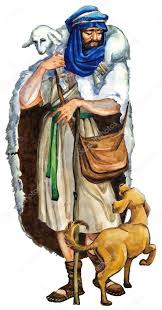

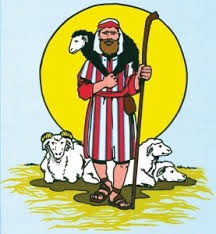





 themarhaminstitute