Now that you’ve read what I had to write on ablution and adab, it’s now time to head to your mat for the taHajjud of our lives. 👍🏿 If you are like me, you have one of those rug mats, that have the Kaaba etched somewhere in the middle, some geometric shapes here and there, just a good ol’ prayer mat that you’ve probably been using for years.
The first issue I have had with this kind of mat is the obvious distraction these drawings pose, even when one is praying at the haram, one’s eyes aren’t glued to the haram, now, are they? We are already facing it, over a billion of us every day, to have it staring back at one when one is trying to contemplate on the verses of the Quran being recited then becomes a struggle. I appreciate the ‘facing kaaba’ pun though. 🤦🏿♂️🙄
And there’s also the fact that Rorschach-centric images appear when one stares at these beautiful rugs long enough, so that one now has to try to blink it away, or see to it that you smoothen the hair rugs when next you go on sujud so that the image is erased, only to rise up, and there’s another image. there. staring. at. you. 🤦🏿♂️ Allah already said shayton is an obvious enemy, and he is into repetitive schemes. We seek refuge in Allah from the accursed one, and his emissaries. Amin. 🤲🏿
The other issue I have with a rug mat is the fact that even when I close my eyes in sujud, by the time I sit, open my eyes, blink once or twice, particles somehow finds their way into my eyes. 🤦🏿♂️ Perhaps, my eyelash picks it up, perhaps, it’s my breath that situates them perfectly on my lash, and if this happens on my first sujud of that prayer, you bet the distraction will last the entire solat. As if particles in the eyes are not bad enough, whenever for some reason I do not bring my rug on a journey, and I have to sujud on an hotel rug, you know, those ones that were chosen specifically for its longevity quality, it’s like I’m peeling my forehead; and there’s the fact that the chemicals used in washing those rugs are strong (for obvious reasons), so strong that on several occasions, I believe, inhaling them from the rug has gotten me sick. True story. Sniffling, migraines, fatigue et al.
Anyway, let me quit rambling about my dislike for the rug mat. 🙄 As for the solution that I found, it’s the yoga mat. With their glossy finish, particles can’t linger between hairs. Oh, did I mention that these geometric filled rugs are also too short for me? Being 6’2 and all, I either have to scut back if I want to sujud on the rug, or if I don’t scut, I’m going to be sujud-ing on perhaps, the harsh-particles-filled rug or floor beneath it. The yoga mats are over 5 feet long and 2 feet wide, and my head lands comfortably on it every time. 🥰 And did I mention that there are no distractions on it? Plain, not one drawing whatsoever. I know Walmart now sells some with some mandala-centric designs, I went for the plain ones, a black one too. 😁
I take it on journeys, I even use it at gas stations or rest areas when we are on very long journeys across America, it’s a delight. I make sure to fold it half on half first, then the next half on half, until it forms a perfect rectangle; that way, the bit on the floor doesn’t interact with the part I will be standing on to pray. And when I put it on the floor at gas stations and the likes, I make sure to use wipes to wipe clean the part that was on the floor.
And of course, I’m not inhaling chemicals or dusts from the yoga mat, it’s smooth all the way. Another unintended benefit I found is that whenever I do a short sujud, and I need my head to go farther so that my back is straight, and I’m unable to move my legs back, because it’s close to the wall or something, I can just slide my head on it, whenever I’m wearing my hat, that is; something that may totally bruise my forehead if I tried on the rug. 🙄
So, get your self a long mandala-less yoga mat, preferably black, and make sure to fold appropriately if you have to fold up after use. Maybe you can buy a couple; one in the car, one at home, one at work etc so you won’t have to be carrying the same one everywhere like me. You’ll get to see my mat below, have been using it for years now. 🥰🥰🥰
The next bit in this piece is about where you’ll be placing the Quran when you now have the mat. This, uff, definitely slowed down my resolve to start taHajjud. Being someone that wears glasses, if I have to also hold a Quran (which cannot be small, because, astigmatism 10.0), having to ruku and sujud becomes a struggle, and so is standing back up; now, I have to pick up my glasses, the Quran, wear my glasses, raise my hands to say the takbiratul ihram, after which I’d start finding the page I was 🤦🏿♂️ that definitely made it really hard.
So I got this lectern, I have those very big Quran, with big fonts, and so I was able to place my Quran on it, and even my glasses if I don’t want to place it on the mat whenever I’m going for my ruku or sujud. The tallest lectern I could find was 5 feet long, and so I had to build a feet high contraption for it because bending my neck that low was starting to really hurt my neck, and frustrating my taHajjud efforts. You’ll see a picture of the 9.75 inches contraption carrying the lectern below.
And that got me thinking about tripod stands for iPads, because, as you will see in the subsequent piece, I had moved on to reading my Quran from my iPad at this time. The tripod I got was so tall, you’ll see how it dwarfs the lectern I’d previously gotten for my physical Quran below. Except you are like 50 feet tall or something, iPad with a tripod will be perfect for you. It can come as close to my eyes as I wish it to with its flexible neck that holds the iPad. Its so portable, I can literally sling it behind me anywhere I go. Bliss, I tell you, these gadgets changed the night for me, and I pray they do the same for you too. Amin. 🤲🏿
And just before I end this, let me share a bonus picture of that time before I got the tripod, and I was on a journey, and could carry my lectern with me that I had to improvise for those that might find themselves in the same shoe some day:
That’s the hotel’s balcony’s chair on the table y’all. The struggle is real. haha!03.21.22 at a hotel in West Virginia.
Now that we know what to do to wake, and stay awake, the next thing is to proceed towards doing the ablution, right? Ablution in the West is one that over the decade has got Muslims trying all sorts of body contortions to achieve, and I can sadly add myself to that mix, until recently.
Letting an ample amount of water go to waste every time I have to do ablution, because even when you hold water with one palm, and use the other to close the tap, water still finds its way to get wasted, and the reality of the water that gets wasted when one washes the legs, even if one lets it drip. Oh, and the raising of one’s feet onto sinks across airports, kitchens and baths, because one doesn’t have a plastic kettle that can hold water, and yes, water bottles can hold water too, but it really isn’t the best replacement for the good old plastic kettles.
Anyway, after almost a decade of thinking there has to be a place where one can get plastic kettles in the west as it’s gotten in Africa, and the Middle East, I was able to discover an easy fix; the Gardening Section of any of the chain stores, really – Walmart, Home Depot, and the likes. In fact, I got these at Home Depot:
But what if I said that before you do ablution, you should brush your mouth, or even have a bath, and do as much cleanliness as is needed before you even do ablution, wouldn’t that be something?
And you might be asking why do that, as for the brushing, you understand that, because as you’ve read in one hadith or the other, the prophet pbuh always brushes his teeth when he woke up for taHajjud, and had even said that if it weren’t for the difficulty it will cause for the Muslims, he would have required it before every solat. You know all of that.
This then takes us to another word you might have been hearing in passing too, adab. Now, it’s just translated to etiquette, good manners, morals, and the likes, and so that one has a full grasp of the word, I will be going into its Classical Arabic meaning. For it is only when one understands this word at a deeper level, that one is able to make decisions that will follow suit, depending on one’s circumstances, environment, wherewithal and the likes. InshaAllah.
So, classically, adab is said of inviting someone to a banquet, or a meal at one’s place. It has a before, during and after nuance. Which is, how and what one does before inviting someone over, what one does in such person’s presence, and what one does after. We’ll go through some instances so as to have a working grasp of the word.
So, for instance, for whatever reason, Barak Hussein Obama, the 44th President of the United States, decides to move to your neighborhood, and you hear that he is honoring every home invites (selectively), and so you want to go ahead and invite him to your home for a meal, with you, and your family.
You know there ain’t no way your house not in proper order, you know; the best air freshener be popping, food made with perfected recipes be sending aromas every which where, and the list things that will be on flick goes on and on. And when you are out to his house, you’d make sure that you’ve had your bath, brushed your teeth, worn your best cloths, scenting your best perfume, and carrying a batch of cookies that your great grandma swears by is the best cookie in the world, mmmm, mmm, mm.
Only then, do you proceed to 44’s newly minted home down the street to invite him over. Now, in his presence, you have a copy of his book, actually, now that we are here, let’s switch this person to Nelson Rolihlahla Mandela; so, you have a copy of his autobiography, that was written almost entirely in Xhosa, you could have brought on of the others that has been translated to English, but you really want him to love you, you want to show your love, you want him to know how much you’ve dedicated to this love you have for him, so, you bring along his Xhosa autobiography, just so that you can impress him, before asking him to autograph it.
You stand before him, after exchanging pleasantries, you start reading, in Xhosa, which you took time to not only understand, but now you are able to read fluently. So, you read paragraphs after paragraphs in Xhosa, he is super impressed, that an American learns Xhosa just because of him, he bumps you up the list of houses to honor their invitation. You beam, as you read, you are cognizant of the fact that every word is his word, he wrote the book, so it’s like he is talking; so you stand attention, like a soldier at a military parade that stands still as long as the General requires them to, whether in blistering sun, or chilling cold. You stand still, you read his words, you hear his words, it moves you, he loves you, he promises you that after having had the meal in your home, he will also host you in his home, you are elated, you have a friend in this new neighbor of yours. 🥰
The things that you learned during the meet sticks with you, they move you, you tell everyone about the visit, what you’ve learned, you try to convince them it’s the best experience ever, that they should definitely go visit General Oba-Mandela, that they should learn Xhosa, that they should read this particular book to him, that he loves it, and you go on and on so that the people know you as the guy in love with General Obamandela, and his book.
I guess you are having an idea of what I’m getting at with this allegorical expression of ‘adab’ as it relates to perhaps not just the night prayer, but each and every prayer we stand for. It is this manner, this etiquette, that was in full force before, during, and after meeting that’s called adab. And there are adabs one learns for different things, but we’ll just be focusing on that of the night prayer here.
Now, imagine the sort of adab one has to have with the one that created the General, Obama, and Mandela. Like, and not just them, but also 7 billion plus other humans, and not just that, the trillions and trillions of other creations that exists now, before, and will ever exist. 🤯 This planet that holds us, the other planets we dream to visit, the sun, the stars, the skies, the universes, every. thing. that. exists. 😳🤔
No pressure, no pressure at all. And just to reduce the pressure, I’ll state this, I’m able to brush my teeth before the ablution, easy, that will be my brushing for the day 🤦🏿♂️😁, it’s the bathing I haven’t gotten a hang of, off and on, but I won’t despair, keep brushing, when brushing before ablution becomes a habit, it will be easy to add another thing to it. Perfume is also easy, I have an oil based perfume ready to roll on my nice cloths every now and then. And at times that I did have my bath before taHajjud, I add armpit roll-on to the mix, cream my body, beards and head, and comb them too. Before I don my nice and best cloths that I have designated for the night prayer.
So that before you even start your night prayer, even you are pleased, and so is Allah, InshaAllah, and the angels too. It’s you, alone, with your Maker, in your best cloths, best perfume, clean body, and ready to recite the words of the Greatest.
There’s also the adab of the recitation which we will get into when we get to the part on the Quran. But as you recite, you are into it, you aren’t distracted, you aren’t looking here and there, you are still, like a soldier at a military parade, you are at attention, waiting for the next command, it’s an expression of love, enamored, hoping that all of these makes the Creator pleased with you. The night is over, you learned something new, you put it to practice, Allah sees that, Allah sees that your adab for Gẹs words goes beyond the night, but it extends into every facet of your life, you do that every night and day, so that you become a living expression of the Quran, Allah loves you, even now, every thing that exists is an expression of that love, every leaf, every breath, the least of our appreciation of Gẹs love for us is to strive – as much as we are able to, preferably with practices we are able to sustain – towards knowing Gẹs words, and letting them fill one up, let them overwhelm one, letting them be one.
I should state that other than the ablution mentioned above, nothing that I have mentioned in this piece is compulsory before you start enjoying your taHajjud, but I find that perhaps, doing them, the joy that I feel, has somehow made it easy for me to wake up every night for taHajjud, hence why it’s being mentioned here. Some of them are things that I do now, and some, I’m still aspiring to do, hopefully, they give you even more joy than I feel doing them. Amin. 🤲🏿
So, I have been doing a two-hour tahajjud for 5 months now, and I thought sharing what has made it easy for me is an opportunity to do more ibadah, and of course, when you share this piece with your family and friends, you too would be getting as much reward as I would. InshaAllah! 👊🏿
Now, let’s get to it. If you think that this may not be able to help you, that there’s no way you’d be committed to a two-hour taHajjud, you are me my entire 34 years on this planet. Like, I’d read everything I could lay my hands on about the virtues of taHajjud, and yet, I couldn’t sustain it. At some point, I decided to start small, you know, and be consistent at it, as the prophet pbuh would have wanted me to, it didn’t work.
I came up with one rationale or the other, I still live with my parents, InshaAllah, when I am alone, easy, I would be able to do it without waking anyone up, you know. Got to the university, alone, it didn’t work. I have so much books to read, when I’m done studying, I would definitely be able to. Finished, got married, had kid number 1, number 2 and 3, of course, after every child, ain’t no way this guy is waking up for taHajjud, one slept when they are asleep or else! 🙄
And now, I figured, there will never be a perfect time to start taHajjud, if I want to do it, I will just have to do it. So, here, in this piece, and in subsequent pieces on this subject, I’ll be sharing the things I have put in place that has made me able to sustain it for 5 months, and InshaAllah continue forever. Amin. 🤲🏿 I figured with Ramadan in less than a month, and the whole covid scare, this might be a good time for people to learn what they can put in place at their homes that will make them able to do taHajjud by themselves without having to expose themselves or others to the virus. 🤞🏿
Instead of just rushing in, I decided to do what I normally do when I have to solve a problem, or figure out a task; I decided to break down the taHajjud process into parts, and see what I can put into place now, something small, that will gear me into it.
First thing I looked into was how long the Quran is, 604 pages, so that’s basically , 600 pages. Cool. Then I figured out how long it takes me to finish a page of the Quran, 3 minutes, you should figure out how long it will it take you too; you know what, I’ll help with that, here, here’s a page of the Quran, time your self, and see what you come up with. Below is Q28 Vs 60 to 70:
Don’t worry if it takes you longer, some pages takes longer too, especially when one is standing, in the MIDDLE of the night. But, it’s just a number we can work with. The next thing I had to figure out was that I needed a lectern that I can place the Quran on when I recite it, because I wear glasses, going to ruku or sujud with the Quran in my hands, and trying to remove my glasses will be so much hassle. So, I got a lectern. The rug I use to pray was too small, being 6’2, I would have to be stepping away from it if I wanted to sujud, so I got a long yoga mat, and of course, it had no distracting geometric shapes that the usual musola does have on it. 😉 Ha, ablution, ablution in the west, I figured out that I could go to the gardening section of Walmart, Home Depot and the likes to get a kettle like we use in Africa and the Middle East (it took almost a decade to figure out that I could do this btw, for those years, I would have to do ablutions in the bathtub or sinks 🤦🏿♂️). Had to figure out how to wake up, and stay awake, and the list goes on; and these, ladies and gentlemen, are the topics we’ll be discussing in this piece, and in subsequent works InshaAllah.
So, don’t worry, don’t start anything yet, all through the time I was getting stuff together, I wasn’t testing the waters either, because I knew that this time, the moment I start, I MUST not stop. So, take your time, read this work, get all what I advise you to get, and when all is ready, you’ll be ready, trust me, you will. Allah eases our affairs, and since getting those things is a show of conviction, Allah will ease the execution. InshaAllah! 🤲🏿
What I have come to realize is that just as with everything one is trying to learn, it’s hard at first, but if one keeps at it, it becomes so easy, it becomes one’s second nature, so that one can be doing it, and not even know that one is doing it, it’ll take no effort at all.
You don’t believe me? Think driving! Ha! Do you remember how hard driving was at first? To turn the steering, in fact, not turning the steering was a problem, and then you had to pull the gears, push the brakes, accelerators in a measured manner, oh, the hassle. One has to be one with the car to make it super fluid, and now, when you drive from place A to place G, you startle your self from a thought at place D, and you don’t know how you got there. Place B to D was a blur. You drove, you stopped at the lights and all, and yet, nothing; that’s the benefit of keeping at it, and not giving up, one becomes a master at it. 💪🏿
This, has science to it. Science! 🔊
The short of it is that the brain weighs less than two percent of the body, but uses more than twenty percent of the body’s energy because of the many many many stuff it has to do. So what it does is that it wraps what they call myelin around a memory that one does every time because it believes we need it, so that the next time the body wants to access that memory, it won’t have to expend as much energy. Say, for instance, it uses 10$ worth of energy when you drive, and every time you drive, it’s spending 10$, but wha t the brain has figured out is that if it wraps myelin around that memory, it can be spending less than 1$ whenever you want to access the memory. And now, it can use the remaining 9$ to work on other memory that you access often. 🧐
And that’s the trick with ‘practice makes perfect’, the myelin is like the rubber material around one’s phone charger or any coated wire, that makes sure that the wire in it conducts properly. The stronger the myelin, the stronger the conduction, and in our case, the more we do a task, the more myelin will be wrapped around it, and the less we do a task, the brain starts cutting back on the myelin supply to that memory, and repurposes it to some other task. Oh, boy, when I realized this, it changed everything. Whenever I felt lazy, and thought to reduce my recitation one night, I’d remember that the memo I will be sending to my brain won’t be a good one, so even if I’m not going to increase it, I’m definitely not going to reduce it, until a time that the two hours becomes so easy, it ends quicker than it used to, and that’s beginning to happen with my taHajjud. AlhamdulliLlah. If you want to listen more science 🔊 of this, you can watch this 👉🏿 https://bit.ly/3pF5anJ
You see, the ‘two-hour’ title came to me at the start because I figured if I take 3 minutes per page, and I read 20 pages a night, that’s an hour, but in practice, if you add the ablution, ruku and sujud and all, I set out 2 hour for it. But now, I’m able to finish in an hour 30 minutes, and sometimes, an hour 45 minutes, not that I’m timing myself, it’s just that the task is getting into its automaticity, which is where we want to get to. It’s like the piano virtuoso, that can play with his eyes closed, he got there by diligently practicing every single day. And now, he plays perfectly, faster, and with much dexterity and style. That’s what we want to get to, InshaAllah. May Allah make it easy for us, and be pleased with our endeavors. Amin. 🤲🏿
The moment I realized that it’ll take an hour to finish 20 pages (which is basically a page short of a juz), that was the moment ease came into the equation. I knew that the time I spend ‘standing in line’ in my daily life if you put together can basically rival one hour, and isn’t Allah more worthy of my hour stand than any other thing I could be dabbling into? 🤔
Anyway, the first task I want us to take a look at is Waking Up, and staying Awake.
First thing I did was divide the night into parts, this can vary from time to time and place to place, I was just trying to see what time to wake up if I need to wake up 2 hours before fajr. I earmarked 8 hours before fajr time, and that helped me with the time I have to go to bed. Don’t worry about falling asleep, if you stick to the routine, you’ll fall asleep as soon as you see a bed. 😂 True story.
Let’s use my initial timing 5 months ago because things have changed now, and I will definitely be getting less sleep this coming ramadan since ishai will be around 9pm, and fajr will be around 530am, if I want to earmark 3 hours for my goal, the math is scary; no pressure though, we’ll deal with it when we get there. Oh, and my goal is to do 40 pages every night so that I can finish the Quran twice this Ramadan. InshaAllah! 🤲🏿
Fajr was around 6 am, and that meant that if I go to bed at 10pm, I would still be able to get 6 hours of sleep before waking up for taHajjud, so I decided to go to bed at 9pm, that way, I’m able to get 7 good hours of sleep. As for actually waking up, I’d set my alarm to ring every 5 minutes from 3:30am to 4am, and I’d try as much as possible to wake on the first ring.
Now that I’m awake, the next task begins, because immediately, the body wants to go back to sleep. When I first started, I’d drink a bottle of an energy drink that has vitamin B12 in it to keep me wide awake. But I soon noticed that I will have to pee, a lot, during the course of the night, and so I reduced it to a cup, and eventually, found that a quarter cup of the energy drink was enough to keep me awake, and so I’m able to use that same bottle for 8 days, and if I had written this piece two months ago which was when I decided to document this, I would have told you to start with a quarter cup of an energy drink that has vitamin B12 in it, and see what it does for you, but Allah, in Gẹs infinite mercies caused me to keep experimenting, so that now, I don’t drink the energy drink anymore. 🕺🏿
I decided to isolate the vitamin I wanted from the drink, vitamin B12, and so I’d take a supplement, which is a very small tablet, and that would do the trick, but I noticed that I’d get headaches and muscle cramps during the day, especially on days that I’m fasting, and so I found out that those are some of its side effects, since they use potassium to carry out their function, they can use up one’s potassium reserve very quickly, but instead of taking two pills (vitamin B12 and Potassium supplements), I figured I’d look into the multivitamin aisle and see if I can get a pill that has both. Oh well, I found that they came with not just B12 and potassium but with a lot more vitamins that are good for the body, and that’s how I joined the daily multivitamin band. 🤦🏿♂️
Before I go into the one I eventually started taking, let me say a thing or two about vitamin B12, a vitamin you should totally look up after reading this if you are still curious about it:
Vitamin B12 boosts your energy, improves memory, and helps prevent heart diseases amongst a plethora of other benefits it has. It’s the only vitamin that can’t be found in fruits and vegetables (vegans have to take it in supplement form), other than some very small amount in ginger and garlic (science 🔊); humans primarily get it from eating meat, and the animals get it from the soil while eating grass. And these days, because pesticides, antibiotics and chlorine kill the bacteria that produce this vitamin 🙄, even farm animals have to be given vitamin B12 supplements; you know, civilization and all. 🤦🏿♂️
Anyway, research has found that those that eat meat and those that don’t eat meat lack the requisite amount of vitamin B12 needed for their daily functions anyway, hence, why I sought the energy drinks initially, and that led me to now taking the daily multivitamin I mentioned above. The best way for humans to get enough vitamin B12 is simply to take supplements because as we see, one doesn’t get enough from meat (the animals are ‘middlemen’ anyway 🙄), and now, they are also being given B12 supplements too – so, but if one starts taking vitamin B12 supplement, one knows for sure, that they are getting the optimum amount of the energy boosting supplement. 👍🏿 Good deal!
So, to the multivitamin I settled on, after looking at a couple, and since it does the trick, I ain’t looking elsewhere. I was able to lay my hands on Centrum Silver (men 50+) Multivitamin supplement, even though I’m 34, the fact that it has other vitamins plus a huge dose of B12 has really changed my taHajjud effort. AlhamdulliLlah. 😁 I mean, check this out, Vitamin A 1,050 mcg (29% as Beta-Carotene) 117%, Vitamin B6 6 mg 353%, Vitamin B12 100 mcg 4,167%, Vitamin C 120 mg 133%, Vitamin D3 25 mcg (1,000 IU) 125%, Vitamin E 27 ma 180%, Vitamin K 60 mcg 50% to mention a few of its content. There’s no way I would have gotten all of these without taking the multivitamin.
And the way I use it is to take one tablet with sahur, of course, after I must have done taHajjud, and I find that I’m able to wake up at 1.30am the next morning easily, and stay awake too, without needing to pee while I’m doing the taHajjud, which lasts one to two hours. It’s really amazing. 👍🏿 I know, that means I’m done at about 3.30am ish, right? I use what’s left for work; I’m basically prepping my brain up for Ramadan that I will need 3 hours for my goal instead of 2 hours that I need now. 💪🏿😁
Did I mention that the energy drink I used to drink for taHajjud has 490% vitamin B12 in it, while the centrum for men 50+ has 4,167%? 😲 Told you it changed everything. That’s more than times 8 of what I used to take and I only used to take a quarter cup after I wake up; just before taHajjud, and it kept me awake, but it’s just the pee issue, but what it led me to was even better, way better. Y’all think this pee issue isn’t an issue uhn?
Once, I had to pray my one rakah Witri before Shafi’, didn’t plan it to go that way, but I had to pee so bad, I finished that rakah, my first rakah of taHajjud that night, and went to pee. 🤦🏿♂️ The struggle is REAL. 😅 By the way, I only pray 3 rakah in my taHajjud, I find that I’m able to recite more of Allah’s words that way, instead of doing 5, 7, or 11 rakah that I would have to ruku and sujud in which will inevitably eat into the time I would have been using to recite. Also, at the end of every 2 rakah will be an opportunity for shayton to start whispering not to exert myself anymore and all. So, I just push my self to withstand the stand, aren’t we seekers of siratal mustaqim anyway, mustaqim being from qawam, qawam which means upright, to stand upright. 😁 See what I did there? 🤦🏿♂️
Anyway, back to the multivitamin, the women’s version of the multivitamin has 2,083% of vitamin B12, and it has Iron too, while the men’s doesn’t have Iron, you know, women need their Iron. Women know what I’m talking about. 👍🏿 I thank Allah for guiding me to it, and thus, the responsibility I have to share my findings with you guys. This multivitamin, by Allah’s will, that I now take has enabled me, who 4 months ago wasn’t a taHajjud-ian, into not missing a night at all. AlhamdulliLlah. And incidentally, I’ve been able to add Fasting to the mix, because I have to eat to use the multivitamin, so breakfast becomes sahur, and I’m able to go all day till iftar without eating, so I stumbled upon fasting along the way (technically, I have always fasted, but it definitely reinforced it). I don’t fast on Fridays sometimes, because it’s the eid of the week, right? But sometimes, I add it anyway. But I definitely don’t fast weekends so that I can eat with the family during the day and all. AlhamdulliLlah.
Supplement Facts:
Now, if somehow, you aren’t able to get a daily multivitamin (which I recommend), or an energy drink with ample Vitamin B12 in it, or you just don’t want to take either, another exercise I find that wakes me up is doing 10 to 15 minutes of chores around the house, ironing cloths for work, washing cloths, folding cloths, or just workouts, I find that ironing cloths will wake anyone up, because you don’t want to burn yourself. Hehe!
All that written, it’s a battle, like real battle, don’t let the negative whispers in your head win. Allah already recorded that one Shayton’s defense against us on the day of judgement will be to say that the only thing he did was advise, he didn’t make anyone do anything. 🤦🏿♂️ Dude be lying! See it as a challenge, every night will have its own challenges. Know that every night you do it, the myelin in your brain will grow stronger, and the task will become easier and easier. Like driving a car, playing a piano, riding a horse, doing some pull-ups – those stuffs are HARD at first, impossible in fact, but if one keeps at it, it’ll be like it was never difficult. 💪🏿👍🏿👊🏿
May Allah ease your affairs, and make this journey you are about to embark on rewarding. Amin. 🤲🏿 This piece continues with ‘ablution and adab’. 👍🏿
This is a continuation of cliteracy in islam, and here, and in subsequent posts, InshaAllah, the aim is to try to classically understand the words that have been translated to sex either directly or indirectly in the Quran. Hopefully, in doing so, we are able to see how Cliteracy is a part and parcel of sex in Islam.
We will start this exercise by taking a look at Q2 V187, where five different words were used to refer to sex. If they weren’t meant to convey different meanings, Allah would have used the same word five times, but just so the verse is clear, Gẹ precisely chose to use those words. Interestingly, Allah ends the verse by saying that Gẹ makes Gẹs verses ‘clear’ so that we can attain piety.
The words in order of appearance are rafath, libas, bashir, tubashir, and taqrabu. And as we will see, the order is important too. Q2 V187 provides thus:
“It has been made permissible for you the night preceding fasting to go to (rafath) your wives [for sexual relations]. They are clothing (libas) for you and you are clothing (libas) for them. Allah knows that you used to deceive yourselves, so He accepted your repentance and forgave you. So now, have relations (bashir) with them and seek that which Allah has decreed for you. And eat and drink until the white thread of dawn becomes distinct to you from the black thread [of night]. Then complete the fast until the sunset. And do not have relations (tubashir) with them as long as you are staying for worship in the mosques. These are the limits [set by] Allah, so do not approach (taqrabu) them. Thus does Allah make clear His ordinances to the people that they may become righteous.”
I think Allah, here, is using Ramadan, being the training camp that it is, to teach every Muslim couple the ideal progression of sex, and what it entails, and hopefully, when I’m done with this exercise, it will be an enlightening one.
Amidst the virtues and values Allah wants us to take away from Ramadan is how to have sex the proper way; if not, it will not be so woven with the verses of Ramadan, and deliberated upon at such length. I mean, if the reason we are created is to worship Allah, and sex is the precursor to getting more people on earth to worship Allah, it only makes sense that sex, the proper way of attempting it, is looked into.
The least acknowledgement we can pay to these verses of the Quran is not to ignore them, but to try to understand the words Allah used to communicate these ideas to us.
The first word we will be trying to understand is Rafath. It appeared only twice in the Quran, first, here in Q2 V187, and subsequently, in Q2 V197, exactly ten verses after. The root alphabets of the word are ra, fa and tha.
And despite the popular understanding of this word to mean sex; it is classically said to be the saying plainly of what should be indicated allusively, with respect to coition. Dirty talks, enticing conversation, or any other act or speech that is meant to in a way, prep the other in a coitus and amatory way. Basically, talks and actions that alludes to sex.
And so rafath actually means to utter or act in a way that would have otherwise been regarded as foul, unseemly, immodest, lewd, obscene, indecent in and around sex, and in expectation of sex. This can be in form of words or actions. Whether by the tongue (words), eyes (giving sexual signals), hands (making sexual gestures), lips (moving it in a suggestive way), the entire body (contorting it in a way that suggests coitus, or to dance or move in such a manner), and every other gesture or words that though doesn’t involve the act of sex itself, is enough to make one or both of the parties engorged or tumescent.
The next words that we will be discussing in this verse are libas, bashir, tubashir – which is a variant of bashir – and eventually taqrabu; and as much as I am inclined towards discussing libas and bashir now, I think discussing taqrabu now will shed light on not just this verse, but a host of other verses in the Quran.
You see, having discussed taqrabu in details here at length, wherein I looked into what Qarib (taqrabu) means and entails, which I will highly recommend you read now, or after finishing this piece. I won’t be going in-depth into qarib here as I did there so as not to make this piece super cumbersome and lengthy. It is important to note that Allah ended this verse by referring to rafath and libas, one can even argue that bashir is included, to be within the scope of taqrabu.
By Allah saying ‘…these are the limits set by Allah, so do not approach them…’, Gẹ is essentially saying that to do what was stated above – rafath, libas, and bashir, that is – during the times they were stated not to be done, and if one does, one will be approaching (taqrabu) the limits set by Allah.
It is with this understanding that we’ll look into Q17 V32, wherein Allah says wa la taqrabu zina, which simply means do not go near zina; by Allah referring to rafath in Q2 V187 as a means of going near (taqrabu), Allah makes it easier by being more specific about one of the acts that constitutes taqrabu, and therefore one can be deliberate in one’s continuous struggle to avoid or go near zina as it relates to Q17 V32.
Another verse that I find that this verse helps clarify is Q2 V222, wherein Allah – when talking about how to behave or not to behave sexually when it comes to a spouse on her period – says wa la taqrabuHunna hatta yatHurna, which basically means do not taqrabu (approach or go near) your spouse until they’ve purified themselves, which would be after their period is over.
What this then means is that the nearness being referred to in Q2 V222 doesn’t have to do with physical nearness like being in the presence of, holding, talking, seeing one’s spouse etc; but what the taqrabu here means is to not do rafath and libas with them, because then, we may fall into doing bashir with them while they are on their period, bashir here means sexual intercourse.
Which as we’ve seen with Q17 V32, wherein Allah forbids going near Zina, because Gẹ knows that the only way to commit the act is by first going near it. And so in Q2 V222, Allah uses the same logic, that we should not go near – rafath and libas – our spouses while they are on their period because then, having sexual intercourse (bashir) with them while they are on their period will be impossible, or at least almost impossible.
That way, spouses are able to avoid the frustrations and resentment that may occur in instances where rafath and libas is done, and sexual intercourse doesn’t follow because of course she is on her period.
And so in Q2 V197, the second, and last place rafath was mentioned in the Quran, wherein Allah talks about not doing rafath during hajj, it is based on the understanding that the sexual experience starts with rafath. The leading on, the enticement, the excitement, and by Allah saying no to rafath there, Gẹ is saying no to all that will come as a result of it, which includes libas and bashir et al.
It is fascinating to me that Allah ends V187 of Q2 appropriately with these words – Allah makes clear Gẹs verses to the people that they may become righteous. Allahu Akbar! Indeed, Gẹ makes them clear.
In essence, rafath is part of foreplay. So when Allah said ‘it has been made permissible for you the night preceding fasting to rafath with your spouse…’, Gẹ is in a way mandating foreplay, which as we’ve seen can include words, gestures and every other acts that is geared towards sexual intercourse with one’s spouse. And that also means that one should stay away from Rafath in all its suggestive manifestations while one is fasting, but one can engage in them with one’s spouse from the time one breaks one’s fast till it’s time to start the next day’s.
As we will see, while rafath is non-physical in its foreplay nature, libas is physical in all of its nature; and these two acts are part of what one should not come close to (taqrabu) whether with sex with one’s spouse when they aren’t on their period (during fasting), or when they are on their period (fasting or not), or when it comes to zina.
It is important to note that the role that foreplay plays in cliteracy is a primary one, and so seeing that Allah ordered the actions in a way that follows this progression is reassuring, fulfilling and informative to say the least.
In the next piece inshaAllah, we will be addressing libas, pun intended. Haha! I will explain the pun in ‘addressing libas’ in the next piece inshaAllah.
Sex has existed since the beginning of mankind. It is through it that we derive not just pleasure, but reproduction. It is so much of a primary exercise that without it, there would be an end to life itself. Imagine what will happen to the continuity of life if every one stops having sex; well, maybe artificial insemination can replace sex in that respect. Maybe!
So what is Sex in fact? Is sex in Islam just about reproduction, or does it include pleasure, and if it includes pleasure what are the ways we can derive this pleasure without going out of the teachings of Islam?
It is sad that when we talk about Sex in this age of ours, we only think of penetration. We don’t associate or assume that the Clitoris is a part and parcel of the female sex organ. While in fact, if Sex is to give pleasure to both parties, which it is, the Clitoris has to be fairly and justly given its due.
Cliteracy, therefore, is about enlightening people on the importance of the clitoris with respect to sex, and pleasure generally. Cliteracy has to be taught and imbibed. Things have to change. It is alarming that one out of every three women do not, and in most cases cannot reach orgasm through penetration alone. 80% of women have also been found to have difficulty reaching orgasm through penetration alone. Clitoral stimulation during intercourse can help, except if the person has the medical condition called Female Sexual Dysfunction (FSD).
So where does this take us? If the pleasure of both parties in a sexual intercourse is primary, then we have to give the clitoris the right it deserves. We must give it as much pleasure as the phallus gets. We must be Just! We must stand firmly for justice every time as the Quran stated in Suratul Nisa verse 135 that ‘oh you who believe, stand firmly for justice…’
First of all, let’s look into sex in Islam, and the good associated with doing it right and well. In doing this, we will have to explore the primary sources of Islamic Law, which are the Quran, and the Sunnah (Hadith). Let’s start with what the Quran says about Sex.
Quran 2 verse 187 states that ‘it has been made permissible for you the night preceding fasting to go to your wives [for sexual relations]’. Quran 2 verse 222 states that “and they ask you about menstruation. Say, ‘It is harm, so keep away from wives during menstruation. And do not approach them until they are pure. And when they have purified themselves, then come to them from where Allah has ordained for you. Indeed, Allah loves those who are constantly repentant and loves those who purify themselves.’”
Quran 2 verse 223 was more graphic about it when it stated that ‘your wives are a tilth for you, so go to your tilth (have sexual relations with your wives in any manner as long as it is in the vagina and not in the anus), when or how you will, and send (good deeds, or ask Allah to bestow upon you pious offspring) for your own selves beforehand. And fear Allah, and know that you are to meet Him (in the Hereafter), and give good tidings to the believers’.
The Prophet once said that ‘Allah is not shy to tell you the truth: do not have intercourse with your wives in the anus’. Narrated by Ahmad, 5/213
From the three verses above, we learned that Sex is permissible for us with our spouses. We also learned that there are times we must not have sex, and we also learned about how not to have sex. That said, let’s look into what the Hadith has to say about Sex.
Hudhaifa and Abu Shaiba reported Allah’s Messenger (SAW) as saying: Every act of goodness is Sadaqa (Charity). – Muslim 2197.
Abu Dharr reported: some of the people from among the Companions of the Prophet of Allah (SAW) said to him: Messenger of Allah, the rich have taken away all the reward. They observe prayer as we do; they keep the fasts as we keep, and they give Sadaqa out of their surplus riches. Upon this he (the Prophet) said: Has Allah not prescribed for you (a course) by following which you can (also) do sadaqa? In every declaration of the glorification of Allah (i. e. saying Subhan Allah) there is a Sadaqa, and every Takbir (i. e. saying Allahu-Akbar) is a sadaqa, and every praise of His (saying al-Hamdu Lillah) is a Sadaqa and every declaration that He is One (La illha ill-Allah) is a sadaqa, and enjoining of good is a sadaqa, and forbidding of that which is evil is a Sadaqa, and in man’s sexual Intercourse (with his wife), there is a Sadaqa. They (the Companions) said: Messenger of Allah, is there reward for him who satisfies his sexual passion among us? He said: Tell me, if he were to devote it to something forbidden, would it not be a sin on his part? Similarly, if he were to devote it to something lawful, he should have a reward. (Muslim 2198)
In another hadith, Umar Ibn Al-Khattab (May Allah be pleased with him) came one day to the Prophet and said, “O Messenger of Allah, I am ruined!” “What has ruined you?” asked the Prophet. He replied, “Last night I turned my wife over,” meaning that he had had vaginal intercourse with her from the back. The Prophet (peace and blessings be upon him) did not say anything to him until the verse cited above was revealed. Then he told him, “[Make love with your wife] from the front or the back, but avoid the anus and intercourse during menstruation.” (Reported by Ahmad and At-Tirmidhi)
From the three Hadith above, we learned that Sex is permissible for us with our spouses. We also learned that having lawful sexual intercourse can be an act of worship, and we also learned about how not to have sex.
If Sex is permissible in Islam, then why is the Clitoris ignored? Is stimulating the clitoris not part of sex? You see, over the years, women have been known to be shy about these things. They would rather not climax than tell their spouses how they want it. And some women just don’t know their body well, talkless of educating their spouses. Thus, men, and women alike, have to be educated in the affairs of cliteracy. Men especially, have to know that Sex is not about them alone. It involves more than just them, and it should be so treated.
Having known the position of Sex in Islam, it beholds that we learn how it is done. Sex in Islam is not just for procreation, it is also a means of pleasure for both parties as portrayed above. And the better the parties feel, the more the rewards that will be recorded for them, just like every other good deeds.
For instance, Allah (SWT) says “whoever brings a good deed shall have ten times the like thereof” (Surah al-Anaam: 160) and the Prophet (SAW) once said ‘Every good deed that a human performs is multiplied ten times up to seven hundred’. (Bukhari and Muslim)
So for every iota of sexual pleasure each party endeavors to lawfully give the other, the more records of good deeds the person will have. How much more if one is able to get their spouse to climax, every time? The reward will be endless.
This takes us straight to the cliteracy question of this piece. So if for instance, a husband only cares about satisfying himself and not his wife, he most likely won’t get enough good deeds recorded for him. But if he is able to understand the sexual urge of his spouse, and satisfies it, he will definitely get huge rewards. So this is not just about pleasure, it’s about worship too.
The clitoris is major to climax, as I have mentioned above, and stimulating before, during or after sex will not only pleasure one’s spouse, but will be recorded as acts of worship if one carries it out in lawful circumstances. With rafath: foreplay in the Quran, I was able to highlight an instance where foreplay was mentioned in the Quran, and in that piece, and in subsequent ones, I’ll be discussing more of such verses in the Quran.
Pending the time you read that piece, here are a handful of hadith recorded in volume 14 of Wasa’il Shia in pages 40 and 82, that is related to sex and foreplay. As much as I don’t know how authentic these Wasa-il Shia hadith are, it is worthy of note. For example, in page 40, Imam Ali was recorded to have said that ‘when you intend to have sex with your wife, do not rush because the woman (also) has needs (which should be fulfilled)’. Also in page 40, Sex without foreplay has been equated to cruelty. The Prophet (SAW) said, “Three people are cruel …a person who has sex with his wife before foreplay.”
In page 82, another hadith equates sex without foreplay to animal behavior: “When anyone of you has sex with his wife, then he should not go to her like birds; instead he should be slow and delaying.” And in more specific terms, ‘there should be mutual foreplay between them because it is better for sex.”
These sayings clearly shows that the husband and the wife should feel completely free when they are engaged in mutual stimulation which is known as foreplay. And foreplay doesn’t have to be a rigid affair, it is different with every body and even with every circumstance. What might constitute foreplay today, might not necessarily constitute it tomorrow; one has to keep working at it like every other act of worship. There is nothing wrong, according to Islam, for a woman to be active and responsive during sex. The operative words are mutual pleasure and satisfaction.
We should be careful not to treat the clitoris as just a thing that comes before sex, and not as sex itself. The harm in treating it as a thing that comes before the main event is that it will be whisked through, and not be stimulated well enough. At best, it will be a part of it. So as much as one stimulates it at the foreplay session, one can also learn to stimulate it even when one is now in the penetration phase. The clitoris deserves as much right and time as the male’s sexual organ, because as we will see later in this piece, it is integral to orgasm for women.
Now that we’ve been able to establish that lawful sexual intercourse, apart from being a thing of pleasure for the parties involved, it is also an act of worship. We’ve also been able to establish where and when to or not to have sex. We’ve also been able to establish that the clitoris, like the phallus, is a sexual organ that ought to be stimulated whether before, during or after sex. As we have also been able to establish that foreplay is an essential practise.
Contrary to popular belief, women do not actually take longer to orgasm than men, and that is only true if one knows what one is doing. Studies have shown that women and men reach orgasm within the same time frame if the woman’s clitoris is well stimulated.
Let’s go into details on the Cliteracy issue. In 1998, Australian urologist Helen O’Connell published a paper in the Journal of Urology describing the sheer scope and size of the clitoris. She wrote that the un-erect clitoris, most of which is not visible, could be up to 9 centimetres long — longer, as some have described it, than an un-erect penis.
The external part of the clitoris that we see is actually referred to as the glans. This part of the clitoris has over 8,000 nerve endings on it — twice as many as that of the average penis. The 8,000 nerve endings on the glans communicate with and connect to a network of 15,000 more that service the entire pelvic region. This means that, contrary to Sigmund Freud’s theory that clitoral orgasms are inferior to their vaginal counterparts — technically all orgasms are clitoral, even ‘vaginal’ ones. A woman’s ability to orgasm (and its intensity) has nothing to do with the shape, size, or color of her clitoris.
Most (about three-fourths) of the clitoris is hidden from sight; the majority of it is actually internal, and connected to the glans by an internal shaft known as the corpus cavernosum of the clitoris. The corpora cavernosum is made up of a pair of spongy erectile tissue structures that, when erect, wrap around and squeezes on the sides of the vagina like they’re giving it a hug.
From there, the corpora cavernosum extends further and branches off into two wings known as the crura, creating a wishbone-like structure. When stimulated, these “wings” fill with blood and go from pointing towards the hips to stretching straight back towards the spine.
Underneath the crura on either side of the vaginal opening are the clitoral vestibules, also known as the vestibular bulbs. These sac-like erectile tissue structures lie internally just beneath the labia majora. Like the corpora cavernosa, they too become engorged with blood during arousal; this cuffs the vaginal opening, increases tightness, and pushes the vulva outward. The blood becomes trapped, causing erection of the clitoris. Upon orgasm the blood is released into the circulatory system by orgasmic spasms.
The clitoris is the only human organ that exists solely for pleasure (unlike the penis, which has a reproductive purpose). The clitoris is made up of erectile tissue that becomes erect during sexual stimulation and relaxed after orgasm. 50-75% of women reach the big “O” through clitoral stimulation, with or without the addition of vaginal intercourse.
Not only does the clitoris never deteriorate, but it actually gets bigger with age! At the end of puberty, a girl’s clitoris has nearly doubled in size. By the time a woman is 32 years old, her clitoris is almost four times larger than it was at puberty. And it just keeps growing. After menopause, the clitoris is about seven times larger than it was at birth! The clitoris is much larger than you think!
All in all, I hope we have seen that the clitoris is not just a ‘bean’ as some refer to it. But a primary sexual organ that must be well appraised. Hence, stimulating it is definitely an art we have to perfect.
This brings to light the issue of Female Genital Mutilation. It is worthy of note that Islam does not in anyway mandate that the female genital be mutilated. Male circumcision is a different story. It is definitely a sunnah (although not compulsory, fardh) and it takes after the covenant of Prophet Ibrahim (Prophet Abraham). It is clearly meant for males only and scriptural reference to it is the Torah, none in the Quran, but of course, it is in the teaching of Prophet Muhammad (SAW). The Torah says, “And Abraham took Ishmael, his son, and all that were born at his house, and all that were bought with his money, every male among the men of Abraham’s house and circumcised the flesh of their foreskin. In the self – same day as God had said unto him” Genesis 17:23, see also Genesis 17: 9 to 14, and 23 to 27.
The fact that Christians (unlike Jews and Muslims) ceased to circumcise their boys, was not a decree of Christianity proclaimed by Jesus (AS). It was Paul who later exempted Christians from circumcision and permitted them to eat pig’s meat. Jesus was circumcised and he did not eat pig’s meat. Now that that is out of the way, let’s look deeply into Female Circumcision.
As I have written above, female circumcision Is NOT required in Islam.
Dr Hassan Hathout, a gynaecologist, a Board Member of the Minaret, a bi-monthly magazine published by the Islamic Centre of Southern California summarized this point below:
1. Female circumcision is a habit practised long before Islam. Its map of distribution does not coincide with the Islamic map, and includes parts of Russia, some Asian (including some Arab) tribes, parts of South America and the Nile valley (Egypt, Sudan and Ethiopia). Female circumcision is still being practised by both Non-Muslims and Muslims in these countries. However, at present in Egypt and Sudan only Muslims practise it, (a minority in Egypt and more in Sudan).
2. Female circumcision is not an Islamic requirement. There is a hadith that says that “circumcision is sunnah (obligatory) for men and charity (good deeds) for women”, but various sources do not consider it authentic. In another hadith, the Prophet pbuh instructed Omm Atiya, a woman practitioner of circumcision, “Take the minimum, Omm Atiya, and don’t exceed it, for this would be more pleasurable for the husband and protective of chastity by satisfying the wife’s desire” (narrated by Ibn Majjah). This is taken to refer exclusively to the tribes of that time who would insist on the procedure, since Islam did not recommend or forbid female circumcision (same stand in Christianity and Judaism: both knew it).
3. Female circumcision is not practised in Islamic countries other than Egypt and Sudan and possibly exists in few others. Women of Mecca, Medina, Najd, the Persian Gulf, Iran, North Africa, Turkey, Pakistan, Syria, Lebanon, Palestine, etc are not circumcised. This is an established fact, as well as first hand knowledge – I am a gynaecologist and I have dealt with all those nationalities.
4. Female circumcision does not diminish sexual desire, for this depends mainly on psycho-hormonal factors. All circumcision does is to make the woman less able to get satisfaction, and this is certainly a frequent cause of marital disharmony and problems. The major factor of chastity before marriage and fidelity within it remains to be the conscience and proper Islamic upbringing. There is no evidence whatsoever that moral standards in Islamic countries that do not have circumcision are lower than in Islamic countries that have it.
5. In view of this, it seems that there is no Islamic basis of making circumcision a requirement for women/Muslim converts or, for that matter, non-converts.
Regarding the question on circumcision versus female genital mutilation: they are technically one and the same. The degree is quite variable. In its most minor form it is trimming of labia minora. A higher degree is to add amputating part of the clitoris. The severest form, the one still practised in Sudan and called “infibulation”, is the wide removal of both labia minora and clitoris and sticking both sides together leaving only a small opening for the egress of urine and menstruation, and the entry of the penis at intercourse (sometimes against great difficulty necessitating surgery).
Medical complications are possible, including haemorrhage, sepsis, scarring, difficulty at childbirth which has to be tackled surgically, apart from the psychological aftermath.
In conclusion, cliteracy is not only part of Islam, it is essential in receiving good rewards. It has been likened to giving alms. And one will be rewarded for lawfully practicing it.
The root letters of the word Zina is zain, nun and ya. Of this root, four forms of the word occurred a total of 9 times in the entire Quran; Zina once, Yaznun twice, Zani thrice, and Zaniyatun thrice.
Zani and Zaniyatun occurred three times in Q24 verse 2 and 3; V2 was talking about the punishment for doing Zina, and V3 was talking about who they can marry.
In Q60 V12 and Q25 V68 that Yaznun was mentioned in; in both instances, it was mentioned as a condition of being a slave of Allah as in Q25 V68, or as a condition for pledging allegiance to the prophet pbuh.
In a nutshell, it is only in Q17 V32 that character and meaning was given to the word. Allah said; Wa la taqrabu zina, inahu kana fahishatan wa sa-a sabila – which is translated as ‘and do not come near adultery, it is immoral, and an evil way.’
But our task here is to dig deeper into this word that everyone seems to know but may not fully understand. And to do that, five words in the verse has to be looked into – Taqrabu, Zina, Fahishat, Sa-a and Sabila. Hopefully, we are able to have a full grasp of the word when we are done. InshaAllah.
The root word for Taqrabu is actually Qaf, Ra and Ba; Qarib, the Ta before it is for emphasis. Qarib means for something to be close by, or near, as was used in Q21 V109 where the prophet pbuh was told to reply those that won’t believe that God is One that “…if they turn away, say, I have informed you sufficiently. Although I do not know whether what you are promised is Qarib (near) or Baiyd (far)”.
And from this idea of closeness, it has come to be used for family relations, as seen in Q2 V83 where Allah says, “… and be good to parents, Qurba (relatives), and orphans, and the needy…”
Qarib can also mean to ‘offer’ something, the act of offering; and it can also mean the ‘offering’ itself, what is being offered; as in Q5 V27 wherein Allah says, “And relate to them the true story of Adam’s two sons: when Qaraba (they offered) Qurbana (an offering), and it was accepted from one of them, but it was not accepted from the other…”
Also, what can be inferred from Q5 V27, is that the offering was made with the hope of getting closer to God, but of course, the proximity is not a physical one, but one can say one that is spiritual and psychological. So, Qarib need not be physical in proximity, but can include mental proximity.
Before we go into the next word which is Zina; let’s do a recap of what we think Qarib means.
We’ve been able to deduce that Qarib means being Near, being a Relative, Offering something, and that it can also mean the Offering itself. We’ve also been able to deduce that Qarib goes beyond physical proximity, but that it can manifest itself in different forms.
Now, Zina. The first thing to note before going into the word is the fact that the Quran used different words when referring to sex. Allah could have said ‘do not go near illegal sex’, but instead, in this verse, Gẹ decided to go with Zina.
In Q2 V187, rafath and bashir were used to connote sex. In Q2 V223, fatu was used in place of sex. And words such as Furuj in Q23 V5 has also been used to connote sex or chastity.
The three instances mentioned above paint different pictures in one’s mind: bashir paints a picture of ‘effect on skin’, hopefully, I am able to write something elaborate on this in the future; how this in essence is talking about Cliteracy, you can read for more details on Cliteracy in Islam pending the time I delve into a tafsir on Q2 V187, but for now, let’s bear in mind that Bashir connotes skin, and having an effect on the skin.
In Q2 V223, the picture painted is one that has to do with farming. And so we are to approach our spouse from any direction in so far as it is not against the way ‘God has directed’ us to as seen in V222 of Q2. The use of farming is also a deliberate one if one takes into consideration the fact that you need to wet the earth before and or after planting a seed if you catch my drift, but we should delve into that in the piece I said I will hopefully write in the future in furthering the conversation around Cliteracy in Islam. InshaAllah.
But, here, in Q17 V32, Allah used Zina.
So, now, what is Zina? Zina has been translated to mean fornication and adultery; but how did it come to mean that? You see, Zina in its classical sense means to be in a tight place, or of something to be narrow. In essence, to be in a narrow and tight path; a very narrow and tight alley for example, and it came to be used for illegal sexual intercourse because folks that perpetrated in it tend to choose such remote, narrow or secluded areas where people can’t see them perform the act.
Why would someone who is meant to take a straight road from point A to point B decide to take a narrow and tight path? And what are the experiences of one that takes such a path? For the fellow, it may be that they aren’t interested in getting to point B at all or anymore, or they lost their way due to forgetfulness or being unable to find their map, or that they think this narrow and tight alley might somehow lead them to point B faster, or they just decided to take a short break in the narrow and tight alley.
But little do they know that this path leads nowhere, and I say this because it is mentioned in the verse by Allah immediately; calling it a fahsha which in its classical sense means ‘to cross the line’. So, however one tries to squeeze one’s self through it with the hopes of light at the end, one will soon find that it is a dead end, and the only way to get to point B is to get back on ‘Sabil’, also a word used in the verse.
Another sense one derives from a Narrow And Tight Alley (NATA) is the fact that it is a hidden path. So that any hook up spot no matter how large or small can pass as NATA aka Zina.
But we shouldn’t jump the gun; the picture painted with Zina is that of Place. And it makes sense that it is a Place especially because Qarib means Near, Fahshah means crossing the line, and Sabil means path; we will hopefully get into these words later.
NEARNESS.
So, wa la taqrabu zina is saying not to go near the narrow and tight path; yorubas will say kọrọ – kilon wa lọ kọrọ? The injunction here isn’t to not be in it, but not to go near it, because Gẹ knows that mere going near it is enough to cause one to slip into this narrow and tight place. Also, the sin here includes the ‘going near’, not just the ‘being there’. So, going near sex in any way other than in marriage in whatever form the nearness takes is Zina. That changes everything, right? May Allah forgive us our sins. Amin. I shouldn’t fail to mention that Q25 V68 made Zina itself a sin too.
RELATIVE.
To the second meaning of Qarib which is relative, or those that are close to one. What that means is that; to relate with someone that one can marry in a way that others may think of them as relative – this can be seen as going near Zina. Of course, I’m not saying that we shouldn’t be kind to those we may be able to marry; but in this day and age where there are phrases like ‘friends with benefits’, and everything in between and auxiliary to it, one has to be careful. Treating one that is not one’s relative as relative has a more nuanced meaning; an example would be having sex with someone other than one’s wife will qualify as going Qarib to Zina.
OFFER AND OFFERING.
To offer something one should only offer to one’s spouse to someone who isn’t one’s spouse could be seen as Qarib. Here, emphasis on the act of Offering itself; it need not eventually be offered – so one bringing it forth either by words or action should suffice. And the subsequent side to this offering itself is that, it will qualify as going near the narrow and tight path, if one eventually executed the said Offer, which here, is the Offering.
Question then is, why will someone feel the need to make an offer or offering? One decides to make an offering if one wants Acceptance, if one wants to be Grateful, and or if one wants more of something that is being given, Gratification, being indebted and so on and so forth. One just has to be mindful of how one seeks acceptance, how one shows gratitude, where one seeks gratification and so on.
PROXIMITY
As we’ve seen with the story of the two sons of Adam, the nearness that they sought by offering the sacrifice that they offered wasn’t necessarily to be by God’s side at the moment; but it is one of seeking nearness of psychological and spiritual proximity. So we should be mindful of our intentions for they can build a bridge of proximity that might lead one close to the narrow and tight path.
So, wa la taqrabu zina is not just don’t have sex outside of marriage as we might have been thinking; as we’ve seen, with Allah’s deliberate use of Qarib and Zina; the destination is as unlawful as going near the path that leads to it.
Now to the next word; Fahishat aka Fahsha. Fahsha is generally translated as immorality, immoral conduct and so on; but at its core it means to cross the line, what yorubas will call ikọja’la. Going beyond the line that has been set for one. So that in Q2 V268 where Allah says ‘Satan threatens you with poverty, and urges you to Fahsha…’, understanding that it means crossing the line makes it more relatable. One then sees that all of Satan’s plans is in one way or the other related to making one cross the line drawn by Allah in Gẹs message.
But Allah also said, after having mentioned to not do Zina in Q25 V68, and V69 mentions the punishment, V70 says, ‘except for those who repent, and believe, and do good deeds. These – God will replace their bad deeds with good deeds. God is ever Forgiving and Merciful’. Just an aside, one of the meaning of the word translated to ‘believe’ in V70 is ‘trusts’; so when we repent, we must believe and trust that He has forgiven us, and then proceed to do good deeds. Another insight is the word translated to ‘replace’; badil also means substitute or replace. So those bad deeds will not just disappear, they become good deeds. How Merciful Gẹ is, the most High, the most Merciful. But this promise comes with sincere repentance.
While we are on Fahsha and forgiveness; I would just like to mention the fact that in Q7 V80, prophet Lut pbuh referred to the act that his people were doing as Fahishat. It is sad that today, despite our continuous and unending preaching of forgiveness today for those that commit Zina, and acceptance of their humanity, we do not extend the same gesture to the homosexuals because their ‘line crossing’ is an anathema to one’s culture, tradition or personal idiosyncratic beliefs even though in Q11 V74 Ibrahim pbuh argued and pleaded on behalf of the Homosexuals, and Allah went ahead to praise him for it in the next verse by calling him Haleemun (gentle, forbearing), Awaun (kind, tender-hearted, imploring), and Muneeb (penitent, ever returning); but we are not ready for that conversation. Even Lot was said to have been ‘anxious’ and ‘concerned for them’ in V77 of Q11 when the angels showed up.
Anyway, back to Fahsha; crossing the line need not be morality; just as morality line exists, so can economic line exist, so can ibadah line exist, and so can all the lines and boundaries that Allah has set for us in the Quran and in the Sunnah of the prophet Muhammad pbuh exist.
Now, to the next word Sa-a.
Sa-a is generally translated as evil, bad, wicked, hurt, trouble and the likes, but in its classical sense, it actually means to be imbalanced, and because of the imbalance, there is chaos, deterioration. It is the chaos that erupts from there being an imbalanced environment or place that causes vices to come forth. So when someone does an evil thing or says something unpleasant, one is trying to tip the scale of balance and fairness.
When one takes into consideration the fact that it has been used as an opposite to hasan in Q7 V131 and Q3 V119; hasan, which has ‘balance’ as part of its meaning, one is able to see how sa-a has imbalance at its core.
Now, couple imbalance with Sabil, which is translated as Way; one gets an ‘imbalanced way’. Being an imbalanced way doesn’t remove the vices that is derived from it, in fact, it reinforces it. For what that means is that if one goes on that road, one comes across all those vices and troubles, and depression and anxieties and the likes.
Allah’s words are perfect in their precision. It was amazing to me when I dug deep into Q17 V32 that the imagery of road, path, destination was consistent throughout that verse when understood in the classical arabic sense rather than what English has done to it with translations, and modern Arabic has done to it with linguistic evolution.
So, now, we have an image of not going near a narrow, tight, bumpy, imbalanced road because it would be tantamount to crossing a line drawn by Allah. Isn’t it interesting also that for fornication or adultery to happen; both parties have to meet at a place – whether virtual, physical or mental etc. And I think that’s why the image of Place is embedded in Zina. So that one is reminded when one starts to physically move towards the destination, one is reminded not to stray.
Another observation is that in Q1 V6, Allah referred to Islam as siratol mustaqim, the ‘straight path’; it then makes sense why in all of the instances where Zina was mentioned in the Quran, other than where its punishment and who to marry was mentioned; it was mentioned as one of the things someone who Believes should stay away from. With Zina being a narrow, tight and bumpy detour from the straight path. Q60 V12, Q25 V68, and Q17 V32 are three instances if you want to do a further reading on it.
I hope with this exercise, we can all now see Zina in a different light, and are able to subsequently hold ourselves accountable when we start to stray instead of pointing fingers at those we think have taken the detour even though they might have repented, and Allah may have converted their bad deeds to good deeds. May Allah guide and keep us on siratol mustaqim. Amin.
Q17 V79 states that “And from [part of] the night, (taHajjad) ‘pray’ with it as (nafilatan) ‘additional [worship]’ (llaka) ‘for you’, it is expected that your Lord will (yab a’thak) ‘resurrect’ you to a (maqama mmahmudan) ‘praised station’.”
In deciphering what this verse is really about, one has to deeply understand a handful of key words. And the first one I will like for us to look into it ‘nafilatan’. 2 variations of the word was used in the Quran, each one twice; nafilatan, and anfal. And despite the fact that the former has been popularly understood to mean voluntary or supererogatory prayers and the latter to mean spoils of war, at their core, what these words really mean is ‘gift’, a reward for doing something, or something given or done for one doing something.
In Q21 V72, Allah said, “And We gave him Isaac and Jacob in (nafilatan) ‘addition’, and all [of them] We made righteous.” So, we see that nafilatan was used here to qualify the grandchild of IbraHeem, ya’qub (Jacob). We can’t say Jacob is a ‘voluntary prayer’ now, can we? But what this tells us is that Jacob was given to IbraHeem as a grandchild in addition to Ishaq (Isaac), as a gift. Allah could have decided to make the next prophet after Isaac take some hundreds of years, but as a reward for IbraHeem’s steadfastness, Allah bestowed upon him a nafilatan, one in form of a human being.
Now that we know this, let’s move to the second of three places the word was used; Q8 V1. Allah said that “They ask you, [O Muhammad], about the (anfal) ‘bounties [of war]’. Say, ‘The [decision concerning] (anfal) ‘bounties’ is for Allah and the Messenger.’” Obviously, spoils or bounties of war, anfal, which also happens to be the title of this chapter, is a reward gotten after an opposing side has been defeated, this gift, if you will.
So the pattern we see is that after something has been done or given, nafilatan is what comes after. And this takes us to the verse at hand. Q17 V79 says that “And from [part of] the night, pray with it as (nafilatan) ‘additional’ [worship] for you; it is expected that your Lord will resurrect you to a praised station.”
We see clearly here, that the chain of ‘reward’ theme is unbroken. The question then is, what is this nafilatan a reward of? What came before it? The verse before it, V78 has the answer. V78 of Q17 says that “Establish prayer at the decline of the sun [from its meridian] until the darkness of the night and also] the Qur’an of dawn. Indeed, the recitation of dawn is ever witnessed.”
‘At the decline of the sun [from its meridian]’ is said to be Zuhr and A’sr, while ‘until the darkness of the night’ refers to Magrib and I’sha, and ‘the Qur’an of dawn’ is the fajr prayer. So, we see that the previous verse basically is the 5 daily prayers, and that is what ‘taHajjud’ is nafilatan to.
Now, I know, you have the questions, like, how is the gift something you do? Shouldn’t it flow naturally from having done something?
The first lesson one derives from this is that the gift of solat is taHajjud, it is the reward one gets after having done the solat, and it naturally flows, so that it’s not even a bother. And for those that observe them, it soothes and pleases them just as the victors are pleased at the sight of spoils of war. For these folks, they see it, not as something they ‘do’, but as a gift or reward that needs to be ‘picked up’ and enjoyed, just as the warrior would pick up the spoils of war, or IbraHeem would pick up his grandchild. In other words, the ‘picking up’ is not a chore once the gift has been given. Allahu Akbar!
I pray Allah bestows us, our families and friends the nafilatan of taHajjud. Amin.
Another interesting thing that can easily be missed is that, in the 3 places where Allah mentions nafilatan or its other form, anfal, solat is mentioned with it; whether in the case of spoils of war, or the grandchild of IbraHeem.
We’ve seen that of Q17 Vs 78 and 79.
In Q21 V72, Allah said ‘And We gave him Isaac and Jacob in addition, and all [of them] We made righteous.’, V73 that follows states that “And We made them leaders guiding by Our command. And We inspired to them the doing of good deeds, establishment of (solat) ‘prayer’, and giving of zakah; and they were worshippers of Us.”
And in Q8 V1, Allah says that “They ask you, [O Muhammad], about the bounties [of war]. Say, “The [decision concerning] bounties is for Allah and the Messenger.” So fear Allah and amend that which is between you and obey Allah and His Messenger, if you should be believers.”, V2 continues by stating the qualities of this said believer when it says ‘The believers are only those who, when Allah is mentioned, their hearts become fearful, and when His verses are recited to them, it increases them in faith; and upon their Lord they rely.’ So while V2 talks about the state of their heart, V3 gives more outward expression of their faith when it says ‘ The ones who establish (solat) ‘prayer’, and from what We have provided them, they spend.”
So we see that there is a constant link between nafilat and solat, which further shows that the former is a reward of the latter. In fact, one can perhaps say that every mention of the injunction to pray the 5 times daily prayer, solat, is an injunction to pray taHajjud too, right? While it may seem far fetched; but, if we take into consideration the fact that taHajjud has been said to be the nafilatan of solat, it should automatically flow just as spoils of war is an automatic consequence of winning a war, except of course, if one hasn’t or didn’t win the war: may Allah make us victors. Amin. May Allah make us victors every day of our lives, and may the expression of this victory manifest itself in our observing the taHajjud every night. Amin.
i.

or, is there a victor
that lets anything
hold him back
from reaping
the fruit
of his
labor?

ii.

is there a victor
that leaves the battlefield
without claiming his treasures?

is he a true victor?

does a true victor leave
his hard gotten treasures
for someone else to claim?

iii.

what a strange victor that is;

for his spoils, his spoils of war,
can only make him stronger;
more generous, more gracious,
more protected, more grand;

just as his nafilatan can only
beautify his faith, his soul.

iv.

oh victors,
do you sleep
while your spoils
lie unattended
in the vastness
of the night?

do you?

v.

oh victors,
do you sleep sound,
dream even, while your
spoils of war lie uncollected,
unbatered, unused, throughout
the night on unknown lands
amidst strange elements?

vi.

oh victors, do not
let sleep deprive you
of enriching your soul
with the spoils of a war
you won square and fair;
before the break of dawn,
and another war begins.

vii.

shouldn’t you repurpose
the spoils from the previous
night for the wars of the next day?

shouldn’t you?

shouldn’t you fill your days
daydreaming on how to
administer the spoils?

viii.

the longer you are awake,
thick in the night, vic,
repeating the words
of the creator of the worlds;

the more you enrich yourself,
protect yourself, and the more
you get stronger for the wars ahead.

ix.

look forward to it, knights,
look forward to witnessing it;

just as much as a parent looks
forward to meeting their grandchild;

prepare all day, so that as soon as
the bearer of good news shows up;

after the yawns and stretches:

x.

you are quick to forward
your pretty gender neutral onesies
that would match the new soul
that has come forth,
the one that’s about to roam
the night, elated, euphoric,
ecstatic, collecting her spoils.

xi.

look forward to it victors,
for the night is undisturbed,
and if you don’t claim your spoils,
your enemies will, and enemies,
if you know anything about them,
it is that they will not hesitate
to use your spoils against you;

xii.

all is fair,
as they say,
in war and love;

oh noble souls,
long to love
your nafilatan,
your spoils of war.
Let’s see, we’ll title it ‘nafilatan nights’. 😁 The words of Allah as we recite them during the nafilatan, the reminders, the admonitions in them, are indeed enough treasures, for a mind eager to learn.
Here, now, we are tasked with proving that nafilat is the true name of taHajjud, and that taHajjud, and any other name for the night prayer like qiyamu layl, tarawih, shafi’ and witr, are words that describes nafilat. The similitude is that of a ‘gift’ that’s being described as standing, leaning, multiple or single, all of which truly describes the position the gift is in, or the amount of it there are, but which doesn’t deprive the gift of its essence of being a gift.
It is with this in mind, that we continue our journey through Q17 V79, which states that, “And from [part of] the night, (taHajjad) ‘pray’ with it as (nafilatan) ‘additional [worship]’ (llaka) ‘for you’, it is expected that your Lord will (yab a’thak) ‘resurrect’ you to a (maqama mmahmudan) ‘praised station’.”
So, here, Allah is saying to do taHajjud, to give one’s self that gift, so that perhaps, because one does taHajjud, one may be resurrected (yab a’thak) to a praised station (maqama mmahmudan). So, what is taHajjud? What does it entail?
The word is derived from Ha, Jim and dal. The ta is a prefix that emphasizes the Hajada, just as the ta in taLlahi when one swears by Allah. Or the ta in tasbih (sabaha), taslim (salama), tasjud (sajada). In each place that ta prefixes a word, an emphasis is going on; God is saying ‘especially’, ‘particularly’, ‘zero in on this word’, and the likes, in those verses.
Anyway, back to Hajada; this verse is the only time it was mentioned in the Quran, no other variations of the word was used. And it is said to mean sleeping in the night or in the latter part of the night; to stay awake at night; (of a camel) to rest the fore part of the neck upon the ground.
Just as you may already know that Arabic has different words for animals whilst they are in different positions, especially with the camel. You know, just as ‘barak’ is said of the camel when it sits – when they take a rest during their journey, they’d make them sit around their temporary settlement for protection, and that’s how the word ‘barrack’ in the ‘military barracks’ evolved to be used as so, from the camel sitting, barak style.
And as for how the word barak came to be translated to ‘blessings’; that is because when a Barak (barrack) is created, everyone is able to go about their business as usual without fear of harm, Modern Arabic then started to refer to this ‘security system’ as a ‘blessing’, because to have it meant security, peace of mind, and the likes. And you’ll find that in duas, it comes in the latter part, and that’s because it is only when one has something, that they need protection around it; Allah’s protection this time around. An example is in our daily sayings of ‘Assallamu A’laikum Warahmatullahi Wabarakatuh’, so you see that the greeter prays that Allah’s peace and mercies be upon you first before ending it with ‘barak’. And that’s why saying the full dua should be practised more often instead of shortening it therefore depriving the recipient an important aspect of the prayer. May Allah make it easy. Amin.
I’m reminded of Utaybah, son of Abu Lahab, the same Abu Lahab that Suratul Masad cursed, who after divorcing one of the prophet’s daughter before consummation, rebuking Islam in a grandiose embarrassing way, tore the prophet’s cloths and spat on him; the prophet pbuh then prayed that one of Allah’s dogs should deal with him. Utaybah would have to travel northwards to Syria for a trade expedition soon after, so his father, Abu Lahab, told those that will be in his company to make sure that they arrange a strong ‘barak’ for Utaybah because of the prayer of the prophet pbuh. Fast forward, they did as was told while they were on the journey, only to wake up one day, and a beast of burden had scaled the barak, torn him to pieces and devoured him; just him. Anyway, I digress, thought I’d write one or two things about the word since it’s an integral word in the daily lives of the Muslims.
Back to Hajad, Hajad is what is said of the camel when the camel rests the fore part of its neck on the ground. And for context, these are some pictures of the camel when it does Hajad:
And without me stating the obvious, you can see that there is an eerie similarity between their state and when we prostrate, right? So that in Classical Arabic times, when they said someone was in a position of Hajad, this was what was understood. Just as in english when one’s physical position is likened to that of a cat when it stretches, lies on its back, tries to scare one off and the list goes on.
One might ask, why wasn’t a variation of the word sujud used? So that we have something like tasjud? But what Hajad has that sujud doesn’t have is the ‘sleepiness’ or ‘exhaustion’ that’s attached to Hajad. The camel does that position sometimes when it wants to sleep, just as we see above that Hajad also means ‘sleeping in the night or in the latter part of the night’. Whereas sujud doesn’t have such somnial quality. Sajda is mostly said when the camel bows for its rider to get on board. Sajda is also said of a ripe fruit when it hangs low out of heaviness. 8 forms of the word sajda was used 90 times in the Quran.
Despite the fact that Sujud was used in the Quran when Allah told the angels to prostrate to Adam as seen in Q7 V11; and that the plants and trees prostrate to Allah as seen in Q55 V6; and that all that’s in the heavens and the earth, and their shadows, prostrate to Allah as seen in Q16 Vs 48 and V49; and in Q76 V26, where Allah said, “And during the night prostrate thyself before Him,
and extol His glory for a long part of the night.” in which sujud was used for the prostration that happens in the night; what Hajad takes into consideration, especially in this verse, where a huge reward accompanied its mentioned, is the sleepiness and or exhaustion involved.
So that Allah is saying that ‘maqama mmahmudan’ is for those that do taHajjud despite how sleepy or tired their body gets during it. This does not mean that one must feel sleepy or tired to get the maqama mmahmudan, but with the use of taHajjud, and not tasjud, it is implied that Allah acknowledges the drowsiness that threatens to steal one away from the nafilat. Allah is acknowledging even those nights that are hard, and adding them to the mix. So that we don’t think that those hard nights doesn’t count. So that we don’t give up on those hard nights and decide to stop, and sleep instead. So that we know to hold steadfast, despite the drowsiness that’s waging its war, we keep at it, and InshaAllah, we’ll get to the other side if we hold steadfast, and do not give in to the pressure.
Especially when one takes into consideration Q73 V20 wherein Allah basically acknowledges that the prophet pbuh wakes up to pray almost two-thirds of the night, half of the night and sometimes a third of the night. Which if we put into perspective, if the night is 8 hours; ‘almost two-thirds of the night’ is more than 5 hours of taHajjud, definitely, drowsiness will try to steal one away. A lot of us can barely stay awake for an hour, 5 hours?! 😳 A word that takes that into consideration is definitely an added booster. So, despite the sleepiness, if any, hold your ground, don’t despair, the reward is grand.
I should do a series on how to ease the taHajjud process. InshaAllah. 🤞🏿
But why the prostration? Why didn’t Allah mention another word that takes into consideration the sleepiness one will feel standing for those hours, or bowing for those hours?
Despite the fact that it is easier to fall asleep, literally fall asleep, while prostrating, and even lose count of one’s words: I think if we take into consideration the words we say during prostration, and how that ties into the metaphorical meaning of the position we are in, when all of that is coupled with the specific reward mentioned; one easily sees why.
So, we say, subhana rabbiyal a’la, right? Which loosely means ‘Glory be to my Lord, the Most High’; so that when we are at our lowest, with our palms on the ground, the highest part of our body, our head, touching the floor, the lowest there is, we acknowledge the ‘Most High’.
Now, is it a coincidence that the reward mentioned has something to do with a ‘praised position’? So that because we debased our ‘highest’ to the ‘lowest’, we will be rewarded with being ‘raised’ to a ‘praised position’ on the day of judgment, a position that raises one high.
A’la, its root alphabets are ain, lam and waw, and 14 variations of the word was used 70 times in the Quran. And it is used to mean height, the top, exaltation, loftiness, honour, grandeur, to rise, to ascend, to tower, to mount, to overcome, to be arrogant, to be proud, pride, notables, and the likes. So that really, when we say those words whilst prostrating, it’s as much humbling, as it is an acknowledgment that Allah is the Highest, and no one can make one high but Allah.
But before we look into how acknowledging the Most High, while we are at our lowest ties with maqama mmahmudan; it is pertinent here, to give voice to ‘yab-a’thak’ (resurrect).
Yab a’thak is derived from ba-a’th, with ba, ain and tha as its root alphabets, and 6 variations of the word was used a total of 66 times in the Quran.
In Q6 V60, Allah said, “And it is He who takes your souls by night and knows what you have committed by day. Then He ‘yab-a’thukum’ (revives) you therein that a specified term may be fulfilled…” So, there, Allah is saying the process of waking up every morning when we wake, is a ba-a’th. And what we find is that, with ba-a’th doubling down on the theme of ‘sleepiness’, it further reinforces the argument that I’ve put forward about ‘taHajjud’ and the ‘sleepiness’ it acknowledges.
In Q18, Suratul Kahf, where Allah talks about those that slept in the cave for over 300 years; Allah says in Vs12 and 19 that, ‘ba-a’thnaHum’ (We awakened them); and in V19, Allah says, ‘waHum ruqud’ (they were asleep).
And, again, what all of these shows is that despite the fact that ba-a’th in Q17 V79 that we are studying is translated to resurrect, the word is also used for being ‘woken up’. Allah is saying Gẹ will wake us up from our taHajjud, from humbling the topmost part of our body to the earth beneath our feet, to the maqama mmahmudan. Allahu Akbar!
Only the speech of the Creator of the heavens and all that’s beneath it is able to flow like this. Oh Allah, I bear witness that there is no god but You, Allah, the creator and sustainer of all there is; and please, count me, accept me, my spouse, children, parents, siblings and friends as part of those who submit to you wholeheartedly, and resurrect us oh Allah, amongst your i’badika solihin, and let us all enter aljanatul firdaus on that certain day without reckoning, and without the fire touching us. Amin, thumma Amin.
I hope you see now, that taHajjud is the word that perfectly fits into this verse; if tasjud had been used, it will not include those tired nights; and if a word that acknowledges the ‘standing tired nights’ had been used in this verse, it won’t flow with ba-a’th that as we’ve seen means to wake or rise from one’s sleep, and again, of course, it won’t flow with maqama mmahmudan, a praised position. The whole of idea of rising from one’s prostration into maqama mmahmudan will be lost; the guy is already standing, to be raised, to rise, you have to be prostrating. And of course bowing won’t suffice because one is still kind of standing; but prostration all the way, now, one can be raised.
And it is with this that the maqama mmahmudan reward is attached. So, our next task is to look into what those words mean.
Maqam is one of the variations of the word qawam, with qaf, waw and mim as its root alphabets. Qawam, briefly, means to stand or rise. 25 variation of words evolved from this root, and we’ll be getting into more details when we get to Qiyamu Layl, InshaAllah, but for now, it’s safe to know that maqam is one of those words that are derived from it. With maqam, the mim is prefixed to it, just as the mim in mmahmudan, the next word is prefixed to it, being a conjunctive pronoun that it is.
With mahmud, the root alphabets are ha, mim and dal, and 7 forms of the word was used 68 times in the Quran. Hamd is said to mean praise, praiseworthy, to commend, to find to be praiseworthy.
So that when both words are being put side by side, which so happens to be the only place in the whole Quran where that was done, we have maqama mmahmudan, a praised, praiseworthy, commendable position – what Q44 V51 describes as maqama amin, the secure and safe place.
Have I mentioned that Q17, the surah that started all of these, that has this verse on being raised to a praised position from a prostration despite the tiredness one feels, is no other than suratul Isra? This is where I wait for you to flip the tables. 😀 The surah that told us about the prophet pbuh being raised to the heavens, in the night, while he slept, the ascension. Seeing the parallels, already? 😁 Also, have you noticed that mahmud is a variation of Muhammad? Both derived from prefixing mim to hamd. And we know that it was on this mission that he pbuh got the solat from Allah; so, with maqama mmahmudan, we are going to be in the company of our beloved prophet Muhammad pbuh. InshaAllah. Amin.
And as I have mentioned, it just so happens to be when he pbuh got the solat, the same prayers that taHajjud is attached to as its nafilatan – it even appeared in V78, the verse before 79 that we are doing an exegesis on; full circle, right? Again, no one is capable of such layered depth but Allah, the Creator of all that exists. Gẹs words are perfect all the time.
Muhammad pbuh will be at this maqama mmahmudan, and this is the only path mentioned in the Quran to getting to this praised place; exhaustive taHajjud. The fact that V79 of Q17 is the only place in the Quran where taHajjud, the call to exhaust one’s self in the night prayer is mentioned, and the fact that maqama mmahmudan, which was also mentioned only this once is promised, to those that exhaust themselves in taHajjud, definitely seals the point.
Also, did you notice something coming full circle here? And that is that Allah said
Also, did you notice something coming full circle here? That, Allah, in Q8 V1 said “They ask you, [O Muhammad], about anfal (Nafilatan), Say, “The [decision concerning] anfal (Nafilatan) is for Allah and the Messenger…” And now, we see how the Prophet pbuh comes into the picture. Since the reward for praying the nafila is to be with the prophet in maqama mmahmudan, by Allah’s leave, he will be interceding for us on that day that only he will be able to. Amin.
So, back to how a’la ties to prostrating and maqama mmahmudan. Saying subhana rabbiyal a’la, acknowledging the Most High when we are putting the topmost part of our body on the ground is rewarded with being at the praised place, right? Cool.
Does it also mean that when we bow, and say subhana rabbiyal a’zeem, with a’zeem meaning strength, and knowing that we place our palms on the strongest bone in the human body, the femur whilst saying that, also mean that we will be granted strength on that day that is literally called the day of standing (yawmal qiyama)? 🤔
Does it also mean that when we place our palms on our chest – that area of our body that one points to when one is trying to direct or guide others to one – and recite the fatiha, which has at its crux the prayer to be guided also mean that we will be assured guidance on that day that only those Allah guides will be guided, those that will be granted lights that will illuminate their path? Get it?
Oh Allah, make us part of those that will be granted your light on that day. Amin.
InshaAllah, at a later piece, I should delve deeply into how Huda whilst standing, a’zeem whilst bowing, and a’la whilst prostrating are a metaphorical show of humility; here, I just wanted to mention them with hopes that we see that since it flowed that acknowledging a’la whilst prostrating means a praised place on that day, perhaps, the other places one places one’s palms during prayer also has some significance on the other things one will be granted on that day. 🤷🏿♂️🤞🏿
So that we can assume a derivative verses that says something along the lines of ‘bow, so that perhaps, you’d be granted a praised strength on the day of standing’; and ‘stand, so that perhaps, you’d be granted a praised guidance on the day that most will not have guidance’. And Allah knows best.
In this piece, I want to also look into the other words used to refer to the night prayer, other than taHajjud. So that one is able to have a fuller understanding of why they weren’t the words used in this verse.
Qiyamu layl seems to be a popular usage, and as we’ve seen, it has something to do with ‘standing’ but before we get into that, let’s take a look at Tarawih; as you’ll see, it lends credibility to the argument that taHajjud was meant to mean an exhaustive night prayer, one in which one ought to exhaust one’s self.
The root alphabets of tarawih are ra, waw and ha, and of this root, 7 words were derived, and they were used a total of 57 times in the Quran; turih, rawah, rawh, ruh, rih, riyah, and rayhan.
And as we see, tarawih, as a word wasn’t used in the Quran, and definitely not to describe the night nafilatan. In fact, it was never used by the prophet pbuh to describe the night prayer. Instead, what I have found pawing through the hadith literatures are words like ‘qama ramadan’ as seen in riyadu solihin hadith number 1187 and also reported by Bukhari and Muslim; hadith number 1188 in riyadu solihin has ‘qiyamu ramadan’ and ‘qama ramadan’, an hadith that was also reported by Muslim; and hadith number 1189 of riyadu solihin records ‘qama layl’, an hadith that was also reported by Bukhari and Muslim.
It is unclear how the word found its way into usage, and replaced qiyamu ramadan, qama ramadan and qama layl; but the meaning suggests that those that coined it understood taHajjud the way we’ve come to understand it now.
Ruh is said of air, wind, blowing air, breath and the likes, as we see in Q66 V12 where Allah talks about blowing His ruh. The idea of catching one’s breath after every 4 rakah of the night prayer, the portion where one rests, takes a break, as opposed to exhaust one’s self, is how ‘tarawih’ came to be coined. Raaha is said of the cattle when they come back home in the evening, to rest, to resign for the night, to stop and the likes.
Considering how lengthy tarawih gets, it makes sense that it would be defined by its pauses. Scholars have it at 11 rakahs, 20 rakahs, and even 36 rakahs. It was reported that though it started as 11, with its prolonged recitations; so, instead, to make it easy, so that people can catch their breath, take a break, not ‘exhaust’ themselves, they increased the rakahs, and shortened the recitations; which also gives credence to the idea of resting, taking a rest from what would have been a longer stand time.
As for Qiyamu layl, we know layl is night, and qiyam’s root alphabets are qaf, waw and mim, and 25 forms of the word was used 652 times in the Quran.
Unlike tarawih, we find that Q73 V2 says ‘qumi layl’, and ‘quwmu… layl’ was used in V20 of the same Q73.
As for its meaning, anywhere you see any of the variations above, the idea of meaning you should have at the back of your mind should be to stand, to halt, to stand up, to rise; to revolt, to resist, to rebel; to erupt, outbreak; to set up, to reside, location, to be constant; to be straight, to estimate, value, justice; backbone, to support, pillar, substance, overseer, to guard over, guardian, leader etc.
So, you see, the idea of the backbone, the spinal cord, without which we wouldn’t have ribs, and without which we wouldn’t be able to stand erect, that being one of the main things that still distinguishes us from other animals on earth. It is the crux of suratul fatiha, wherein we ask at least 17 times to be guided to its path. And we were made so, so that we are constantly reminded to be straight, even at nights.
We see that with Qiyam, the standing part of the night nafilatan is emphasized, unlike with taHajjud that its exhaustive prostration is emphasized. There’s no way to get to prostration without standing, right? Same as prostration comes with every standing. So the deliberate use of taHajjud in a verse about being awoken or raised to a praised place is perfect, because as I have alluded to hitherto, if Qiyam had been used there, and followed with being raised – the semantics and thematics – wouldn’t have had a perfect flow of progression in thought. But, Allah, azawajal, is perfect every time. All glory, praises, and adorations are due to Gẹm, and Gẹm alone. Allahu Akbar!
As for shafi’ and witri, with shafi’ being the crux of ayatul kursiy, and that crux being a theme that coursed through the entire Quran, I won’t be doing justice to its mention here, but whenever I write about kursiy, I will be sure to put the link here. InshaAllah.
But for this piece, let’s just know that shafi’ is ‘even’, for something to be even, and witr is its odd. So, we see in full circle, that nafilatan is the real name, and I believe, if we use it to refer to the night prayer whilst reminding people of its true meaning, gift, it will be more looked forward to. We’ve seen that every other word just emphasizes parts or forms of the gift, but we shouldn’t be lost on those parts; we should refocus on the whole:
i.

or, is there a victor
that lets anything
hold him back
from reaping
the fruit
of his
labor?

ii.

is there a victor
that leaves the battlefield
without claiming his treasures?

is he a true victor?

does a true victor leave
his hard gotten treasures
for someone else to claim?

iii.

what a strange victor that is;

for his spoils, his spoils of war,
can only make him stronger;
more generous, more gracious,
more protected, more grand;

just as his nafilatan can only
beautify his faith, his soul.

iv.

oh victors,
do you sleep
while your spoils
lie unattended
in the vastness
of the night?

do you?

v.

oh victors,
do you sleep sound,
dream even, while your
spoils of war lie uncollected,
unbatered, unused, throughout
the night on unknown lands
amidst strange elements?

vi.

oh victors, do not
let sleep deprive you
of enriching your soul
with the spoils of a war
you won square and fair;
before the break of dawn,
and another war begins.

vii.

shouldn’t you repurpose
the spoils from the previous
night for the wars of the next day?

shouldn’t you?

shouldn’t you fill your days
daydreaming on how to
administer the spoils?

viii.

the longer you are awake,
thick in the night, vic,
repeating the words
of the creator of the worlds;

the more you enrich yourself,
protect yourself, and the more
you get stronger for the wars ahead.

ix.

look forward to it, knights,
look forward to witnessing it;

just as much as a parent looks
forward to meeting their grandchild;

prepare all day, so that as soon as
the bearer of good news shows up;

after the yawns and stretches:

x.

you are quick to forward
your pretty gender neutral onesies
that would match the new soul
that has come forth,
the one that’s about to roam
the night, elated, euphoric,
ecstatic, collecting her spoils.

xi.

look forward to it victors,
for the night is undisturbed,
and if you don’t claim your spoils,
your enemies will, and enemies,
if you know anything about them,
it is that they will not hesitate
to use your spoils against you;

xii.

all is fair,
as they say,
in war and love;

oh noble souls,
long to love
your nafilatan,
your spoils of war.
To conclude, until our days are preoccupied with work and catching up on sleep, and our nights are devoted to reflecting whilst reciting the words of the creator of the heavens and all that’s beneath it in our qiyam, ruku and sujud, the troubles of the world will continue to get to us. It is no wonder that suratul muzzammil was said to have been revealed at a very tough time for the prophet pbuh, and his companions. And the obligation to pray the night except for a little was regarded by the prophet and his companions as an obligation, which they strictly adhered to. It was reported that Allah delayed V20 of that surah which as we know eased the burden for them to pray what’s ‘easy’ for them; even though I think the ease was for the categories of people mentioned, but the point is that the verse on ease was only revealed later when things weren’t as difficult for the prophet pbuh and his companions.
So, it is when we are most likely going to stay away from it that we should in fact move towards it. Tame your heart with the words of the Most High, until your heart feels pure joy, and it rejoices so much, that despite the swellings of your feet, and thighs, you dig deep, and recite on; hoping and praying to be rewarded with maqama mmahmudan.
And I will end this with the 3 verses that followed V79, the verse we’ve been working on:
80. And say, “My Lord, cause me to enter a sound entrance and to exit a sound exit and grant me from Yourself a supporting authority.” 81. And say, “Truth has come, and falsehood has departed. Indeed is falsehood, [by nature], ever bound to depart. 82. “And We send down of the Qur’an that which is healing and mercy for the believers…”
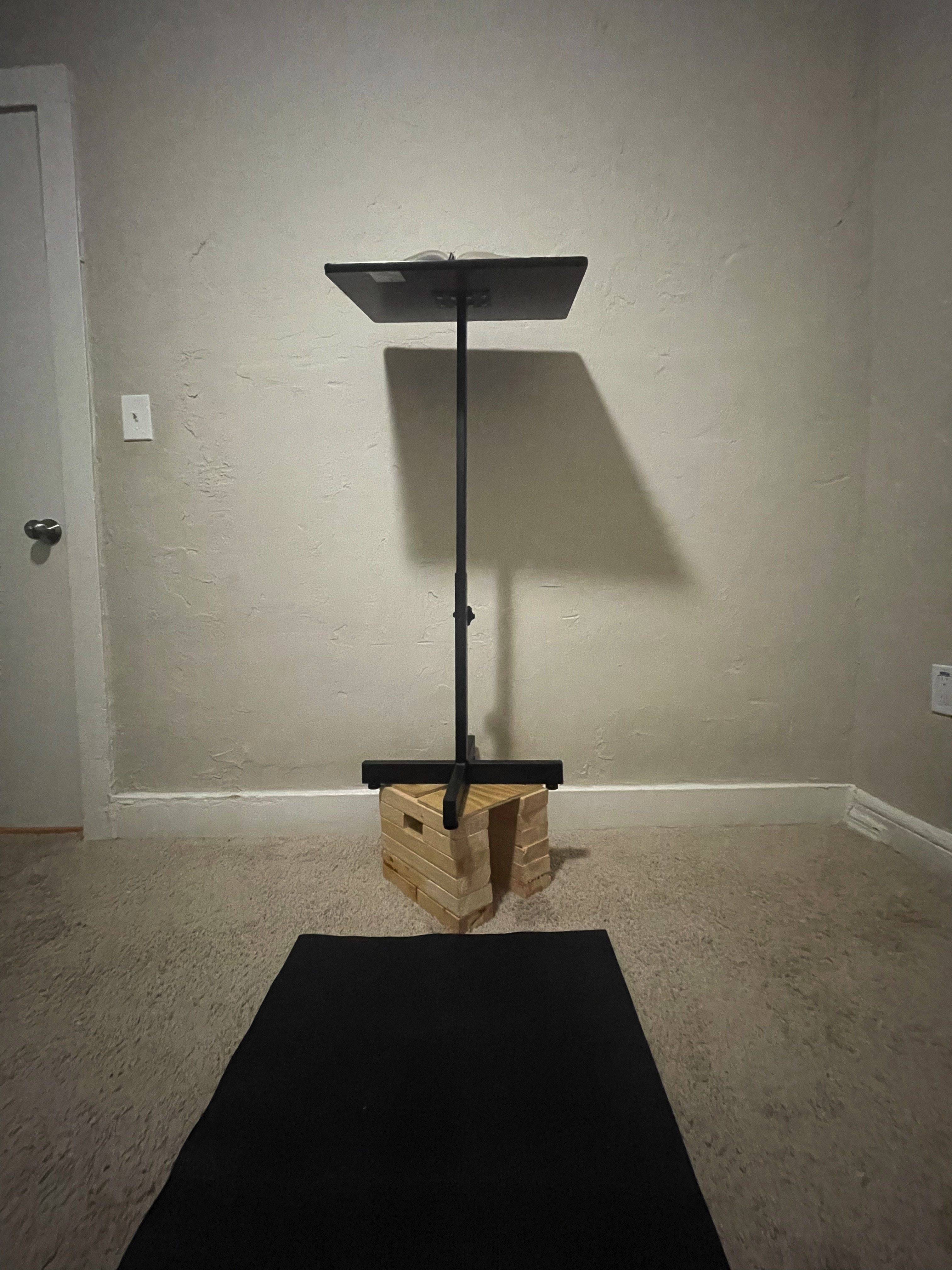
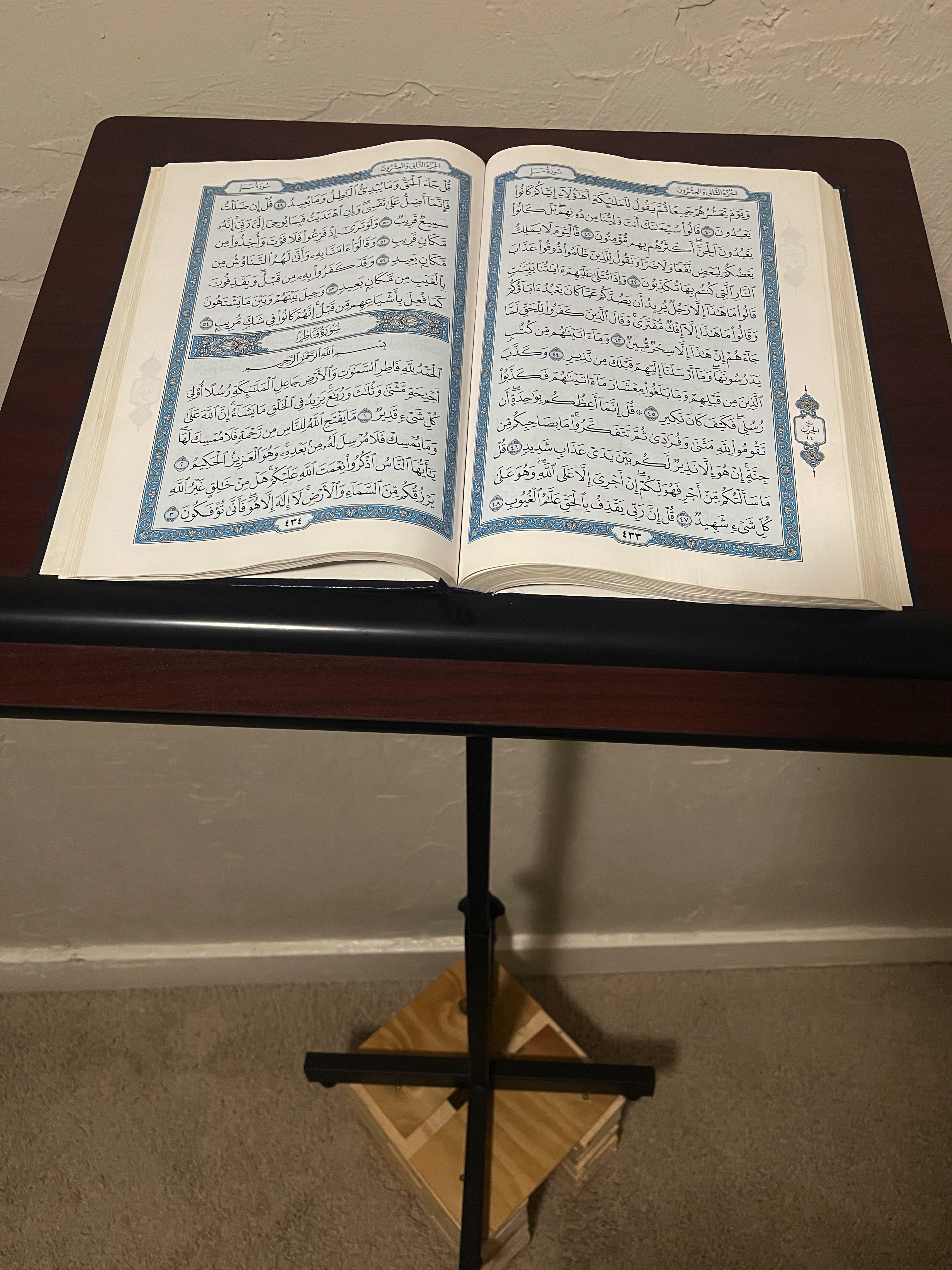

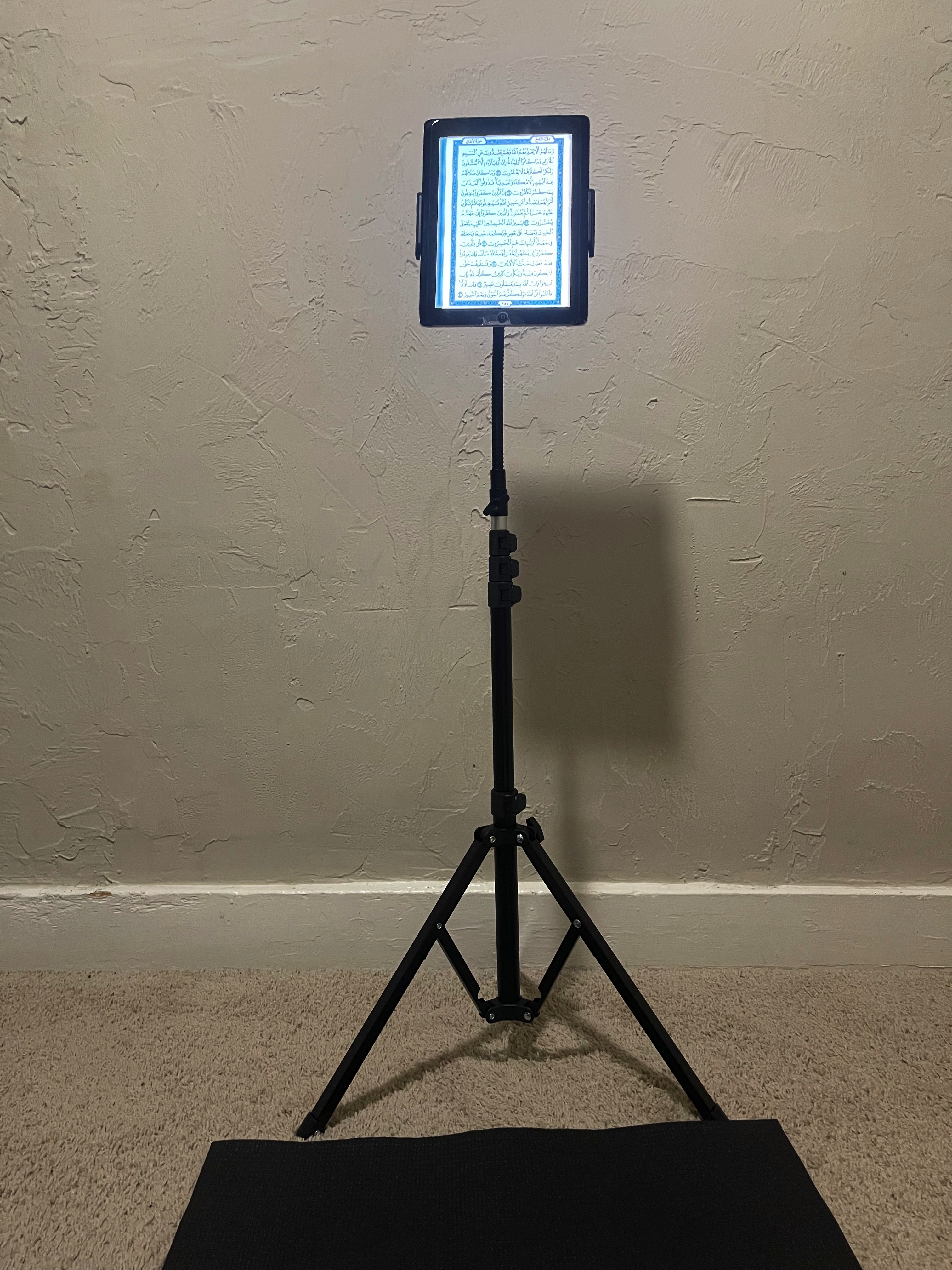


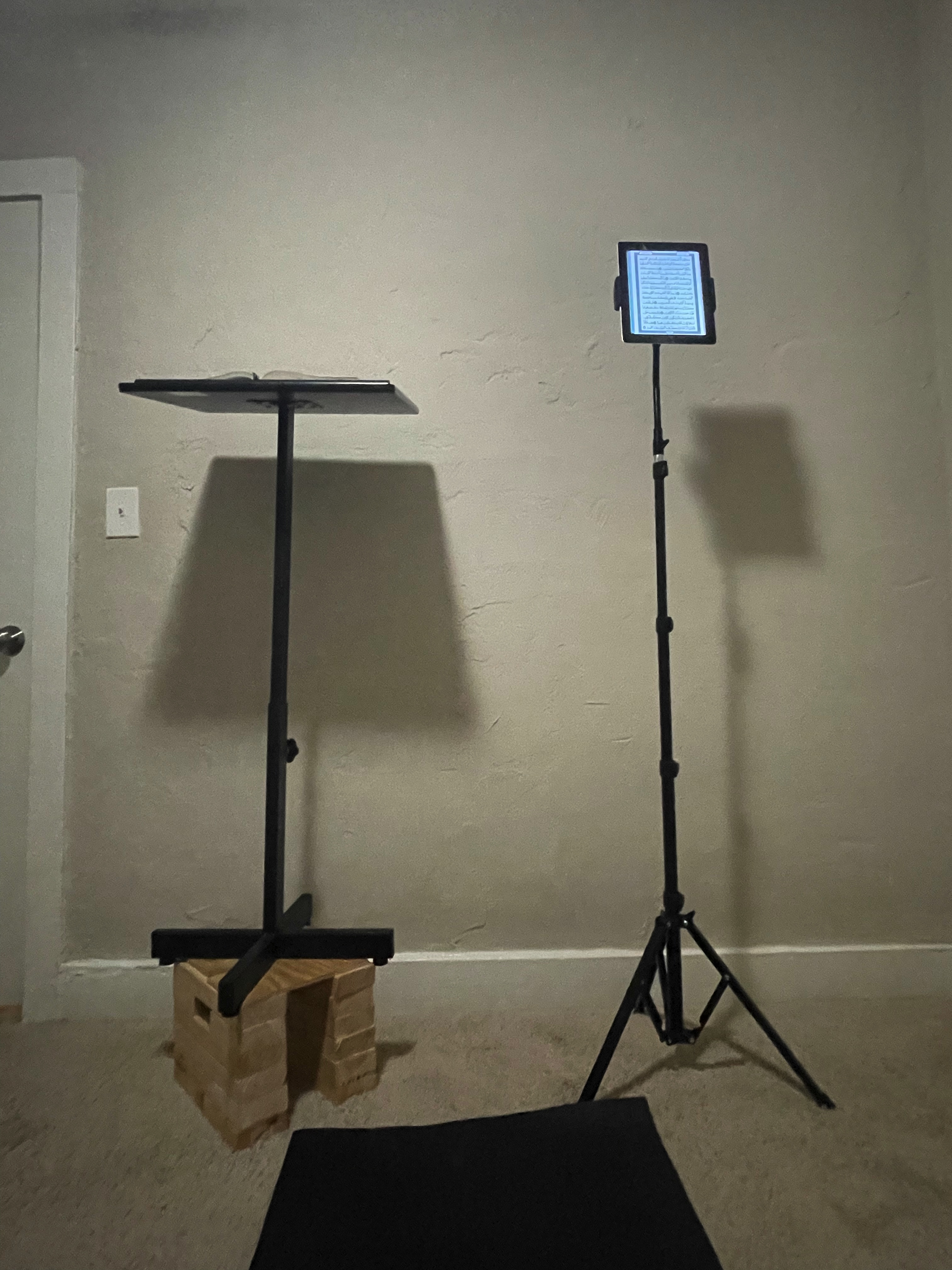

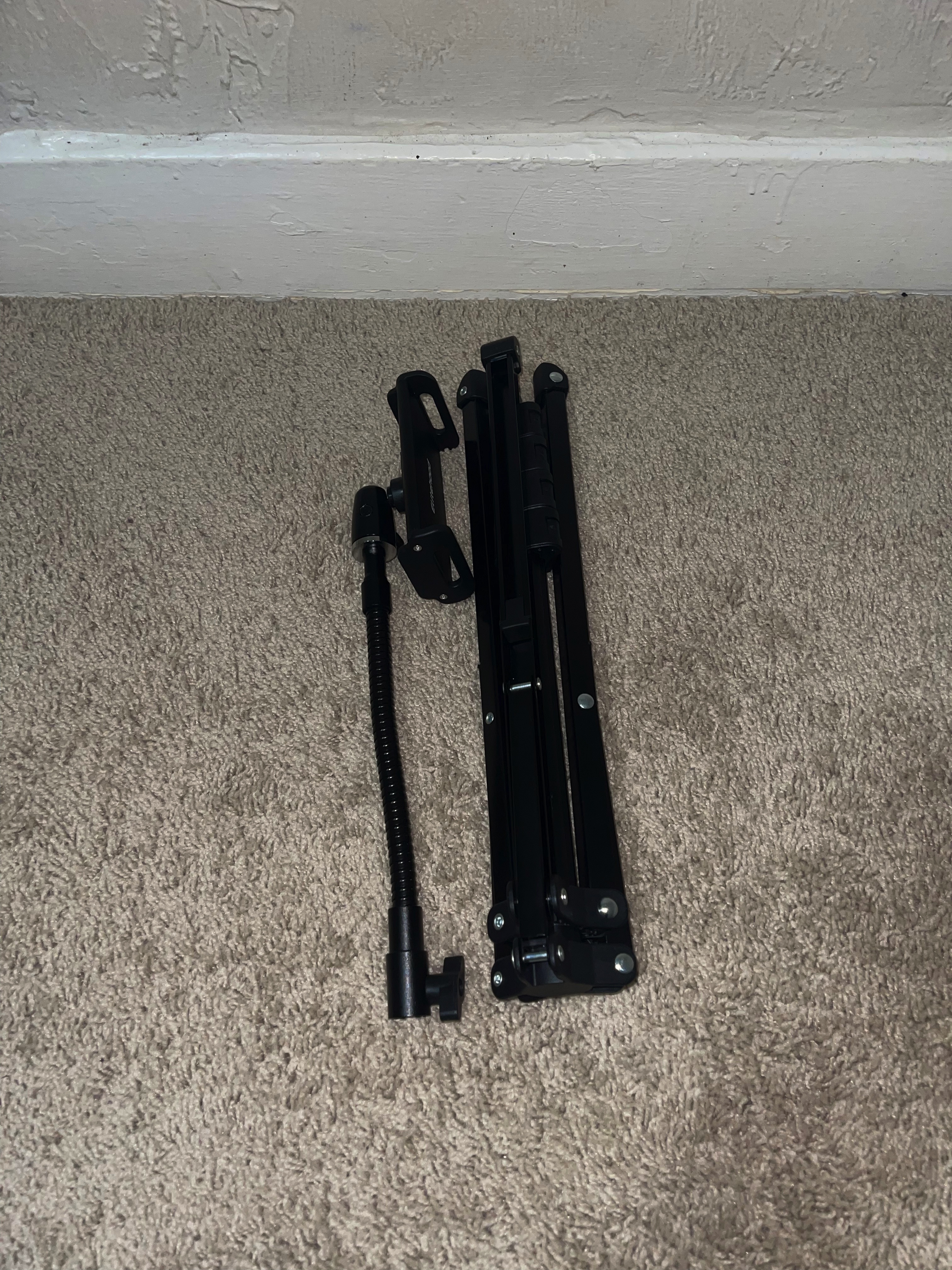


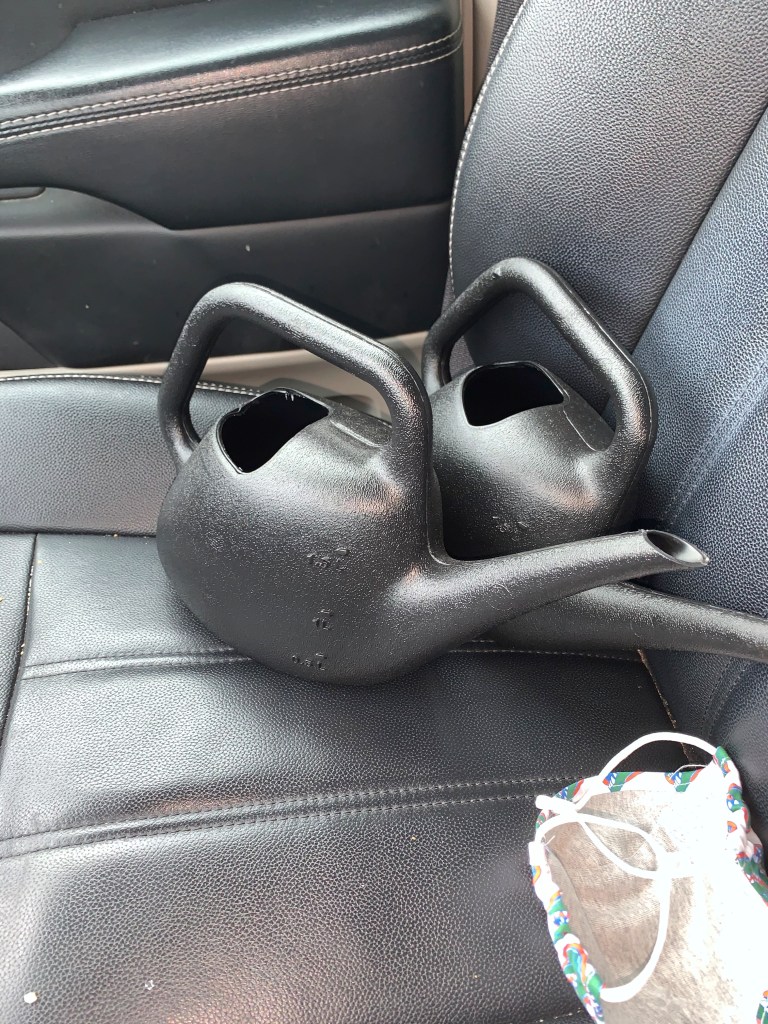


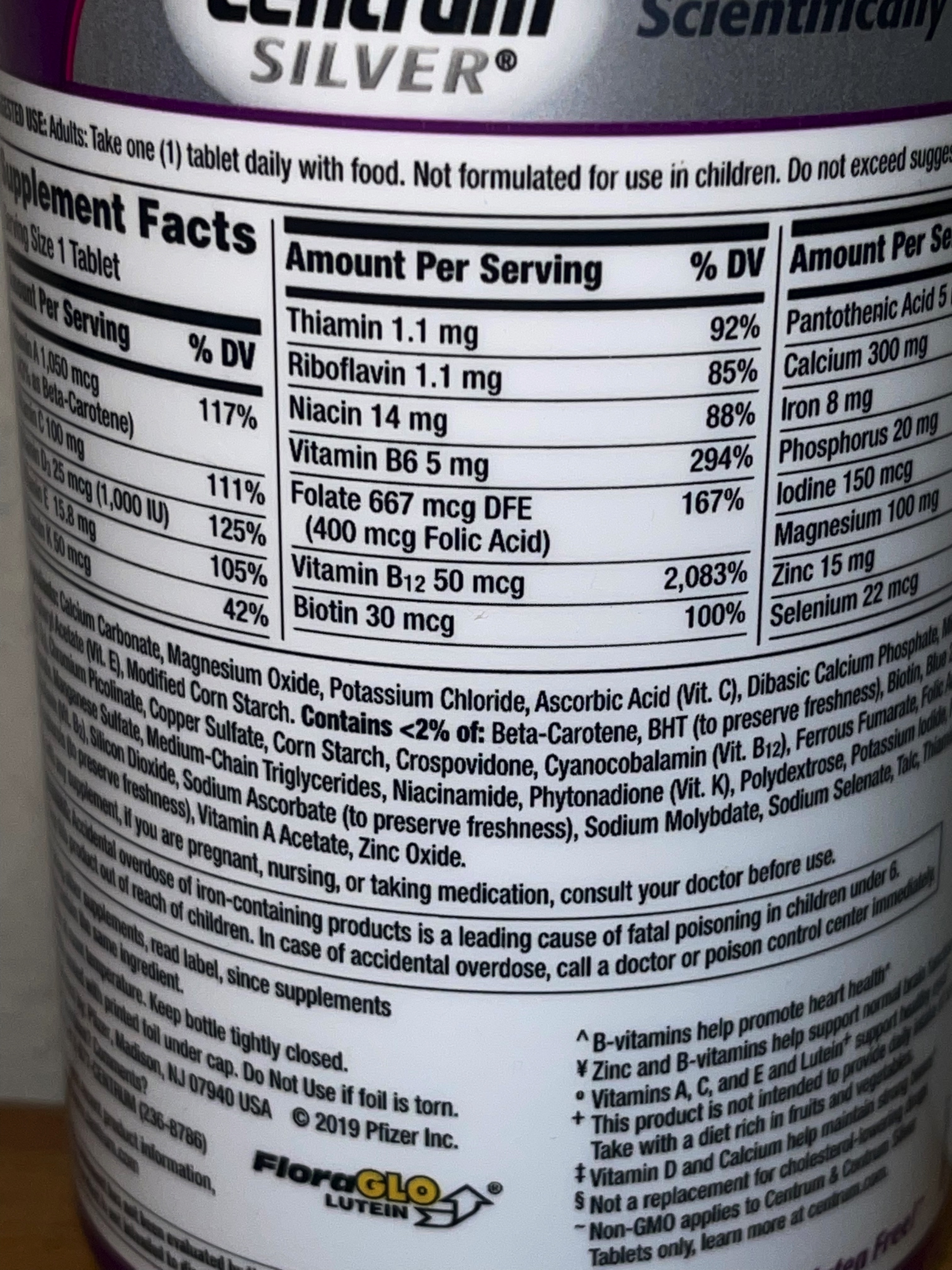




 themarhaminstitute